

Legal/Law/Criminal Justice and Reform
Armed Citizens Can Step On Legal Land Mines If They Aren’t Careful Following Self-Defense Shootings
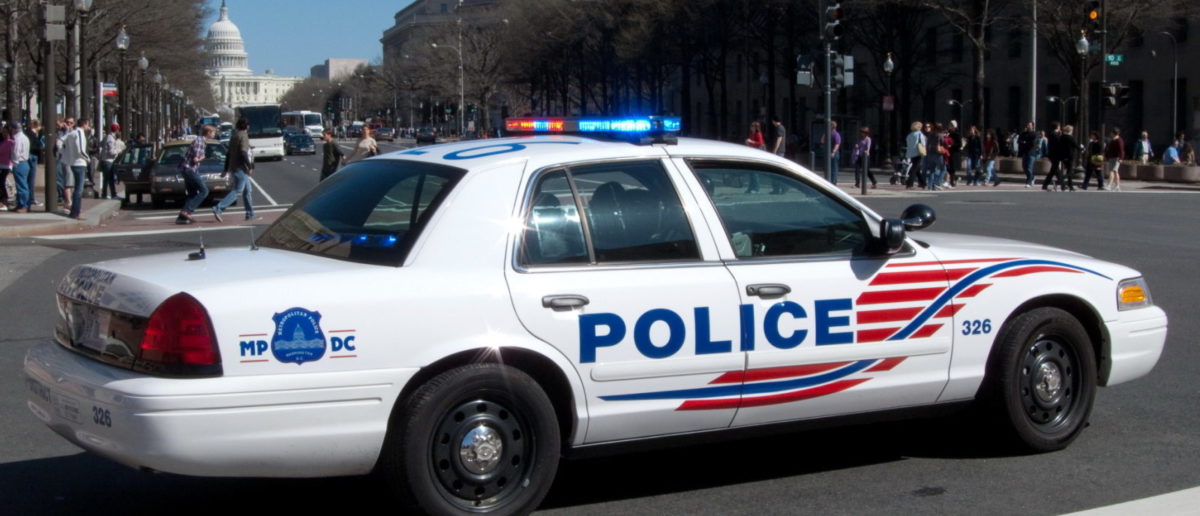
cliff1066/Wikimedia Commons
What armed citizens say to responding police after a self-defense shooting can put their freedom at risk, firearms instructors and attorneys told the Daily Caller News Foundation.
The instructors and attorneys said that armed citizens make those errors in the immediate aftermath of an encounter, often turning what would be a justified incident of self-defense into a criminal trial. Some of the most common mistakes involved what they did immediately after the incident.
“Odds are if you’re the good person who’s never been involved in the justice system before, you probably have no idea what you’re doing,” Tom Grieve, a former prosecutor who also is a firearms instructor and appears on panels for the United States Concealed Carry Association (USCCA), told the DCNF. Grieve noted that because the vast majority of self-defense uses do not involve any shots being fired, far too many armed citizens can find themselves in trouble.
“They know how to use the police against you because they’ve been through the system,” Grieve said. “They understand what they should or should not do and I see a lot of people walk themselves into criminal charges because law enforcement misidentifies them as the bad guy because they don’t understand how to play the system.”
One factor that was mentioned was the armed citizen’s interaction with police in the immediate aftermath of the self-defense incident. While all advised caution in what an armed citizen says to police during that timeframe, not all of them agreed on how much to say.
“I’ve been telling people since the 1970s, you need a brief statement,” Second Amendment Foundation (SAF) President Massad Ayoob told the DCNF. “You need to make it clear from the beginning: This guy attacked you. You need to point out the knife that he dropped. You need to point out, you know, witnesses you saw before they disappear. But you must not try to answer any detailed question.”
Ayoob noted that a number of physiological and psychological effects could make it easy for an armed citizen to get facts wrong and look like a liar in front of police.
Attorneys for Freedom partner & managing criminal defense Attorney Andrew C. Marcantel agreed, saying too much could be a problem for an armed citizen, but he had a different view of what to say in the immediate aftermath.
“By far the number one, I mean, and pretty much any criminal defense attorney will tell you this, who handles these types of cases, is speaking to the police and assuming that the police are on their side and assuming they can talk their way out of the situation and assuming they’re in a good shoot, and assuming they’re in actually a good lawful shoot, those assumptions can cause one to get a case of what I call diarrhea of the mouth,” Marcantel told the DCNF. “When the cops show up on the scene and start just volunteering all kinds of information to the police, much of which turns out to be incriminating.”
“And I can’t tell you how many cases, literally countless cases, where myself and the other attorneys at my law firm are sitting around and staffing and strategizing our cases and we turn to each other and we say, ‘This would be a great case. This would ex be an extremely defensible case if only our client hadn’t said that if only that statement wasn’t made from our own client’s mouth to the police on a recording. This would be a great case’” Marcantel continued. “So, the number one rule that we always recommend is just shut up when the police come around.”
At the same time, though, there was an emphasis on being the first to call police, what Grieve called “the race to 911.”
“Arguably the best advice a lot of people touched on, which you brought up, is the fact that look, call 911. Win the race to 911 is what you hear a lot of people talk about,” Grieve said. “Be very brief. Don’t go into granular details. I’ve seen people get criminally charged on that as well where they try to give the exact street that they’re on or the time that this happened and they screw those things up.”
Both Grieve and USCCA Principal Training Advisor Rob Chadwick mentioned that 911 calls are recorded before a dispatcher even picks up the phone.
“A lot of people don’t understand the instant you dial 911, even before the operator picks up, you are being recorded and not just what you say but everything that’s going on in the background, those sounds, those intonations can be taken out of context,” Chadwick said. “If you are calm and collected and very professional and you get on and and you are relating what happened that could be interpreted as, ‘Hey this person has no remorse whatsoever. He was totally, maybe it was premeditated, that type of thing versus just the opposite could be true too. This person is hysterical, clearly, they didn’t know what they were doing, they weren’t in control of their emotions. And so, remember all of this is going to be interpreted by other human beings.”
Chadwick also noted that what people post on social media long before an actual self-defense incident happens can be used against them.
“Words do matter, not only words you speak to the police during an incident, but words you put in print ahead of time,” Chadwick said. “I’ve seen so many people really regret putting things on social media ahead of time, like, you know, the famous better to be judged by 12 than carried by six or, you know, some comment on a post, ‘I wish someone would kick in my door, I’ve got my 357 waiting’ you know, inflammatory bravado that is on display for the public to see that, okay, well, maybe this person was actually looking for a fight.”
Marcantel noted exercising one of the key clauses from the famous Miranda warnings can never hurt.
“Your silence cannot be used against you, either as a reason to arrest you or in a court of law later,” Marcantel said. “They can’t even present it against you or else it would be a mistrial and this is why the police are required to mirandize people.”
“The Miranda decision from the United States Supreme Court requires every cop in the land to warn you that everything that you’re about to tell me can and will be used against you,” Marcantel continued. “Not for you, not for your benefit, not to help you exonerate yourself, against you. And that language was very purposefully imposed upon them by the United States Supreme Court.”
Marcantel also noted that police officers could make mistakes when taking notes regarding the answers to questions about what happened, could hold anti-Second Amendment beliefs or may be suffering from confirmation bias. Marcantel said it was best to avoid having to use force in self-defense in the first place.
“The best thing that you can possibly do is avoid a situation where possible. I always remind people of the difference between what you’re legally allowed to do and what is the smartest thing for you to do,” Marcantel said. “As a criminal defense attorney who has represented thousands of clients on not only gun cases, but all kinds of different cases in the past, I can tell you that even when you prevail at trial and get all of the charges against you dismissed, you do not feel like a winner at the end because you’ve just gone through maybe years of being cranked through the criminal justice system, shelling out tens of thousands of dollars in attorney’s fees, having a constant stress hanging over your head like a cloud, wondering every day whether you’re going to have to spend a substantial amount of your life in a cage.”
“And at the end of it, yes, all the charges are dismissed, but you do not feel like a winner,” Marcantel concluded.
All content created by the Daily Caller News Foundation, an independent and nonpartisan newswire service, is available without charge to any legitimate news publisher that can provide a large audience. All republished articles must include our logo, our reporter’s byline and their DCNF affiliation. For any questions about our guidelines or partnering with us, please contact [email protected].