

Commentary: Big Tent Ideas
Big Earnings By Big Oil Set The Stage For Post-War Recovery
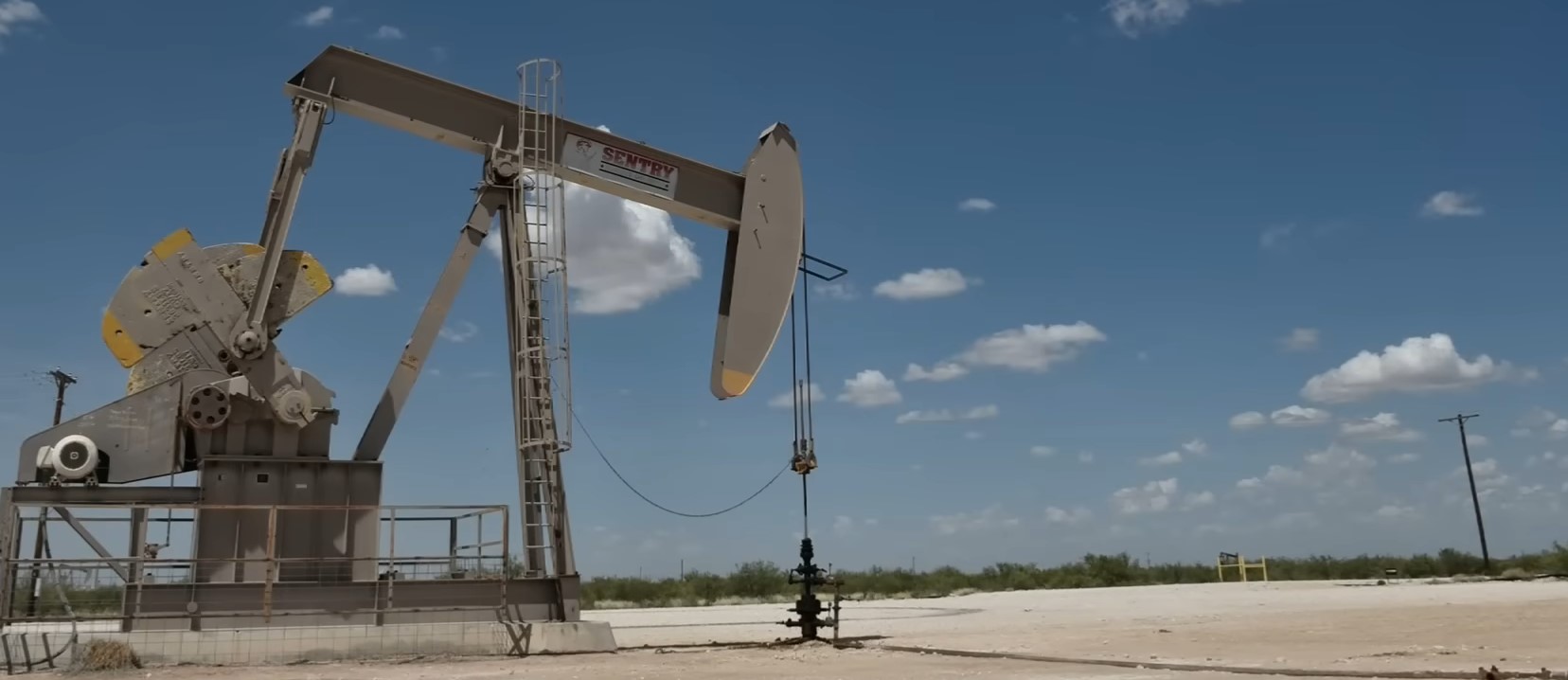
Oil pump (Screen Capture/PBS NewsHour)
A good way to think of this week’s earnings reports by four big oil majors is a test of competing corporate strategies. Two U.S.-based companies spend the last decade largely sticking to the things they do best — producing, refining, and selling oil and natural gas. Two Europe-based competitors spent big chunks of it chasing unprofitable renewables projects designed to burnish their ESG metrics.
Guess which two companies are handing their shareholders the biggest checks today? It isn’t a hard question.
ExxonMobil reported Q3 2026 earnings of $17.5 billion on Friday, along with $19.1 billion in free cash flow. Its refining segment earned $9.05 billion, more than double the previous quarter, as its Gulf Coast refineries ran at 100% utilization. CEO Darren Woods credited investments like the Beaumont refinery expansion with raising Exxon’s distillate production by about 40% since 2019. The icing on the cake for investors: A $20 billion stock buyback program for 2027.
Fellow U.S. major Chevron posted adjusted earnings of $10.4 billion, up from $3.6 billion a year ago. Its downstream business earned $4.9 billion, more than four times the $1.1 billion of a year ago, as its U.S. refineries ran a record 1.09 million barrels of crude per day at almost 98% utilization.
While other big oil companies wandered off into ESG world, Exxon and Chevron focused their capital on their core oil and gas business ventures in the face of massive pressure to change course and get with climate alarm program.
Now, look at BP. On paper, Q3 was also a blowout for the venerable British major. Profit came in at $8.46 billion, nearly four times the $2.2 billion of a year earlier. Its refining indicator margin soared to $46.7 per barrel, up from $15.8 year-over-year.
But BP also booked $4.0 in impairments that the company says are “linked largely to transition businesses,” i.e., investments mainly in wind and solar. While Exxon, Chevron and even ESG-focused Shell all rewarded shareholders with big investment returns, BP had no room for that during the quarter. Instead, its new management team led by CEO Meg O’Neill used the windfall smartly to pay down debt and help settle its remaining Deepwater Horizon liabilities.
This is what years of chasing ESG virtue cost a company that lost sight of what it has always been in business to do.
Fellow British giant Shell — which reported Thursday — falls somewhere in between these extremes. Its $10.81 billion adjusted earnings came with a $1.9 billion impairment of its own, but also left room to invoke a $5 billion stock repurchase program. Meanwhile, its entire renewables segment contributed just a nominal $289 million, boosted by trading activities that more than offset losses by wind, solar and other unprofitable “transition” projects.
All four companies generated most of their profits the same way in Q3: By turning crude into diesel, jet fuel, and gasoline. As CNBC put it, “Diesel prices have surged globally as Ukraine and Iran have bombed refineries in Russia and the Middle East.” The world is short of refining capacity, and the companies that kept theirs running flat out are being paid handsomely for it.
So, the main drivers of the profits are no secret, and the impacts of those drivers are equally obvious. Families feel them every time they fill their tanks at the gas stations. Truckers and farmers are feeling them, too. Every consumer pays the add-on effects when they buy groceries, clothes, and school supplies for the kids.
Cynical Democrats in D.C. — like California Rep. Ro Khanna and Rhode Island Sen. Sheldon Whitehouse, to name a couple — will re-introduce dumb windfall profits tax bills for political advantage. But punishing the companies that are actually meeting market demands will do nothing but raise consumer costs even higher. America played this ridiculous game before in the 1980s, and many of us remember all too well how it ends. The real fixes aren’t complicated: End the wars and unleash the industry to fix the problem. We need more energy, not less, because abundance of any product lowers prices.
Bottom line: Exxon and Chevron didn’t get lucky this quarter — they got ready. Shell is back on track, and BP under O’Neill and her team now seems ready to do the same. If the politicians will stay out of the way, the decade just past will soon be remembered as an unfortunate detour into fantasyland.
All content created by the Daily Caller News Foundation, an independent and nonpartisan newswire service, is available without charge to any legitimate news publisher that can provide a large audience. All republished articles must include our logo, our reporter’s byline and their DCNF affiliation. For any questions about our guidelines or partnering with us, please contact [email protected].