

Healthcare
Millions Of Residents Exposed To Toxic Metals From LA Fires, Study Shows
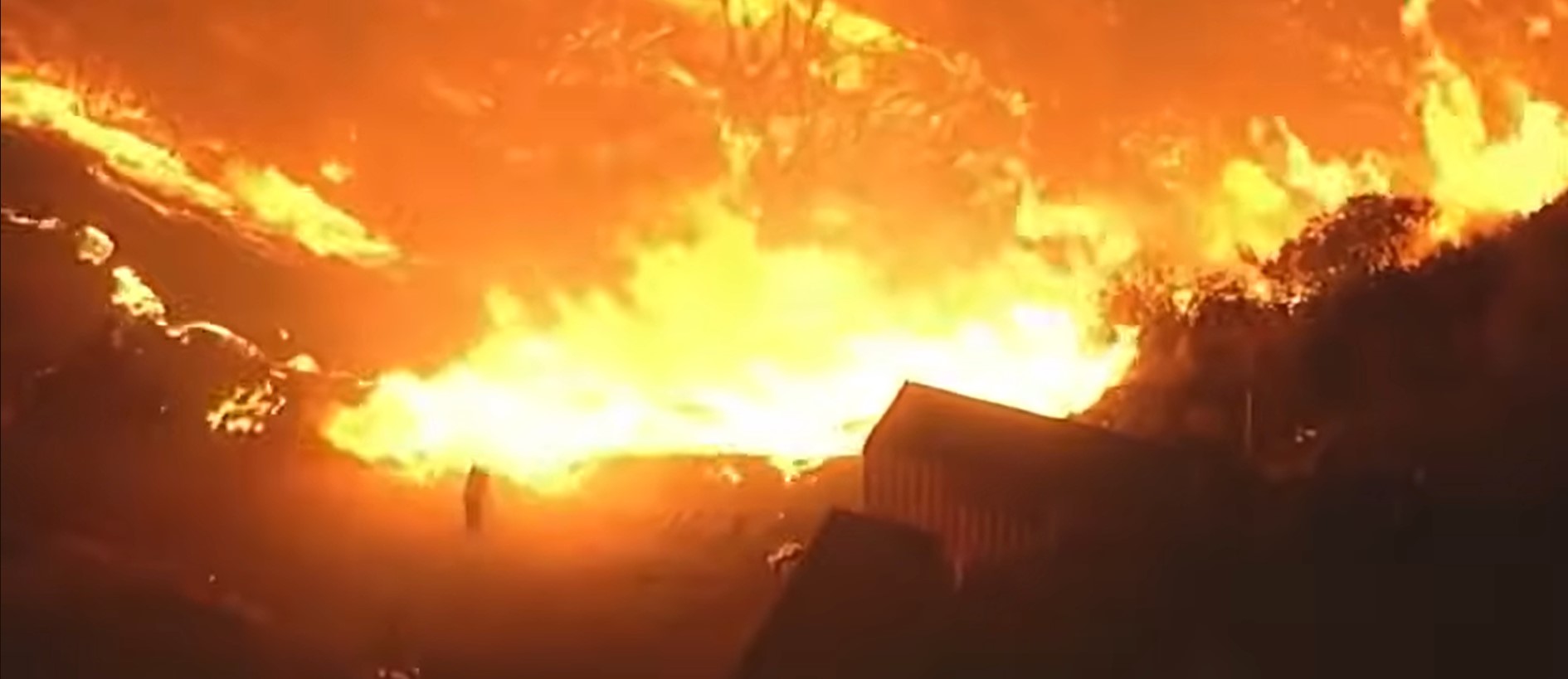
A wildfire in Los Angeles County, Calif. (Screen Capture/PBS NewsHour)
As homes ignited and burned down during the 2025 Los Angeles fires, millions of California residents were exposed to a high concentration of airborne toxic metals, a new study discovered.
Almost two years ago, wildfires spread through southern California killing at least 31 people and destroying 16,000 structures — but the extent of the blaze’s far-reaching effects remained unclear. Researchers measured the chemical signatures emitted between urban fires and wildfire smoke to find approximately 7 million Californians inhaled deadly heavy lead poisoning in the air during the first 24 hours of the devastating fires, a study published Wednesday in Science Advances found.
While some allege that climate change caused these rapid spreading blazes, the Democratic-run state and city governments appeared to not properly prepare for the wildfires and botched their responses to them. For example, Los Angeles government officials caught heat for letting scores of the city’s fire hydrants run dry and for cutting $17.6 million from the Los Angeles Fire Department’s budget, a move approved by Democratic Los Angeles Mayor Karen Bass.
For the study, researchers measured particles present in the smoke every hour during the fires’ blaze and recorded the data in the Atmospheric Science and Chemistry mEasurement NeTwork (ASCENT), according to the study. ASCENT is the U.S.’ first measurement network able to measure the chemical composition of airborne particles in real time, a researcher told the Associated Press.
The researchers compared the chemical makeup of the smoke from the LA fires with smoke from a 2024 wildfire in Riverside County which mostly burnt vegetation, the study reported. By contrasting the measurements in these two smoke plumes, scientists found the LA fire contained 50 times more lead, three times more arsenic and seven times more halogens. At the peak of the burning, about 7 million people were exposed for a full day to lead levels more than 80 times the typical average, the study found.
“One of the real advantages of this study is that it had the opportunity to make measurements sort of hour-by-hour across the sampling network,” Ed Avol a professor at University of Southern California, who was not involved in the study, told the AP. “And typically we make measurements of airborne particulates and so forth a couple of times a week, at best.”
Thousands of homes burned during the LA fires and toxins from incinerated cars, paint, furniture and chemicals under sinks entered the air the study found. In the aftermath of the fires, researchers also linked this smoke inhalation to tens of thousands of deaths across the United States in a previous study, the AP reported in February.
“We saw this coming, and we have said, ‘I told you so’ every time there’s been a super fire. This time, the super fire happens to be even more catastrophic, because it’s happening in one of the most densely-populated areas in the United States,” Edward Ring, director of water and energy policy for the California Policy Center, told the Daily Caller News Foundation on Jan. 11, 2025 — days after the wildfire spread through the City of Angels.
“It’s the same message, which is that we have neglected our water infrastructure. We have mismanaged our forests and chaparral in the name of environmentalism, and we’re paying the price,” Ring added.
Editor’s note: This story has been updated to include additional reporting.
All content created by the Daily Caller News Foundation, an independent and nonpartisan newswire service, is available without charge to any legitimate news publisher that can provide a large audience. All republished articles must include our logo, our reporter’s byline and their DCNF affiliation. For any questions about our guidelines or partnering with us, please contact [email protected].