

National Defense
Animal Rights Groups Sound Alarm Over Tech Bro’s Plan To Create Genetically Engineered War Dogs
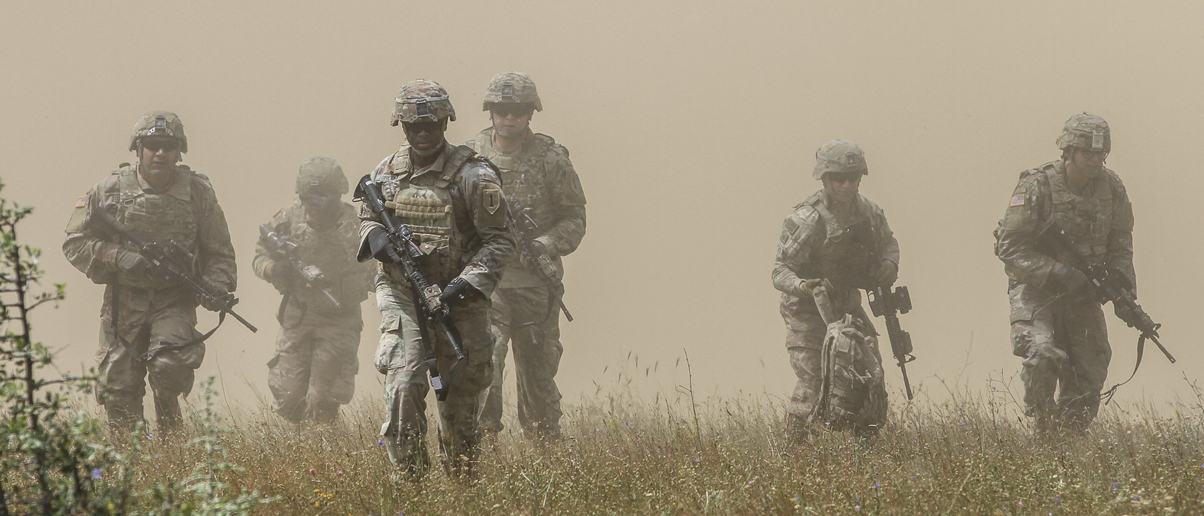
(U.S. Army photo by Staff Sgt. True Thao)
Animal rights organizations are condemning a controversial new effort involving defense technology giant Anduril to develop genetically engineered military dogs, raising concerns about the ethics of subjecting animals to genetic modification.
The backlash follows the unveiling of Warhound, a $200 million startup conceived by Anduril founder Palmer Luckey and biotechnology entrepreneur Ben Lamm that intends to clone and genetically modify dogs for dangerous military operations, Fortune reported. The company plans to genetically alter military working dogs to improve their health and potentially enhance their physical capabilities, while Anduril will supply body armor, advanced sensors and other battlefield technology, TechCrunch reported.
“Warhound is obsolete at inception, and that makes it an incredibly cruel waste of time, money and lives,” Fleur Dawes, director of communications and international partnerships at In Defense of Animals, told the Daily Caller News Foundation. “Boston Dynamics’ robot dog was opening doors on video in 2018. In 2024, a Massachusetts State Police bomb squad robot found a barricaded gunman and took three bullets that could have hit an officer or a dog”
“Genetic engineering and cloning of dogs for military purposes is a very bad idea,” Stacy Lopresti-Goodman, Ph.D., director of Animal Law Education & Scholarship at the Animal Legal Defense Fund, told the DCNF. “Humans spent thousands of years breeding dogs to trust and depend on us. Genetically engineering them for warfare is a profound betrayal of that unique bond. It raises serious ethical concerns, and it can be harmful to the dogs. “
“It’s a pity that some people with enormous amounts of money have very little common sense,” PETA Senior Vice President Colleen O’Brien told the DCNF. “Genetically engineering dogs for dangerous military work is a stunningly old-fashioned idea at a time when other agencies are phasing out the use of dogs in favor of robotics, AI, and other state-of-the-art technology that can be used without putting dogs in harm’s way.”
“The only reason *Anduril*, the most advanced weapons company on the planet, would do this is because it’s cheaper than a robot to send them to war,” a post on X, which got attention from Luckey, said.
The X post is correct in pointing out that robot dogs are now a viable alternative to using real dogs as of 2026. The DCNF interviewed a manufacturer of robot dogs at the Annual Convention of the U.S. Army in Washington on Oct. 16, who explained what these new robot dogs can do.
“So what we’re looking at is the TRUST 70. Trust stands for tactical robot for unmanned security tasks,” Assaf Chaprak, the president and CEO of robot manufacturer Shifters, told the DCNF. “It’s a robot we built from the ground up in-house, completely AI-native, built for rugged applications. It can go anywhere. It can do anything. It’s an open system that can carry any payload, from sensors to kinetics [weapons] and cameras and relays and everything else.”
The dog can carry up to 30 pounds and could be equipped with machine guns, anti-tank weapons or even explosives for use in suicide missions. Using robot dogs instead of living animals could solve the ethical problems of this program, even allowing the robots to be intentionally sent on missions where the operators know the units will not return.
Luckey pushed back against the criticism of the project, pointing to protective equipment and genetic modifications intended to reduce cancer and joint problems in military dogs, according to his post on X.
However, some experts pointed out that these proposed genetic changes could have disastrous side effects.
“Genetically engineering dogs to enhance traits like vigilance or responsiveness could have devastating consequences for their psychological well-being,” Goodman told the DCNF. “A dog who has been engineered to be more sensitive to environmental stimuli might also be more vulnerable to sensory overload, anxiety, or chronic stress, particularly because hypervigilance is a hallmark characteristic of PTSD.”
“Whether for experiments or defense, dogs are not tools,” Catharine E. Krebs, PhD, director of medical research at the Physicians Committee for Responsible Medicine, told the DCNF. “Regardless of purpose, breeding and genetically engineering dogs puts them in harm’s way. Modifications intended to enhance strength, endurance, or sensory abilities could lead to unintended consequences resulting in chronic health issues and a reduced quality of life. For example, increasing muscle mass could add excessive strain to the skeletal and cardiovascular systems.”
Warhound will initially focus on cloning top-performing Belgian Malinois and German Shepherds, preserving their genetic material and modifying genes associated with inherited diseases, including hip dysplasia, muscle degeneration and certain cancers, TechCrunch reported, citing Lamm.
The company also hopes to eventually enhance the dogs’ speed, agility and sense of smell, potentially making them more effective at detecting explosives and conducting dangerous missions, TechCrunch reported.
“There’s also the troubling ethical question about what happens to dogs who don’t meet these enhanced performance expectations,” Goodman told the DCNF. “A 2025 study found that a large proportion of military working dogs who are ‘discharged’ from service are done so due to fear and anxiety, and that those individuals are most often transferred to other agencies or die.”
Anduril will provide protective eyewear, hearing protection, body armor and integration with its Eagle Eye battlefield awareness system. The technology is intended to enable dogs, human handlers and autonomous military systems to coordinate and exchange information during operations, according to Warhound.
The company’s ambitions extend beyond creating genetically enhanced animals. Warhound hopes to address a longstanding military supply problem, claiming more than 80% of American military working dogs are purchased from Europe, according to its announcement.
Fewer than half of those dogs ultimately qualify for military service after an approximately three-year acquisition and training process, meaning the military must acquire roughly 200 dogs to field 100 qualified animals, according to Warhound.
The United States also faces competition from foreign governments, including China and Russia, for qualified military working dogs, Fortune reported, citing Lamm.
The American Humane Society is supporting the initiative and plans to certify Warhound’s training programs while helping retired military dogs reunite with former handlers or find adoptive homes.
“We owe these dogs a commitment to their well-being that matches their service to us,” American Humane Society President and CEO Robin Ganzert said in Warhound’s announcement.
“These processes can involve invasive procedures for egg donors and surrogate mothers, failed pregnancies and developmental abnormalities,” Laura Alvarez, the deputy director of science & regulatory affairs at Cruelty Free International, told the DCNF. “Even puppies born healthy may not have the desired characteristics, raising serious questions about what happens to dogs who do not meet the program’s requirements, including whether they will be rehomed, killed or sold for use in experiments.
Warhound expects its first genetically engineered puppies to be born in early 2027, with the animals potentially entering service by 2028, TechCrunch reported, citing Lamm.
However, the company has not yet secured government customers or established a price for its genetically engineered dogs. Warhound is considering a subscription-style procurement arrangement that would provide military organizations with a continuing supply of trained animals, Fortune reported, citing Lamm.
“Bolting Anduril sensors onto a genetically engineered dog doesn’t protect the dog,” Dawes told the DCNF. “It turns a living being into a piece of hardware. Those backing this $1.2 billion bet on putting living dogs into jobs robots are already doing is throwing money away.”
All content created by the Daily Caller News Foundation, an independent and nonpartisan newswire service, is available without charge to any legitimate news publisher that can provide a large audience. All republished articles must include our logo, our reporter’s byline and their DCNF affiliation. For any questions about our guidelines or partnering with us, please contact [email protected].