

National Defense
Iran Claims It Hit Multiple Ships In Persian Gulf, Warns US Military Of Major Escalation
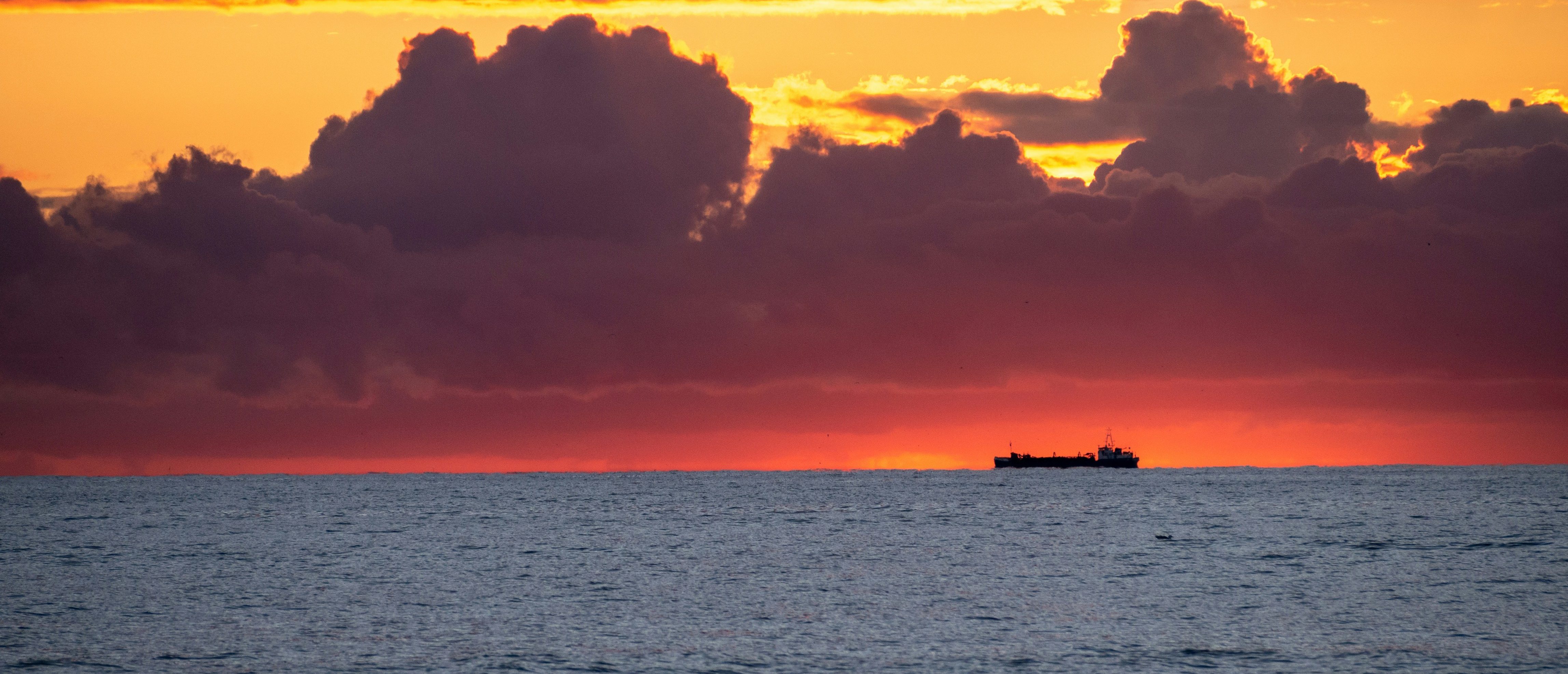
(Photo via Klaus Kreuer / Unsplash)
Iran claimed Thursday that it struck seven oil tankers in the Persian Gulf and near the Strait of Hormuz, warning that continued American military operations could trigger an expanded Iranian assault on U.S. military bases throughout the Middle East.
Four vessels allegedly caught fire after being simultaneously attacked in the northern Persian Gulf on Wednesday, while three additional ships reportedly struck naval mines west of the Strait of Hormuz, according to Iran’s Islamic Revolutionary Guard Corps (IRGC) Navy, Reuters reported. The claims, which have not been confirmed outside of Tehran, represent a potentially significant escalation in Iran’s ongoing campaign against commercial shipping.
“The forces pulling matters toward another round of war are much stronger than the forces pushing back,” Trita Parsi, executive vice president of the Quincy Institute for Responsible Statecraft, told the Daily Caller News Foundation. “Israel is dead set on another war, whereas Trump is oscillating between wanting an exit from the war and an impulse for revenge against the damage Iran has done to Trump’s presidency.”
“On paper, and increasingly in practice, the United States maintains a massive advantage, but in an asymmetric war situation such as this, even the far weaker power can exercise enormous influence,” J.D. Foster, former chief economist at the White House Office of Management and Budget and former chief economist at the U.S. Chamber of Commerce, told the DCNF. “For examples, see Vietnam, Afghanistan, and Iraq. However, it is misleading to view the state of the conflict in military terms. The “front” in classical military terms is stagnant, relatively quiet, and increasingly irrelevant because the crux of the conflict now lies in the economic domain.”
The IRGC claimed its forces tracked four vessels allegedly conducting illegal ship-to-ship oil transfers before the vessels were simultaneously struck and caught fire, according to Reuters.
Iranian state television additionally reported that three other oil tankers were damaged and immobilized after striking naval mines, according to the Associated Press.
“As President Trump stated, Iran is in very bad condition, both economically and militarily, and the blockade will remain in full force and effect, with oil flowing in record numbers of barrels through the Hormuz Strait,” Anna Kelly, White House principal deputy press secretary, told the DCNF. “The United States will not be attacking Iran at any time prior to the midterm elections.”
The Pentagon declined to comment, citing operational security. U.S. Central Command did not respond to a request for comment.
The Iranian military did not identify the vessels involved, their nationalities or whether the alleged attacks resulted in casualties, according to AP.
If independently confirmed, the seven incidents would represent the largest number of commercial vessels damaged in a single day near the strategic waterway since the U.S. and Israel launched their military campaign against Iran on February 28, according to AP.
Despite Iran’s recent wave of attacks on commercial shipping, some experts remained optimistic about the U.S. military’s positioning in Iran.
“The U.S. is currently eroding Iran’s hold over the Strait of Hormuz,” Jason M. Brodsky, policy director at United Against Nuclear Iran (UANI), told the DCNF. “This is triggering the regime to increase the tempo of attacks on commercial vessels. But the U.S. is still managing to enable safe passage for commercial vessels — with some reports suggesting more crude oil is now coming out of the Persian Gulf than before the war. That is a substantial American achievement. The key is to sustain it moving forward. The U.S. also holds an advantage in the air as Iran’s air defense systems are no match for U.S. and Israeli jets.”
“Iran is in the death throes of its military capability,” Steven Bucci, a Heritage Foundation visiting fellow and former Pentagon official, told the DCNF. “They can, of course, threaten and make bombastic claims, but their ability to do any real damage is not great. They could make a lucky strike that becomes significant from a public affairs standpoint.”
The IRGC also threatened to expand its military response against American installations throughout the region if Washington continued what Tehran described as provocations, according to Reuters.
Specifically, Iran warned against American efforts to facilitate oil tanker movements through maritime passages Tehran considers unauthorized, threatening to target regional American military bases in retaliation, according to AP.
“There is no possible diplomatic solution that Iran is willing to offer, and the United States would accept,” Blaise Misztal, vice president for policy at the Jewish Institute for National Security of America, told the DCNF. “The current state of neither war nor peace will continue until one side decides that it is no longer acceptable and seeks to change the situation militarily. It seems likely that this could happen soon, whether because Iran escalates its attack to try and force the United States to withdraw its economic pressure or because the United States decides the moment is favorable to further weaken Iran.”
“The US should take this very seriously,” Parsi told the DCNF. “The Iranians will no longer respond to attacks and respond proportionately, but rather will take the initiative to launch attacks if the US decides to restart the war. Its experience in this war has been that Trump does not respond to positive incentives and face-saving exits, but rather only when the cost of the war becomes intolerable for him. So the Iranian strategy is to signal its willingness to make it intolerable for him very quickly.”
International maritime authorities have independently documented other attacks on commercial vessels near the Strait of Hormuz in recent days.
An unidentified projectile struck the tanker approximately 11 nautical miles west of Bukha, Oman, on Wednesday, sparking a fire that was subsequently extinguished, according to the United Kingdom’s Maritime Trade Operations (UKMTO).
The vessel subsequently anchored, with all crew members reportedly safe and no environmental damage reported, according to UKMTO. The organization did not identify the attackers or establish whether the incident was connected to Iran’s latest claims.
Another tanker reported being struck by an unidentified projectile approximately 30 nautical miles southeast of Al Faw, Iraq, on Oct. 20, although its crew reported no injuries or damage, according to UKMTO.
The International Maritime Organization (IMO) has documented 24 casualties and 120 confirmed maritime incidents across the Middle East since the conflict began, according to its Oct. 21 tally.
Among the most recent incidents, the tanker AL DASMA was damaged in the Strait of Hormuz on Oct. 20, while the vessel JIF BARRACUDA suffered damage near the United Arab Emirates on October 18, according to the IMO.
Commercial shipping through the Strait of Hormuz declined approximately 41% between Oct. 12 and Oct. 18, falling from 203 weekly vessel crossings to just 120 amid continued attacks on merchant shipping, according to a report from MarineTraffic.
“My concern is that no one has a sufficient advantage for the war to end. I fear it will therefore continue more or less indefinitely in its current form,” Ben Friedman, policy director at Defense Priorities, told the DCNF. “While the war is still driving up energy prices despite more traffic flowing, it is not painful enough to get Trump to cut the sort of deal that might work and stick. Nor do I see evidence that Iran will suffer a collapse [of] will and capitulate in a way that satisfies the US. So the status quo seems tragically sustainable.”
The latest Iranian threats also raise questions about whether the Trump administration will intensify its military campaign against Tehran or pursue a diplomatic resolution as the conflict continues.
“Tehran does not believe that additional concessions will prevent an Israeli-American attack, given the fact that it has already been bombed twice after offering major concessions in negotiations,” Parsi told the DCNF. “So between the US and Iran, neither side is giving in, and then the Israelis keep up their pressure for a new round of war.”
All content created by the Daily Caller News Foundation, an independent and nonpartisan newswire service, is available without charge to any legitimate news publisher that can provide a large audience. All republished articles must include our logo, our reporter’s byline and their DCNF affiliation. For any questions about our guidelines or partnering with us, please contact [email protected].