

Business
Big Tech’s AI Debt Deluge Might Be Even Worse Than Previously Reported
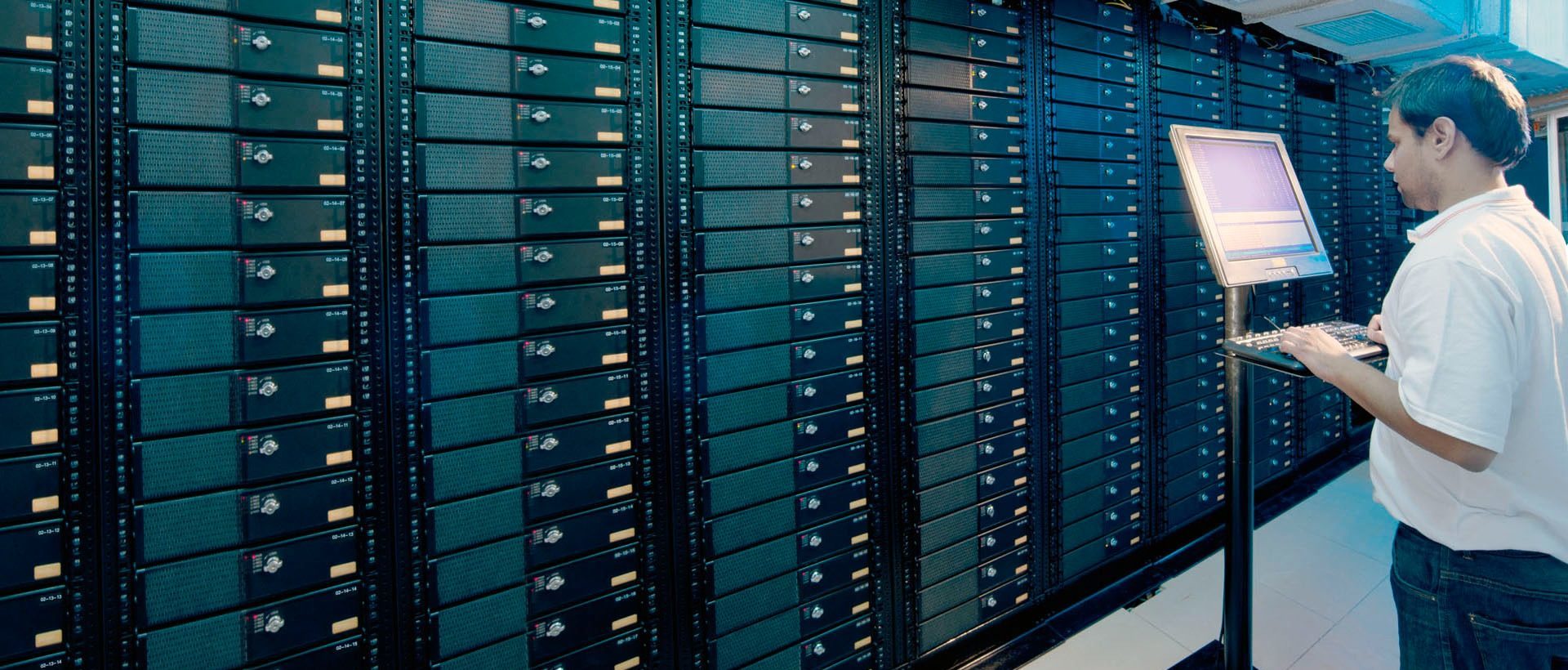
Data center (Azraelito/Wikimedia Commons)
Big Tech could be carrying substantially more financial exposure tied to artificial intelligence than investors realize, S&P Global warned Monday as concerns mounted over the debt financing Wall Street’s AI boom.
Technology companies are increasingly relying on outside investors, financial guarantees and complex financing arrangements to fund their enormous data center expansion. Those arrangements can leave substantial obligations outside conventional debt disclosures, making it difficult to determine who ultimately bears the risk if anticipated AI profits fail to materialize.
S&P Global’s head of digital infrastructure, Mark Habib, warned that interconnected financing arrangements could conceal additional liabilities.
“It is safe to assume that there is more (debt) out there that we are not seeing,” Habib said during a Monday roundtable in London.
S&P estimates that Amazon, Microsoft, Alphabet, Oracle, Meta and SpaceX will collectively spend more than $7 trillion on AI-related capital expenditures between 2025 and 2030. The agency also projected negative free operating cash flow for the group in 2026 and 2027 as investment outpaces internally generated funds.
Technology companies issued as much as $300 billion in guarantees tied to AI data centers and chips over the preceding year, according to a Financial Times analysis. Morgan Stanley analysts separately estimated that seven major technology companies had accumulated more than $3.1 trillion in off-balance-sheet commitments, including leases, purchase agreements and other forms of financial support.
Those commitments are not equivalent to $3.1 trillion in outstanding debt. They nevertheless demonstrate how companies can assume substantial contractual obligations without recording the entire amount as conventional borrowing.
Meta’s Hyperion data center project in Louisiana illustrates the arrangement. The company partnered with Blue Owl Capital on a venture involving approximately $27 billion in development costs, with Meta retaining a 20% ownership stake.
Meta’s SEC filings disclosed approximately $12.3 billion in initial lease commitments and residual value guarantees with a threshold of approximately $28 billion that declines over time. The guarantees could require payments if the property’s value falls below agreed thresholds under specified conditions. Meta said such payments were not probable as of December 2025 and recorded no liability for them.
The borrowing behind the AI expansion is expected to grow substantially.
Goldman Sachs projected that global hyperscaler debt issuance would reach $420 billion in 2027, more than 60% above its 2026 estimate. The bank also found that hyperscalers accounted for just 40% of AI-related credit issuance, suggesting the industry’s borrowing extends far beyond the technology giants themselves.
Those concerns have become especially visible at CoreWeave, an Nvidia-backed provider of computing infrastructure.
CoreWeave accumulated approximately $50 billion in debt, according to LSEG data reported by Reuters. Yields on some of its bonds climbed to roughly 15% to 16% last week as investors demanded greater compensation for lending to the company.
Microsoft accounted for approximately 67% of CoreWeave’s 2025 revenue, according to the company’s annual SEC filing, illustrating how heavily infrastructure providers can depend on continued spending from a small group of technology companies.
Microsoft’s financial relationships extend to OpenAI and Anthropic, two of the industry’s largest AI developers.
Microsoft has committed $13 billion to OpenAI, according to its annual SEC filing, and up to $5 billion to Anthropic. Both companies also depend on Microsoft’s cloud infrastructure, with OpenAI agreeing to purchase an additional $250 billion in Azure services and Anthropic committing $30 billion, according to separate agreements. Microsoft also incorporates their AI models into its products, creating financial relationships that extend in both directions. Amazon remains Anthropic’s primary cloud provider.
Major investment firms, including Blackstone, BlackRock and Carlyle, have participated in financing CoreWeave’s expansion. Carlyle warned in an October research paper that private credit could be called upon to finance approximately $1 trillion of AI infrastructure, potentially creating substantial concentration risks across investment portfolios.
The financial connections extend to Nvidia itself.
The chipmaker agreed to purchase up to $6.3 billion in unsold CoreWeave computing capacity through 2032. Bank of America analysts separately estimated Nvidia’s broader financial backstop commitments across the AI industry totaled approximately $230 billion, according to Reuters Breakingviews. Those commitments are not all outstanding debt, but they tie Nvidia’s finances to companies purchasing its chips.
Whether the industry’s borrowing can be sustained ultimately depends on the revenue those investments produce.
Bain & Company estimated that the AI industry would need roughly $6 trillion in annual revenue by 2031 to support projected infrastructure investment. Currently identifiable consumer and enterprise AI applications could generate only $1.2 trillion to $1.8 trillion annually under Bain’s assumptions, leaving at least $4.2 trillion in additional annual revenue that would need to come from new products and services.
The financial pressure has already affected credit ratings.
S&P downgraded Oracle to BBB-, the lowest investment-grade rating, in July, citing the enormous capital requirements of its AI infrastructure expansion, weakening cash flow and uncertainty over profitability. The agency also identified risks from Oracle’s dependence on major customers, particularly OpenAI, whose ability to fulfill its substantial commitments depends partly on continued AI demand and financing.
Habib said Monday that S&P did not currently see a major disconnect between market pricing and its credit ratings that would justify broader changes. Further increases in investment or intensifying competition, however, could change the agency’s assessment of whether the industry’s spending remains sustainable.
All content created by the Daily Caller News Foundation, an independent and nonpartisan newswire service, is available without charge to any legitimate news publisher that can provide a large audience. All republished articles must include our logo, our reporter’s byline and their DCNF affiliation. For any questions about our guidelines or partnering with us, please contact [email protected].