

Commentary: Big Tent Ideas
Diesel Policy: Don’t Ban It, Bank It For Winter
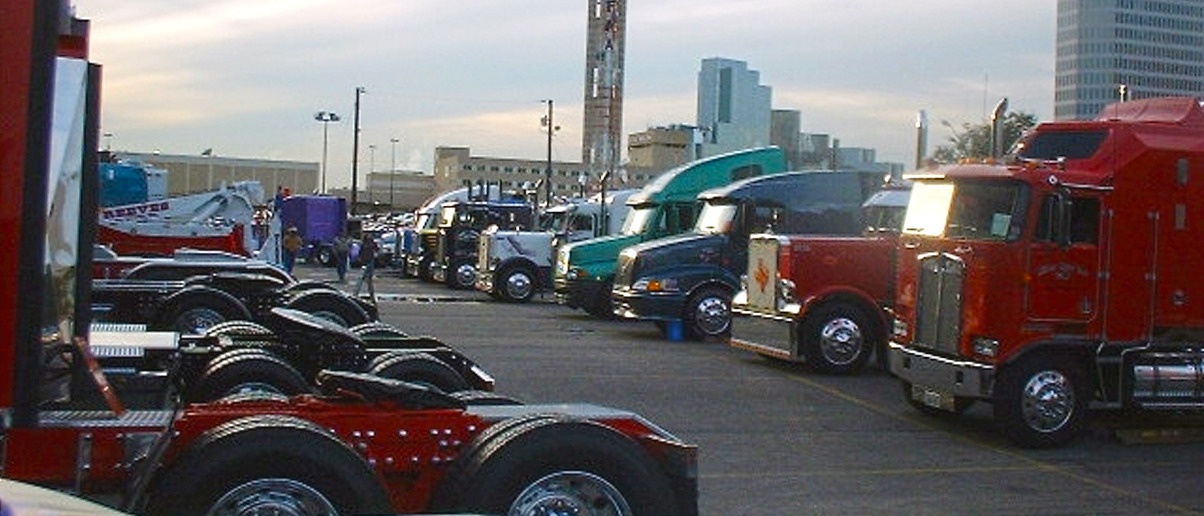
(Ted Gresham via Wikimedia Commons)
America is not running out of diesel. We are running out of cushion.
U.S. refineries are producing more than 5 million barrels a day of distillate fuel, mostly diesel. Americans use roughly 3.6 to 3.8 million barrels a day.
Recently, we have been exporting more than 1.3 million barrels a day, and in one week in August, exports reached a record 1.88 million barrels.
Meanwhile, U.S. inventories sit at about 13 percent, or roughly 16 million barrels, below the five-year seasonal average, and refineries are running at about 97 percent of capacity. There is little room to simply make more. U.S. inventories haven’t been this low in September in decades.
Inventories are America’s shock absorber. They protect us when a refinery goes down, a hurricane hits the Gulf Coast, or a pipeline fails. Heading into harvest and heating season, that cushion is thin.
War explains much of it. Drone strikes have damaged Middle East refineries and disrupted shipping through the Strait of Hormuz. Ukrainian strikes idled Russian refineries, and Russia banned diesel exports in July. China curtailed its own exports.
Buyers turned to American refiners. U.S. distillate exports ran 30 percent above their five-year average this spring. That helped supply the world. It also meant a foreign-caused shock showed up at the American pump.
A complete export ban is the wrong answer.
Refineries make gasoline, diesel, and jet fuel from the same barrel of crude. S&P Global has estimated that a full ban could force refiners to cut crude runs by about 2 million barrels a day. That means less gasoline and jet fuel, too. We would solve one problem by creating others.
A narrower approach fits the arithmetic: temporarily keep a modest share of production at home to rebuild the winter cushion.
The numbers are not enormous. Keeping 200,000 barrels a day here adds about 6 million barrels in a month. At 300,000, it is 9 million. At 400,000, it is 12 million. That is roughly 15 to 30 percent of recent exports — a refill and not an embargo. It is also a fraction of the volume a full ban would trap, so it is far less likely to push storage toward overflow.
Diesel demand barely moves when prices rise. Trucks still deliver groceries and farmers still harvest. Extra barrels would show up as inventory builds, and markets price the risk of tomorrow’s shortage, not just today’s supply.
One independent analysis of weekly EIA data from 2006 through 2025 found that each 1 percent increase in days of supply was associated with roughly a 1.7 percent narrower refining margin. That is an association, not a guarantee, and it does not mean pump prices would fall 15 percent. But the refining margin is a large part of today’s price, and a visible rebuild could take a meaningful bite out of it.
A quota is not free. Refiners would earn less on barrels they cannot sell abroad, and some might trim output. Free-market conservatives should be wary of any export limit. That is why this one must be small, temporary, and reviewed.
Here is what that looks like:
Cap the diversion at 200,000 to 400,000 barrels a day and review it after 30 to 45 days. Set an inventory target based on normal seasonal supplies. Move barrels to the East Coast, where tanks are tightest. A Gulf Coast glut that never reaches New England is a press release, not a policy.
Keep most exports flowing, especially to nearby customers. End the measure when inventories recover or global supplies normalize.
That is not isolationism, and it is not a permanent ban. Refineries cannot make 10 percent more diesel; they are already near their limits. The lever that exists is the export stream.
Diesel will not return to last year’s prices on a quota. Repaired refineries and reopened shipping lanes will do that. But heading into winter with stocks unusually low, rebuilding our fuel cushion should come before sending every available barrel to the highest foreign bidder.
Keep most of the exports flowing. But bank enough diesel for America first.
Frank Lasee is a senior policy analyst for the Committee For A Constructive Tomorrow (CFACT), a Washington, D.C.-based nonprofit that champions free markets, property rights, and innovation as the keys to protecting both people and the environment.
The views and opinions expressed in this commentary are those of the author and do not reflect the official position of the Daily Caller News Foundation.
All content created by the Daily Caller News Foundation, an independent and nonpartisan newswire service, is available without charge to any legitimate news publisher that can provide a large audience. All republished articles must include our logo, our reporter’s byline and their DCNF affiliation. For any questions about our guidelines or partnering with us, please contact [email protected].