

National Defense
Ukrainian Officials Say They Were Never Informed Of Trump’s ‘Energy Ceasefire’
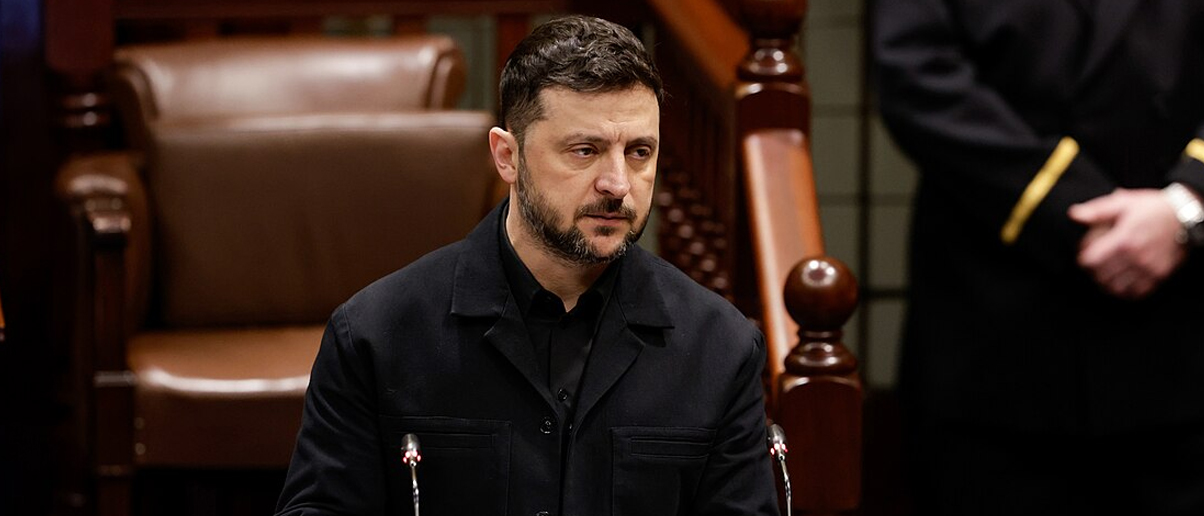
(Houses of the Oireachtas, CC via Wikimedia Commons)
President Donald Trump’s “energy ceasefire” was never agreed to by either side of the war in Ukraine, as Russia continues to pound Ukrainian energy infrastructure.
The truth appears that there was never an official ceasefire as Ukrainian representatives confirmed to the Daily Caller News Foundation that they were not informed of a ceasefire before Trump decided to blast the announcement on Truth Social on Sunday. Although discussions were “ongoing,” according to Russian officials, no deal was ever actually reached.
“Ukraine was not informed beforehand about [the] energy ceasefire announced by President Trump, however our negotiation team came to Miami to discuss it as a possible step forward,” Halyna Yusypiuk, a spokeswoman for the Ukrainian Embassy in Washington told the DCNF.
The White House and the Russian Embassy in Washington did not immediately respond to a request for comment.
At least 15 different targets were hit across Ukraine, the Associated Press reported on Monday. These strikes included a jet-powered Geran drone strike on a power plant in Kharkiv, Ukrainian President Volodymyr Zelenskyy said during a speech at the Warsaw Security Forum on Monday, according to Zelenskyy’s official presidential website.
The energy infrastructure in Russia and Ukraine is significantly different, as Russia is more reliant on oil and natural gas while Ukraine is more reliant on electricity, Zelenskyy explained during a Monday interview on Fox News.
Kyiv did agree to the possibility of a ceasefire, Zelenskyy said during the Fox News interview, even though they were not informed of the negotiations until after Trump made the announcement on Truth Social.
“Kyiv is not currently proposing a long-term settlement, but rather a ceasefire in an area that is its Achilles’ heel — the energy sector,” Russian presidential press secretary Dmitry Peskov told reporters on Oct. 8, the Kyiv Independent reported.
While an official deal was never reached, Peskov did say that contacts between Eastern and Western negotiators were ongoing, and that the Russian Federation would provide updates as soon as they become available, Interfax, the Soviet Union’s first non-state news agency, reported on Monday.
“Russian officials have stated that Russia wants some concessions on sanctions before agreeing to an energy ceasefire,” retired Marine Col. and Senior Advisor at the Center for Strategic and International Studies, Mark Cancian, told the DCNF. “However, discussions are ongoing.”
This non-existent ceasefire was not about helping Russians or Ukrainians — but instead about defending the Republican Party in domestic politics ahead of the November midterm elections, one expert said.
“This deal is not about peace; it is about getting diesel prices down to improve the Republicans’ election chances,” Barry Posen, Ford International Professor of Political Science at the Massachusetts Institute of Technology, told the DCNF.
The “energy ceasefire” may just be another example of Trump prematurely announcing success before any real progress has been made on the ground.
“What is more likely is that Trump’s emissaries broached the idea; the Russians nodded and smiled; the negotiators then reported to the President that there was a chance; then the President did what he always does, announce success, because he likes announcing successes and because he thinks that he is so strong that if he announces an agreement, the parties will be afraid to deny it,” Posen told the DCNF.
As of time of publication, the Russo-Ukrainian War has lasted 4 years, 7 months and 18 days, beginning on February 24, 2022. This conflict is not ending soon, experts told the DCNF.
“Ending this war is hard,” Posen told the DCNF. “Carrots and sticks are required simultaneously with both sides. Plus a lot of hard, tedious diplomatic engagement. Neither Trump nor his emissaries have been up to it so far.”
“Russia has long believed that it was winning the war and has, therefore, been unwilling to negotiate seriously,” Cancian told the DCNF. “Russia has agreed to short energy ceasefires in the past but restarted attacks as soon as the period ended and attacked other targets during the energy ceasefire.”
The reality on the ground in Russia and Ukraine is that neither side wants to end this war. The Russians believe they are winning, while the Ukrainians refuse to relinquish the territory they have lost to the Russians.
“[Russian President Vladimir] Putin is willing to negotiate with the Trump administration to get what he wants, which is the best deal possible,” Posen told the DCNF. “He does not want to insult Trump gratuitously but he won’t give up strategies that he has convinced himself might work. If Russia is still targeting energy infrastructure it is because he and his generals think it does them some good. If he does it even though stopping it might protect his own infrastructure, it is because he thinks he gains more by fighting than stopping. He thinks he can do better in an infrastructure war than Ukraine can, despite Ukraine’s reported successes.”
All content created by the Daily Caller News Foundation, an independent and nonpartisan newswire service, is available without charge to any legitimate news publisher that can provide a large audience. All republished articles must include our logo, our reporter’s byline and their DCNF affiliation. For any questions about our guidelines or partnering with us, please contact [email protected].