

Commentary: Big Tent Ideas
Huawei And Europe’s ‘Tech Sovereignty’ Double Standard
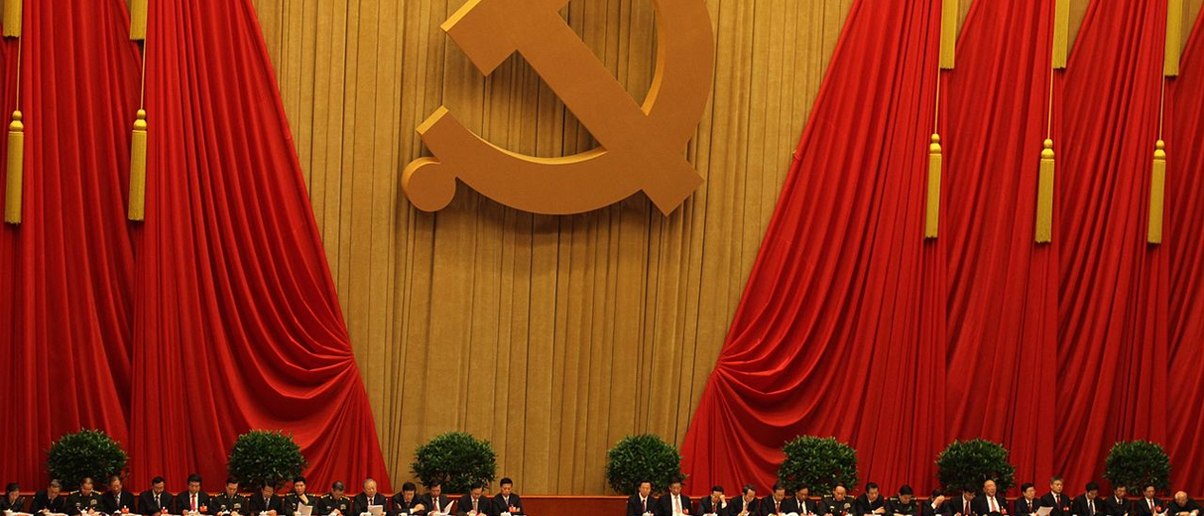
[Wikimedia Commons/Public/Donghae Fang]
Nearly eight years after U.S. prosecutors first brought criminal charges against Huawei, the Chinese telecommunications giant is finally on trial.
The list of crimes the CCP-linked company is accused of committing is extensive. Prosecutors say Huawei stole American technology, conspired to steal trade secrets from U.S. companies, committed bank and wire fraud, concealed business dealings in North Korea despite sanctions there, and helped Iran conduct domestic surveillance during the 2009 protests in Tehran.
Huawei, unsurprisingly, denies it all. The company insists that the government’s “overarching narrative is demonstrably false” and says the case is really an American attempt to undermine its competitiveness — even though its own chief financial officer admitted making false statements about Huawei’s relationship with the front company at the center of the Iran allegations. Huawei will now have to answer the charges before an American jury.
For years, the United States has warned allies and partners about the dangers of working with Huawei, yet America’s NATO allies still haven’t gotten the message. In 2019, then-Attorney General Bill Barr declared that Huawei “cannot be trusted.” The following year, U.S. officials disclosed intelligence showing that Huawei could covertly access mobile networks worldwide, a capability it had possessed for more than a decade. Just this May, the U.S. Ambassador to Spain raised concerns about Huawei equipment in the country’s critical sectors.
Huawei is still wired into telecommunications networks across Europe, where there is little urgency to solve the problem. And even as Europe drags its feet on removing Huawei, it aggressively punishes American technology companies, even when it harms their own security interests.
Europe claims its campaign against American tech companies will increase European competitiveness globally. Yet its technological infrastructure remains littered with Chinese equipment that can be used to steal the intellectual property on which European competitiveness depends and disrupt security-sensitive communications.
The European Commission itself identified Huawei as a high-risk supplier in 2023. Yet Huawei still accounts for between a third and 40% of Europe’s mobile network infrastructure market.
Germany, for instance, gave its carriers a lenient five-plus years, until the end of 2029, to replace critical Huawei and ZTE systems across key parts of their 5G networks, and is now leading opposition to the European Commission’s attempt to make the phaseout mandatory across the bloc. Spain, where a state-backed contractor is under investigation for leaking American military technology to China, has yet to impose a general Huawei ban, and is also resisting the Commission’s proposal. Spain’s government reportedly told network operators they will be allowed to continue using Huawei equipment and awarded Huawei a €12.3 million wiretap-storage contract last year, while Catalonia reactivated a €127 million contract this year for a Huawei-equipped fiber network connecting more than 5,400 police, judicial, health, education and emergency sites.
Europe reserves no such leniency for American technology companies. Unable to produce a Google, Amazon, Apple, Microsoft, Meta or X of its own, the bloc has spent years using regulatory power to hobble the American originals it cannot compete with and using penalties on American tech companies as a shadow revenue source.
Through the Digital Markets Act, the Digital Services Act and a growing web of antitrust rules, it has imposed billions of dollars in fines, kept these companies under a constant stream of investigations and claimed the authority to dictate how their products operate, which services they may offer and even what content their users may see.
Now, Europe’s newly unveiled “Tech Sovereignty Package” proposes criteria that could shut Google, Amazon and Microsoft out of European systems that have long depended on their trusted and technologically superior cloud and AI services.
The campaign has become so aggressive that it is beginning to test the patience of Europe’s own defense officials. They recently warned the proposed rules could leave the continent with inferior technology, expose it to greater cyber risks, and make it harder to coordinate with NATO allies. “We’re still buying lots of American kit, frankly because we’d be less safe if we didn’t,” one official told The Financial Times.
It is at least some comfort that Europe’s NATO officials can still tell friend from foe.
Recognizing the distinction between America’s free-market technology leaders and a Chinese telecommunications giant with documented ties to the Communist Party and military apparatus should not be this difficult. Yet American companies that bolster Europe’s economy and defense continue to be punished and threatened with exclusion while an actual EU-designated high-risk supplier that undermines NATO security remains inside critical networks, continues winning government contracts and benefits from member states resisting a phaseout.
The United States fortunately sees the Huawei threat clearly, and is prosecuting the threat in court. Europe, on the other hand, punishes technology supplied by its American ally while tolerating technology controlled by the Chinese Communist Party.
Until Europe solves this paradox, its claims of “tech sovereignty” will ring hollow.
Michael Lucci is Founder and CEO of State Armor.
The views and opinions expressed in this commentary are those of the author and do not reflect the official position of the Daily Caller News Foundation.
All content created by the Daily Caller News Foundation, an independent and nonpartisan newswire service, is available without charge to any legitimate news publisher that can provide a large audience. All republished articles must include our logo, our reporter’s byline and their DCNF affiliation. For any questions about our guidelines or partnering with us, please contact [email protected].