

Politics
AI Co-Founder Privately Pressed Vatican To Soften Stance Against Machine Consciousness
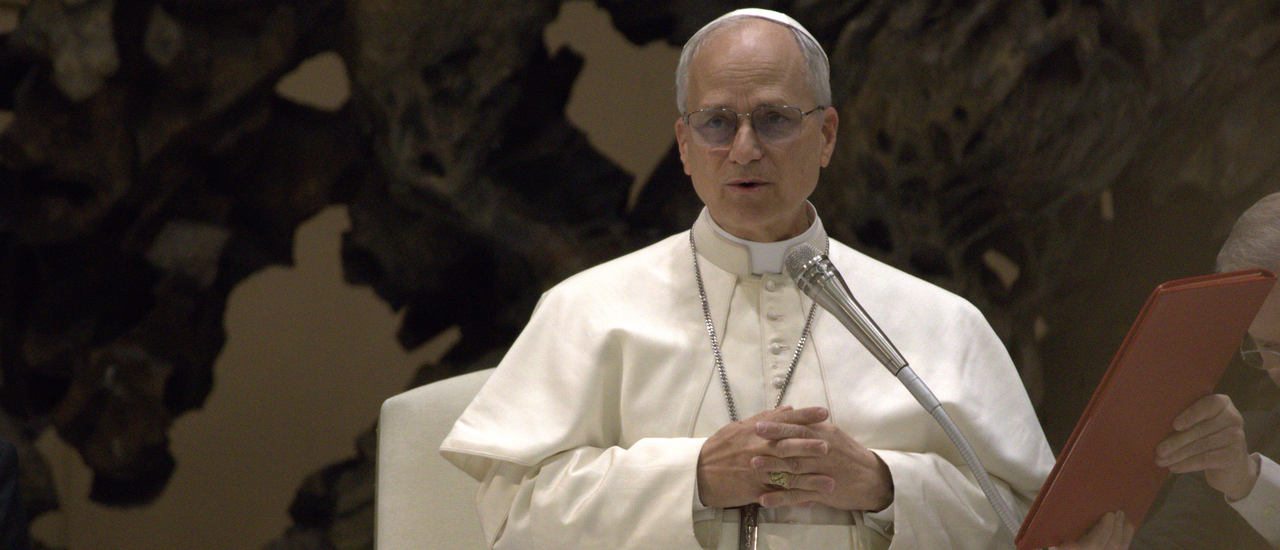
Edgar Beltrán, The Pillar, CC BY-SA 4.0 <https://creativecommons.org/licenses/by-sa/4.0>, via Wikimedia Commons
An executive at an artificial intelligence giant reportedly pressed the Catholic Church to change its steadfast position that AI models are not capable of human-like consciousness.
Anthropic co-founder Chris Olah proposed pulling out of Pope Leo XIV’s May 25 encyclical Magnifica Humanitas after seeing an advance copy that rejected AI consciousness, and then privately urged Vatican advisers to take model consciousness seriously, the New York Times reported. Olah’s behind-the-scenes comments put the frontier lab at odds with the Catholic Church over whether machine intelligence can hold moral status.
“[W]e don’t know if A.I. models are conscious. I don’t know. I’m genuinely uncertain,” Olah told the NYT. “The thing that I care about is that we get to the right answer, whatever it is.”
Olah wanted Vatican advisors to leave the door open as to whether machines could be conscious, the NYT reported. However, he still spoke at the event on May 25.
Anthropic has quietly asked religious leaders for several months whether Claude should be treated as a being with moral worth, according to the NYT.
Neither Anthropic nor a spokesperson for Ambassador Brian Burch immediately responded to the Daily Caller News Foundation’s request for comment.
“So-called artificial intelligences do not undergo experiences, do not possess a body, do not feel joy or pain, do not mature through relationships and do not know from within what love, work, friendship or responsibility mean,” the pope said on paragraph 99 of the Magnifica Humanitas. “Nor do they have a moral conscience, since they do not judge good and evil, grasp the ultimate meaning of situations, or bear responsibility for consequences.”
He further warned about “artificial moral agents” that cannot determine right from wrong, so a machine cannot be left to make “lethal or otherwise irreversible decisions,” in paragraph 198 of the encyclical.
“Every frontier AI lab — including Anthropic — operates inside a set of incentives and constraints that can sometimes conflict with doing the right thing,” Olah said at the May 25 Vatican launch of Maginifica Huanitas.
“There’s no scientific consensus on whether current or future AI systems could be conscious, or could have experiences that deserve consideration,” Anthropic said in an April 2025 research post.
Anthropic told Claude to weigh its own well-being in its 84-page “constitution” of rules to train and steer the model.
All content created by the Daily Caller News Foundation, an independent and nonpartisan newswire service, is available without charge to any legitimate news publisher that can provide a large audience. All republished articles must include our logo, our reporter’s byline and their DCNF affiliation. For any questions about our guidelines or partnering with us, please contact [email protected].