

Legal/Law/Criminal Justice and Reform
Supreme Court Justice Samuel Alito Recuses Himself From Landmark Climate Case
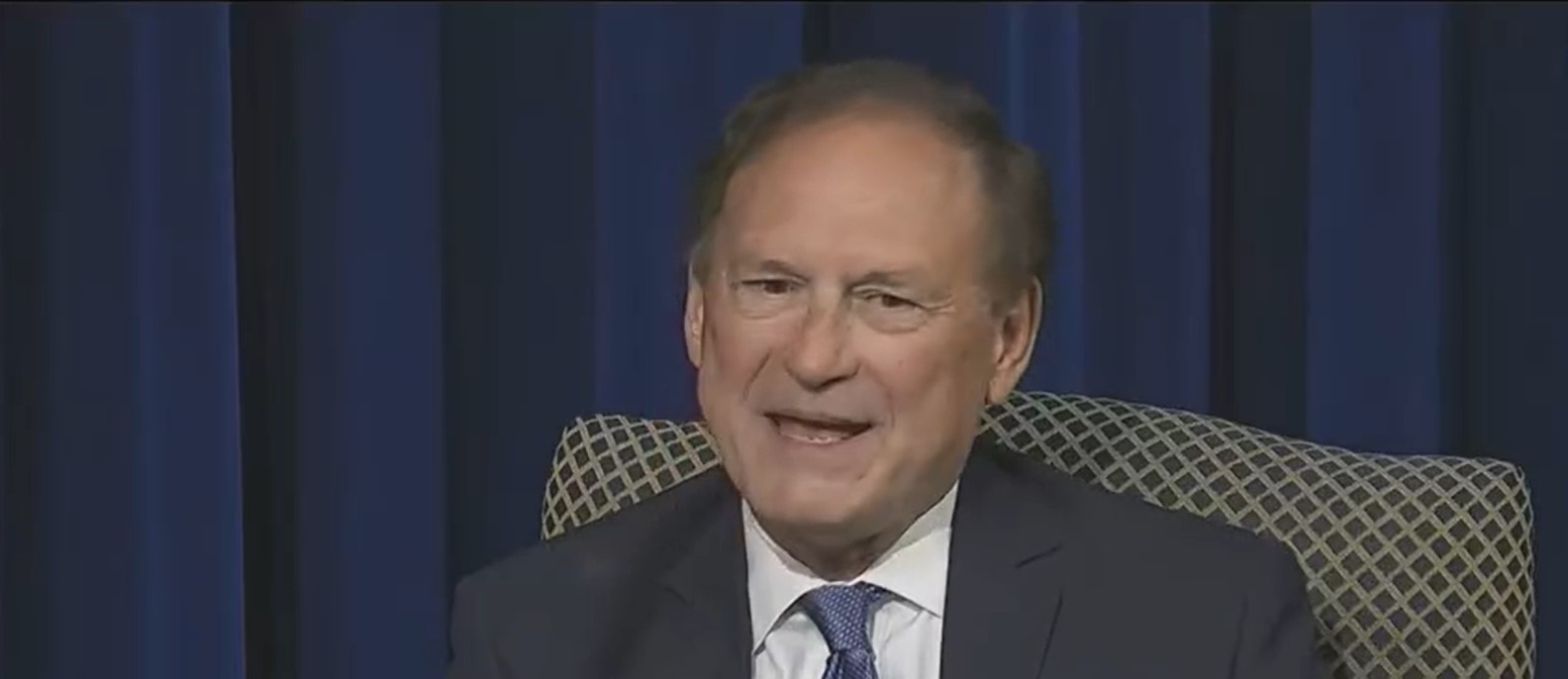
Screen Capture/CSPAN
Supreme Court Associate Justice Samuel Alito recused himself from a landmark climate case Monday one week before oral arguments are set to begin.
Supreme Court Clerk Scott Harris informed attorneys Monday that Alito — an appointee of former President George W. Bush — “has determined that he will not continue to participate in this case,” according to a one-sentence letter sent to the parties in Suncor Energy v. County Commissioners of Boulder County. The brief letter simply stated his decision to recuse himself and did not explicitly provide an explanation.
“I am writing to inform the parties that Justice Alito has determined that he will not continue to participate in this case,” the entire text of Harris’ letter states.
Alito owns stock in several oil and gas companies, though not either of the two companies involved in the case, Reuters reported. He initially resisted calls from watchdog and environmental groups to recuse himself — but had previously stepped aside when the litigation reached the Supreme Court at an earlier stage in 2023.
The conservative jurist held thousands of dollars of stock in each of Phillips 66, OGE Energy Corp, Black Hills Corp, BHP Group, Fortis Inc., ConocoPhillips, Woodside Energy Group, AES Corp, Forbes reported citing 2025 financial disclosures.
The Court is scheduled to hear oral arguments Oct. 5 in the closely watched dispute between Boulder, Colorado, and energy giants Suncor Energy and ExxonMobil, according to the court’s October argument calendar. The case will be the first argued before the justices when the court begins its 2026 term.
The case has also drawn roughly 20 amicus curiae briefs, with environmental groups and Democratic-led governments backing Boulder. On the other hand, free speech advocates have raised concerns that imposing liability partly over the companies’ public statements and political advocacy could implicate the First Amendment.
Boulder County and the City of Boulder sued Suncor and ExxonMobil in 2018, alleging the companies’ production, promotion and sale of fossil fuels contributed to climate change and caused local harms, according to the Colorado Supreme Court. The governments brought claims including public and private nuisance, trespass, unjust enrichment and civil conspiracy under the state’s law.
The Supreme Court Public Information Office did not immediately respond to the Daily Caller News Foundation’s request for comment.
The Colorado Supreme Court allowed Boulder’s lawsuit against Suncor Energy and ExxonMobil to move forward in 2025, setting up a Supreme Court battle over whether states can use their own laws to seek damages for alleged harms tied to emissions produced around the world.
Boulder County and the City of Boulder sued the energy companies in 2018, seeking damages under Colorado tort law for alleged climate-related harms. Suncor and ExxonMobil argue claims involving interstate and international greenhouse gas emissions are governed by federal law and cannot be imposed through an individual state’s tort system.
The stakes extend far beyond Colorado. The case could affect similar climate lawsuits across the country, while climate litigation advocates have discussed using consumer protection and state tort laws to continue pursuing fossil fuel companies even if the Supreme Court limits such cases.
Alito’s recusal follows growing scrutiny over the climate litigation network’s connections to the judiciary. In Hawaii, a watchdog group has sought records concerning interactions between climate advocates, academics and judges through judicial education programs. The state’s former Supreme Court Chief Justice Mark Recktenwald previously disclosed participating in environmental education programs connected to the Environmental Law Institute, which co-founded the Climate Judiciary Project.
All content created by the Daily Caller News Foundation, an independent and nonpartisan newswire service, is available without charge to any legitimate news publisher that can provide a large audience. All republished articles must include our logo, our reporter’s byline and their DCNF affiliation. For any questions about our guidelines or partnering with us, please contact [email protected].