

Energy
Trump Admin Kills Biden’s Fuel Economy Rules, Says New Cars Will Cost $1,300 Less
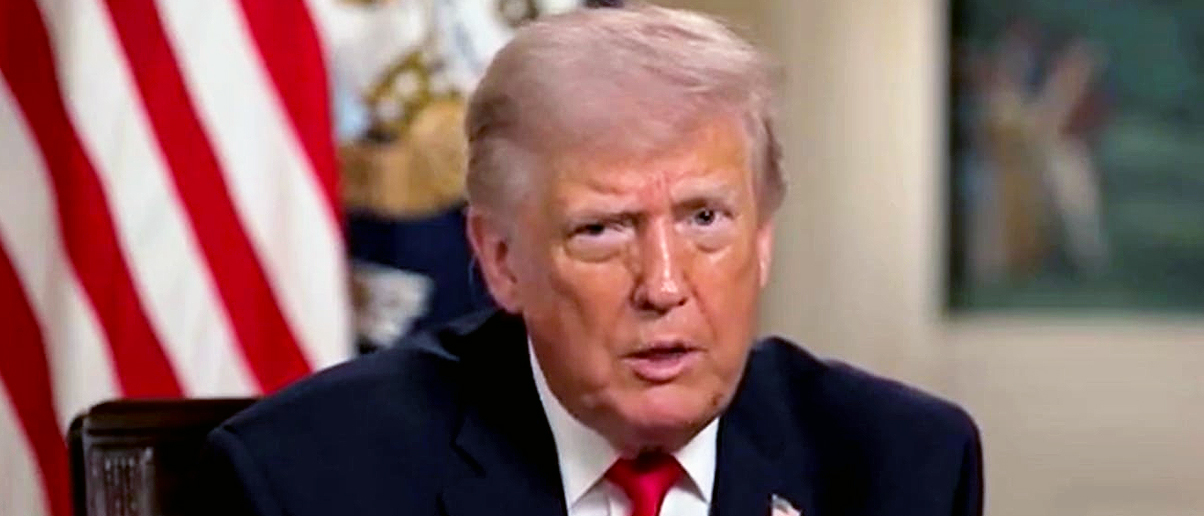
Screenshot/Rumble/Fox Business
The Trump administration finalized new fuel economy standards Monday that it says end a Biden-era push to steer automakers toward electric vehicles.
Transportation Secretary Sean Duffy announced the rule, which his department projects will cut the average price of a new vehicle by $1,300 and save Americans $138 billion over five years.
“Thanks to President [Donald] Trump’s leadership, we have finally ended the illegal mandate that forced automakers to produce more expensive electric vehicles that American families didn’t want,” Duffy said in his announcement.
Jason Isaac, CEO of the American Energy Institute, told the Daily Caller News Foundation that the final rule is “a great step in the right direction to providing affordable vehicles for consumers.”
A March 2025 American Energy Institute report co-authored by Isaac estimated that the subsidies and other hidden costs tied to each model year 2023 electric vehicle total $94,121 to $152,695 over 10 years, not counting the price of the vehicle.
The report also calculated that Ford would have had to raise the price of each gas or diesel vehicle it sold by $1,704 to cover losses on its 2023 electric vehicle line.
“I think they’re being a little bit conservative with $1,300,” Isaac added. “I think what consumers are going to see is they’re going to see more hybrids, and that’s really what the market was demanding before the mandates went into effect.”
He noted that Tesla alone reported more than $2 billion in revenue from selling credits to other automakers in 2024.
“The credits were cheaper than the penalties, so they just paid Tesla or Rivian or other car companies that were only making electric vehicles for those credits,” Isaac explained to the DCNF. “That’s really how the EV mandate was being forced on the rest of us.”
The Department of Transportation did not immediately respond to the DCNF’s request for comment.
Steve Milloy, a senior fellow at the Energy and Environment Legal Institute and a former member of Trump’s Environmental Protection Agency transition team, told the DCNF the rule is “a good move” but that there is “a lot more to do.”
Congress already eliminated the penalties automakers faced for missing the standards, and lawmakers should now repeal the 1975 law that created them, Milloy said.
“We just don’t need fuel economy standards because they just make cars more expensive. They’re not doing anything for the environment,” he added.
“The only complaint or criticism I have is that it is taking them an awful long time to do this stuff,” Milloy noted, adding that the rule will be challenged in court.
“Pro-consumer wins” like the rule “can only be permanent with Republican-appointed judges and a Republican-controlled Congress,” Milloy said in a statement shared with the DCNF.
Trump announced Saturday on Truth Social that he had approved the new standards.
“These new Standards will take the waste out of building cars in America. That means LOWER PRICES, saving families thousands on a new, beautiful, and safe car,” Trump wrote.
John Bozzella, president and CEO of the Alliance for Automotive Innovation, which represents automakers including Ford, General Motors and Stellantis, said Monday that the National Highway Traffic Safety Administration (NHTSA) “made the right call to better align fuel economy standards with the law and current market conditions.”
“The standards finalized under the previous administration effectively required a switchover to electric vehicles that was out of step with market realities and customer demand,” Bozzella added.
Stuart Turley, president and CEO of Sandstone Group, told the DCNF the department’s $138 billion estimate is “only a fraction of what could be saved” if federal requirements to blend ethanol into gasoline were phased out.
The rule covers passenger cars and light trucks for model years 2022 through 2031, according to the department.
The standards would raise the fleet average to 34.9 miles per gallon by model year 2031, up from 30.1 in 2024, according to NHTSA estimates in the announcement.
NHTSA will also end fuel economy credit trading between automakers starting in model year 2028, a practice the department said “artificially propped up the EV industry at the expense of traditional automakers.”
The Natural Resources Defense Council (NRDC), an environmental group, argued Monday that the new target falls below the fuel economy automakers have already achieved on average and will leave drivers spending more on gasoline.
NHTSA projected in 2024 that the Biden-era standards would lift the fleet average to 50.4 miles per gallon, the group noted.
“It’s still an increase from the model year 2024, so I don’t know how they come up with that math,” the American Energy Institute CEO said of the NRDC’s argument. “They’re just trying to spread some misinformation and fear.”
“This notion that California or environmental groups get to decide what we drive is just crazy,” Milloy, the Energy and Environment Legal Institute fellow, told the DCNF.
The rule also changes how vehicles are classified starting in model year 2030, according to the department.
Automakers had been adding equipment to small crossovers so they would count as light trucks and face looser requirements, the announcement said.
The department expects the reclassification to reverse the current split of roughly 70 percent light trucks and 30 percent passenger vehicles, leaving about 70 percent of the fleet classified as passenger cars and the remaining 30 as light trucks.
All content created by the Daily Caller News Foundation, an independent and nonpartisan newswire service, is available without charge to any legitimate news publisher that can provide a large audience. All republished articles must include our logo, our reporter’s byline and their DCNF affiliation. For any questions about our guidelines or partnering with us, please contact [email protected].