

Politics
GOP Chairman Behind House Permitting Bill Warns ‘We’re Running Out Of Time’ As Senate Vote Likely Slips To November
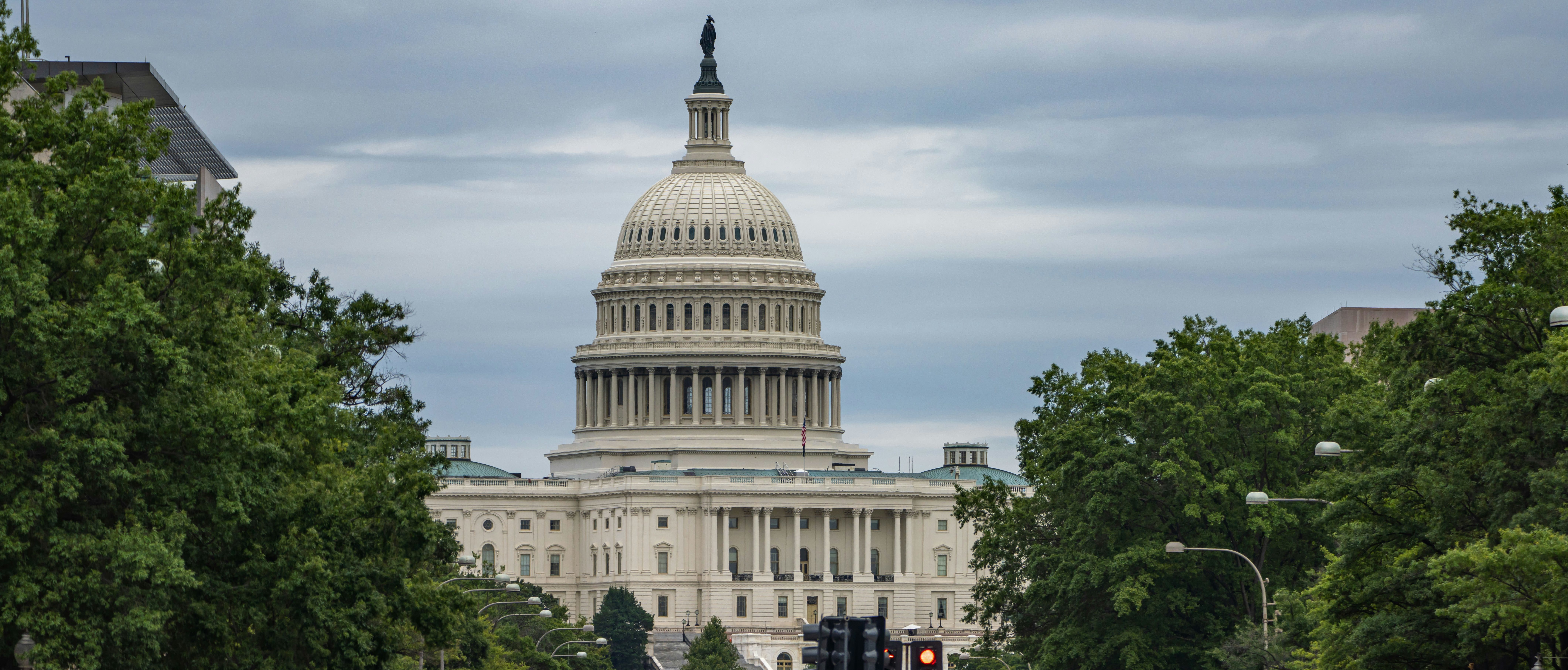
U.S. Capitol (Adam Michael Szuscik/Unsplash)
The House Republican behind Congress’ permitting overhaul warned lawmakers are running out of time as Senate negotiators signaled a vote will likely wait until November.
Republican Arkansas Rep. Bruce Westerman, chairman of the House Natural Resources Committee, said “we’re running out of time” to pass permitting reform on the Republican Study Committee’s “Right to the Point” podcast, according to a transcript provided to the Daily Caller News Foundation on Thursday. Democratic Rhode Island Sen. Sheldon Whitehouse — a lead upper chamber negotiator — said that day that a vote on the Senate’s package will likely wait until the lame-duck session after the November midterm elections.
“I commend [Republican West Virginia Sen. Shelley Moore] Capito. She’s working really hard,” Westerman said of the chairwoman of the Senate Environment and Public Works Committee. “She’s working with Sen. Whitehouse on a bipartisan version in the Senate.”
“All these committees are working with bipartisan solutions that hopefully will get put in a good permitting bill, and hopefully it will happen sooner than later because we’re running out of time,” Westerman added.
Whitehouse told reporters that negotiators are “over the hump on the deal-break issues” and that text “should be finalized within a matter of days, maybe even hours,” Roll Call reported Thursday.
Capito told WV MetroNews that “we have a deal, we have a negotiated bill,” but said Democrats had “walked away” and wanted to wait for the lame-duck session, which she called “so unpredictable in terms of what you can really accomplish.”
The House passed Westerman’s Standardizing Permitting and Expediting Economic Development (SPEED) Act 221-196 on Dec. 18, 2025, five months after he introduced it with Democratic Maine Rep. Jared Golden. The bill would set deadlines for reviews under the National Environmental Policy Act, a 1970 law that requires federal agencies to study the environmental effects of major projects, and would limit lawsuits against approved projects, according to the Bipartisan Policy Center.
The bill has 14 cosponsors, split evenly between Democrats and Republicans, and has sat with the Senate Environment and Public Works Committee since Dec. 18, 2025, according to Congress.gov. It would need 60 votes to overcome a filibuster in the Senate.
“We want to go through the process, but we want to make the process happen more quickly. And we want to take away the ability for activists to shut down projects,” Westerman said on the podcast.
He noted that under current law, opponents have years to challenge a project in court after it wins federal approval.
“Right now in the law, you’ve got six years where you can file a suit and a judge can issue an injunction and stop the project,” Westerman said.
Westerman pointed to the Keystone XL pipeline, whose federal permit former President Joe Biden revoked on his first day in office in January 2021.
“They spent over $5 billion, maybe closer to $10 billion. Never got a penny out of it, never pumped a drop of oil through it,” he said.
Republican Minnesota Rep. Pete Stauber, a cosponsor of the bill who hosted the episode, said the pipeline was stopped “for purely political reasons.”
Westerman said the federal environmental review process takes four to four and a half years on average, while Stauber said opening a new mine in the U.S. takes an average of 29 years.
The chairman also warned that the U.S. depends on China for up to 90% of processed critical minerals, which are used in batteries and defense equipment.
“If you look back at 1995, we produce three times more copper than China,” Westerman said. “They produce 11 times more copper than we do. We have two copper smelters and they have over 60.”
Westerman said some of the bill’s deadlines came from Democratic lawmakers and that renewable energy and fossil fuel projects would go through the same permitting process.
“You don’t get the heavy hand of one administration versus a heavy hand of another administration, we call that permitting ping pong,” he said.
He also tied the bill to household costs, arguing that relying on foreign suppliers hands other countries control over prices.
“Think about when we’re not making this stuff in America anymore, and a foreign country determines what the prices are going to be,” Westerman said.
Westerman closed the episode by arguing that “the regulatory structure in our country negatively affects more Americans than any other policy that we work on.”
Senate Republicans plan to take up Republican Ohio Sen. Jon Husted’s Ratepayer Protection Act, which aims to keep data center power costs off household electric bills, Punchbowl News reported. Capito said much of that bill is already in the permitting package, according to WV MetroNews.
All content created by the Daily Caller News Foundation, an independent and nonpartisan newswire service, is available without charge to any legitimate news publisher that can provide a large audience. All republished articles must include our logo, our reporter’s byline and their DCNF affiliation. For any questions about our guidelines or partnering with us, please contact [email protected].