

Foreign Affairs
South Korea Picks Texas Gas Plant To Power AI Data Centers As First Project In $350,000,000,000 Investment Deal
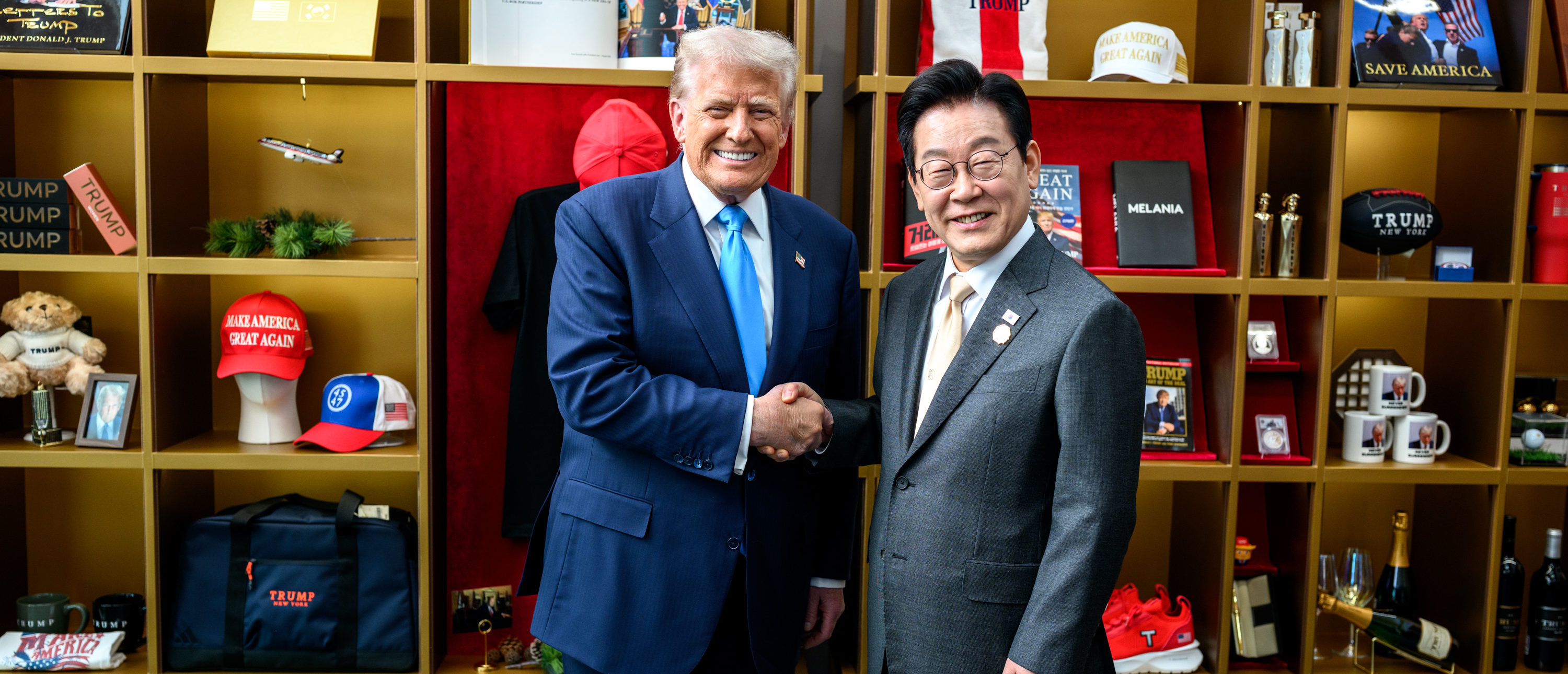
President Donald Trump and President Lee Jae Myung, Official White House Photo by Daniel Torok
South Korea has picked a Texas natural gas plant for artificial intelligence data centers as the first project under its $350 billion U.S. investment pledge.
The 6.3-gigawatt plant planned for Encinal, Texas, would serve AI data centers and semiconductor factories and is worth more than $20 billion, Reuters reported.
South Korean Industry Minister Kim Jung-kwan told Reuters after briefing lawmakers Tuesday that a U.S. government investment committee must still sign off on the plans and that South Korea needs further talks with Commerce Secretary Howard Lutnick. President Donald Trump would announce the final plan, Reuters reported, citing the Yonhap news agency.
Trump had warned of higher tariffs after U.S. officials complained that South Korea was investing too slowly compared with partners such as Japan, according to the outlet. The $350 billion South Korean investment pledge is part of a November 2025 trade deal that set a 15% U.S. tariff on imports from the East Asian nation.
Stuart Turley, president and CEO of Sandstone Group, told the Daily Caller News Foundation the plant would give South Texas producers an outlet for gas from new wells. The amount of gas burned off at Eagle Ford wells or left without a route to market fell after 2024 as new pipelines were built, and the area is seeing new drilling and investment.
“This plant and investment from South Korea is a huge win for the US, Texas, and the local producers able to make money on the natural gas,” he said, adding that producers he works with in the Eagle Ford are “thrilled” because the plant would take gas from new wells that might otherwise be burned off.
“This kind of project is exactly why I tell people (counterintuitively) that data centers will bring electricity prices down, not raise them,” Christopher Johnson, president of the American Energy Leadership Institute, told the DCNF. “They are large, predictable demand loads that justify this kind of capital expenditure.”
“With this new power, we not only can power data centers, but the heavy industry we need to reshore manufacturing to the U.S.,” he added.
“The same reasons why it’s easy to build data centers in Texas are also why we can build immense amounts of power,” he noted.
“Data centers must pay for their own electric infrastructure, add power instead of only adding demand, reuse their own water, reduce the cost of electricity for Texans, not disrupt residential neighborhoods, and eliminate reliance on outdated taxpayer-funded incentives,” Andrew Mahaleris, press secretary for Republican Texas Gov. Greg Abbott, told the DCNF in a statement.
“TCEQ [Texas Commission on Environmental Quality] will issue no data center permits until ERCOT [Electric Reliability Council of Texas] completes its review,” Mahaleris added. “No other state agency will approve data centers until the Public Utility Commission, ERCOT, and the Water Development Board have the information they need to make informed decisions.”
“Greater demand does not automatically translate into higher household prices: the response of supply and infrastructure matters,” the American Gas Association (AGA) told the DCNF.
The group said the U.S. has more than 3,871 trillion cubic feet of technically recoverable natural gas, which it called more than 100 years of supply, citing the Potential Gas Committee.
The AGA pointed to Energy Information Administration projections that residential natural gas prices will fall about 12% nationwide in 2027 and about 25% in the region that includes Texas.
The Commerce Department, the White House and the Office of the U.S. Trade Representative did not immediately respond to the DCNF’s requests for comment.
South Korea would owe a “significant” payment by the end of September once the project is formally announced, lawmaker Bae Jun-young said, according to Reuters. The money could be sent within 45 days of a U.S. request, Reuters reported, citing Yonhap.
Yonhap also reported that South Korea would put up the full investment and split ownership of the plant equally with U.S. partners, according to Reuters.
The government expects the plant to earn back as much as $45 billion across 20 years, officials told the National Assembly, The Seoul Economic Daily reported. Opposition People Power Party lawmakers questioned who would buy the plant’s power over the long term, the outlet reported.
South Korea is also weighing up to eight large reactors to be built in the U.S. and a long-delayed liquefied natural gas project in Alaska, Reuters reported.
South Korea would gain voting rights at U.S. nuclear company Westinghouse with a stake of 5% to 10%, a range the two countries are discussing for the reactor project, Kim told lawmakers, UPI reported.
Kim also stressed that no investment would go forward if it pushed past the $200 billion limit. He gave no date for signing a memorandum of understanding to finalize the Texas project and said more talks with Lutnick were needed later Tuesday, the outlet reported.
A committee member said Trump would likely announce the agreement himself before the November midterm elections, according to the outlet.
All content created by the Daily Caller News Foundation, an independent and nonpartisan newswire service, is available without charge to any legitimate news publisher that can provide a large audience. All republished articles must include our logo, our reporter’s byline and their DCNF affiliation. For any questions about our guidelines or partnering with us, please contact [email protected].