

Energy
Secretary Chris Wright Tells Daily Caller Editor-In-Chief US Energy Policy Must Prioritize Cost, Reliability
X/Energy Secretary Chris Wright
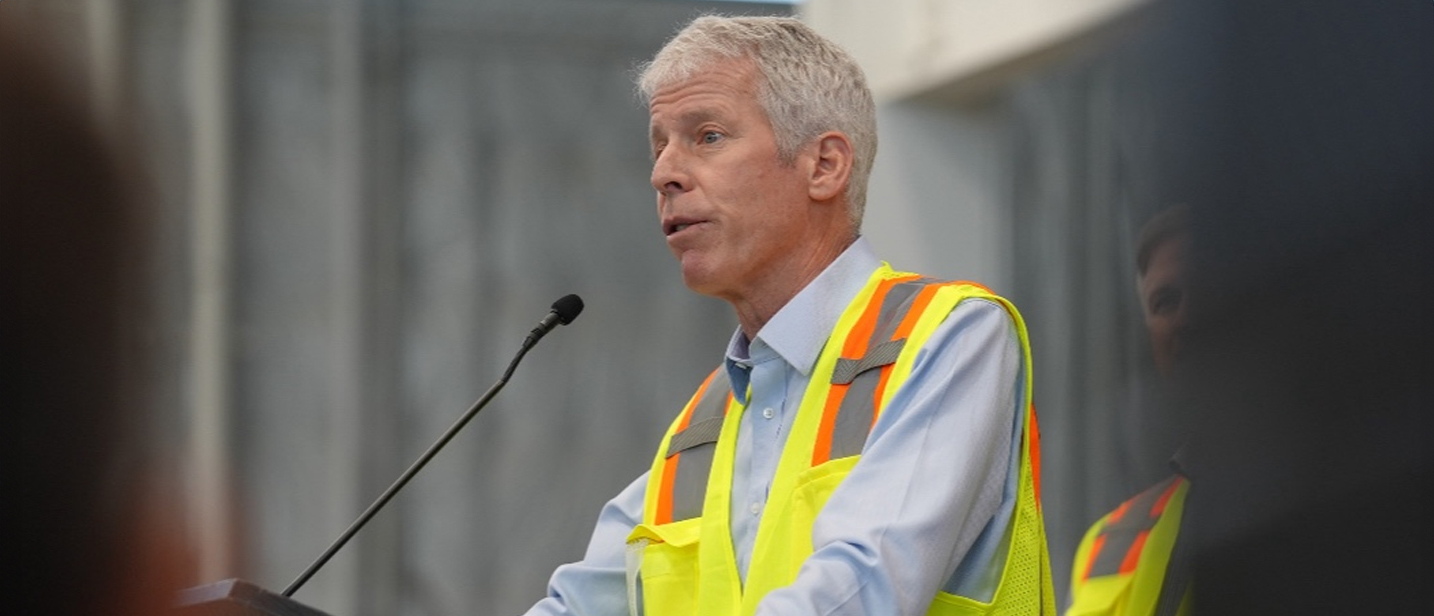
WASHINGTON — Energy Secretary Chris Wright said a power-rich U.S. should mean lower electricity costs and more reliable power for ordinary Americans as the Trump administration faces pressure over electricity affordability, grid reliability and fuel prices.
“We believe in more energy and less expensive energy,” Wright said Thursday during a fireside chat with Daily Caller editor-in-chief Amber Duke. The interview took place during “Daily Caller Live: The New Age of American Power,” an event co-hosted by the Daily Caller and the Daily Caller News Foundation and presented by ClearPath.
Wright pointed to coal as an example, arguing that states that have moved away from using it as fuel tend to have higher electricity prices. He noted that roughly 80% of states without coal generation have electricity prices above the national average.
Coal has been central to the American electricity system for more than a century, Wright said, pushing back against policies that have encouraged coal-fired power plants to retire. The secretary argued that energy policy should focus on the cost and reliability of different resources rather than treating some forms of energy as inherently “virtuous.”
WATCH:
Wright also addressed the administration’s efforts to rebuild the Strategic Petroleum Reserve (SPR), which was heavily drawn down under former President Joe Biden.
The biggest obstacle to substantially refilling the reserve is getting Congress to appropriate enough money to purchase crude oil, according to Wright.
The Department of Energy can also lend barrels from the reserve to companies during disruptions, with companies later returning crude to the government, he told Duke.
Wright argued that the current strain on petroleum markets is not simply a question of whether enough crude oil exists. American refiners are processing enormous volumes of crude, while additional Venezuelan oil is reaching the market, he said.
The more immediate problem is refining capacity, according to Wright. Wright said petroleum flows have fallen sharply since the outbreak of the conflict, describing a decline from roughly 20 million barrels to about 11 million barrels. He characterized the disruption as a fixable problem but said the bottleneck is increasingly occurring at refineries rather than oil wells.
Russia’s refining sector has also faced repeated attacks from Ukraine, which Wright said has proven effective at knocking Russian diesel production offline. The attacks have added pressure to global refined-product markets at a time when supplies are already strained.
China is another factor tightening the market, according to Wright. Chinese refiners have reduced refining activity while the country has begun importing additional petroleum products, increasing competition for available supplies.
“We can’t afford choking,” Wright said, arguing that restricting energy production or prematurely closing existing infrastructure leaves consumers more exposed when international supplies are disrupted.
Wright also criticized the Biden administration’s approach to fossil-fuel infrastructure, arguing that policies encouraging the retirement of coal plants and restrictions affecting oil production left the country with less flexibility when energy demand began climbing.
The consequences are increasingly visible in the electricity sector as utilities confront rising demand from data centers, manufacturing and electrification while older power plants continue to retire.
Wright singled out his home state of Colorado — which has a Democratic governor and Democratic-controlled legislature — as an example of what he sees as a misguided approach to energy policy, describing it as a “misinterpretation of climate change as virtuous” that prioritizes the perceived environmental virtue of an energy source rather than balancing affordability, reliability and environmental impacts.
The administration is also looking abroad as it attempts to expand American energy production and secure critical energy supplies. Wright said cooperation with other countries must be paired with ensuring foreign partners and companies operate under U.S. rules and respect the rule of law.
For Wright, those questions ultimately return to the same principle: expanding the amount of energy available to Americans while keeping costs down.
“There’s no virtuous form of energy,” the secretary emphasized. “There are trade-offs.”
All content created by the Daily Caller News Foundation, an independent and nonpartisan newswire service, is available without charge to any legitimate news publisher that can provide a large audience. All republished articles must include our logo, our reporter’s byline and their DCNF affiliation. For any questions about our guidelines or partnering with us, please contact [email protected].