

Technology
Is Michigan Paving The Way For Another Mass Surveillance Tool?
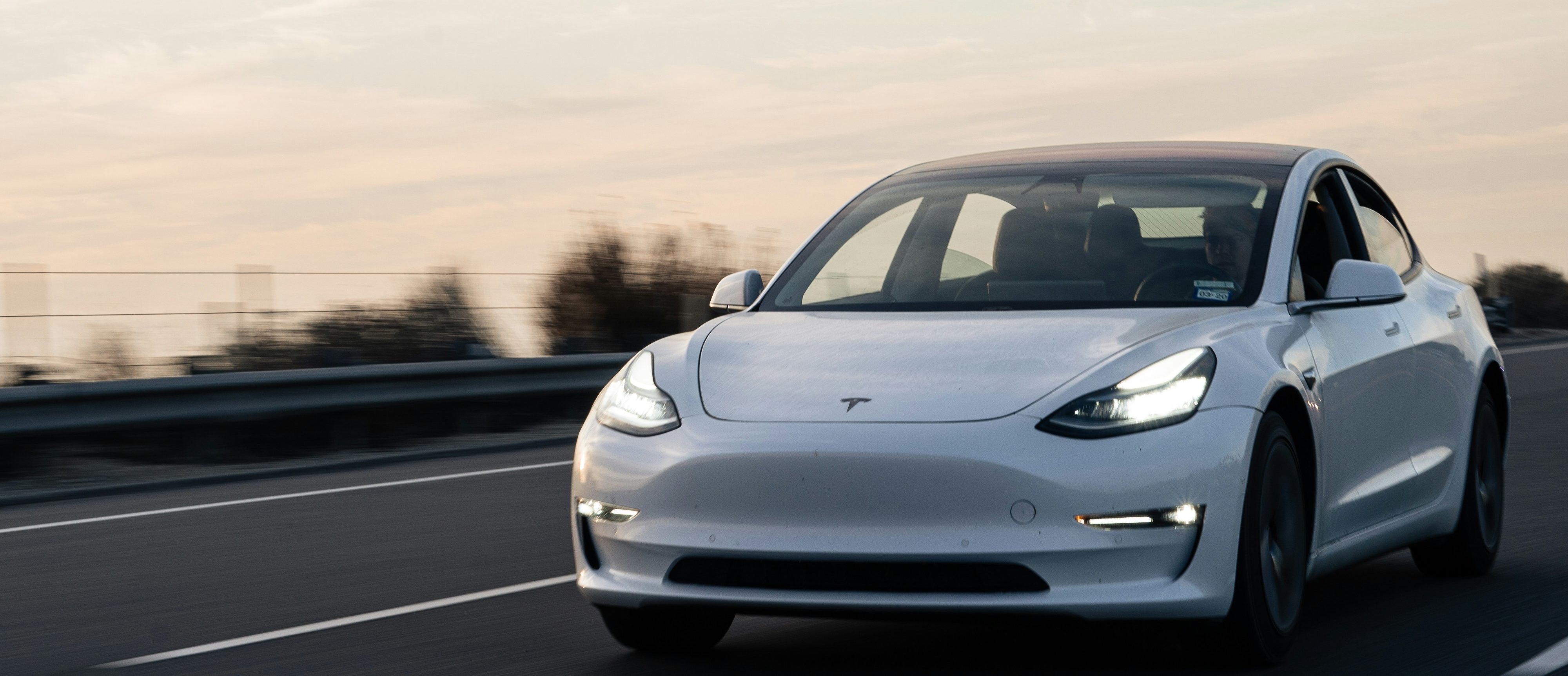
(Photo via Carter baran / Unsplash)
Michigan will test counting drivers’ miles through vehicle GPS and smartphones — even though more than 30% of residents told the state they worry about privacy.
The six-month pilot launches in February 2027 with 1,000 volunteers, Fox 17 reported. It will test odometer readings, in-vehicle telematics, a plug-in device and a smartphone app, according to minutes from an Aug. 24 meeting of the Michigan Department of Transportation’s (MDOT) technical advisory committee.
GPS “can get you within two meters reliably today,” John Peracchio, a State Transportation Commission appointee helping design the pilot, said in a Feb. 4 interview with WDIV. MDOT’s own 2024 survey of 19,160 residents found that more than 30% were worried about data privacy and that 17% would refuse to provide mileage data, according to the department’s report.
“Michigan families are already struggling to afford everyday life, and the last thing they need is state government tracking their every move just to take more of their hard-earned money,” Michigan Senate Republican Leader Aric Nesbitt said in a statement to the Daily Caller News Foundation. “Instead of coming up with new ways to reach into drivers’ pockets and invade their privacy, Democrats need to end their corporate welfare and root out wasteful spending to fix our roads.”
MDOT says on its website that participation in the pilot is voluntary and “no changes are planned at this time.” The department says lawmakers would have to pass new legislation before the state could impose a permanent mileage charge.
MDOT, Peracchio, and Democratic Michigan Gov. Gretchen Whitmer’s office did not respond to the DCNF’s requests for comment. Whitmer leaves office on Jan. 1, a month before the pilot begins.
Drivers can choose whether to share location data with an insurer or automaker and can leave if the company breaks their trust, James Czerniawski, head of emerging technology policy at the Consumer Choice Center, told the DCNF. He added that a state collecting the same data to bill for road use amounts to “a government monopoly with enforcement powers.”
“You can’t swap providers when driving on a public road,” Czerniawski stressed.
Michigan drivers should ask whether the telematics option would collect speed or braking data in addition to location, Czerniawski said. They should also ask whether third parties or law enforcement could access the data, how long it would be stored and whether participation would remain voluntary if the state expanded the program.
Governments trying to replace declining gas tax revenue “must avoid mandatory solutions that subject their drivers to a transportation surveillance state,” Czerniawski went on to say.
Location data collected for one government purpose can later be used for another, Alex Marthews, national chair of Restore the Fourth, told the DCNF. He pointed to federal agencies that gained access to IRS records, Selective Service data and voter rolls originally gathered for other purposes.
The Supreme Court ruled June 29 in Chatrie v. United States that police conduct a Fourth Amendment search when they obtain cellphone location history from a technology company, even if the records cover only two hours. Marthews said the ruling makes the pilot’s current design “constitutionally perilous.”
“Even short-term location information, like a single ALPR [automated license plate reader] snapshot, or a single reading seized as part of the Michigan pay-by-mile pilot, can potentially reveal a person’s activities, preferences, habits and beliefs,” Marthews said. “Elected officials can no longer fairly rely on an assumption that a sweeping system of collecting and parsing all drivers’ location records will not violate the Constitution.”
The pilot arrives amid a national backlash against automated license plate readers. On Aug. 31, Florida ordered Flock Safety cameras removed from state highways within 30 days after Republican Gov. Ron DeSantis said he did not want the state to become a “surveillance state,” the Daily Caller reported. Fixed license plate reader cameras are “quietly turning American streets into zones of constant monitoring,” Republican Colorado Rep. Lauren Boebert wrote in a Sept. 1 op-ed for the Caller.
The telematics and GPS options would create location records, but a private vendor rather than the state would hold them, Baruch Feigenbaum, senior managing director of transportation policy at the Reason Foundation, told the DCNF in a phone interview.
“It would be a private vendor. It would not be the state of Michigan that’s tracking it,” Feigenbaum said.
Automakers already collect the same data from any vehicle built in the past five years, he added. “With the automakers, I actually think the data is less secure because most people, when they buy a car, they sign that 100-page document.”
Peracchio, a member of the advisory committee, told WDIV that one option is to “leverage the embedded telematics” already built into most new and used vehicles. Another is “to leverage a smart device like an iPhone, and to marry that data up with information about your vehicle,” he said. He said a per-mile system “is analogous to tolling” but that he resists “the ugly gantries, toll tags, tag readers and video capture.”
The odometer option would not reveal when or where someone drove, Feigenbaum said. “Nobody would know when you’re driving, where you’re driving, how you’re driving. They would just know that you drove a certain number of miles.”
Verifying the reading is “a challenge,” and the approach is “a very blunt tool” because it cannot tell which roads a driver used, he added. “The telematics option or the GPS-based option is more ideal. There are some trade-offs with the odometer reading, but we want to give people a choice.”
An odometer-only system is “certainly the most privacy-preserving way to go,” Czerniawski told the DCNF, pointing to Hawaii. The state lets electric vehicle owners pay either a flat $50 annual fee or $8 per 1,000 miles, capped at $50, with odometers photographed during annual safety inspections, according to the Hawaii Department of Transportation.
An odometer-only system would resolve Restore the Fourth’s concerns because the state would receive only total mileage, Marthews said. Michigan is among the few states without annual safety or emissions inspections, leaving no regular inspection at which a mechanic could report the reading.
“Safeguarding location data is the key, and zero-location approaches like odometer readings and periodic payments are workable,” Electronic Frontier Foundation Legislative Director Lee Tien said in a statement to the DCNF.
Michigan should model its privacy rules on Oregon, which has “the strongest privacy protections,” Feigenbaum told the DCNF.
Oregon requires the state and its vendors to destroy location and daily mileage records within 30 days after payment processing or the end of a dispute or noncompliance investigation, whichever comes last, according to the statute.
Michigan should also require a warrant for law enforcement access, “because the idea is that if you are the owner of that vehicle, the driver of that vehicle, that is your data,” Feigenbaum said.
When lawmakers first proposed funding the pilot in 2024, the Michigan Freedom Fund, a conservative advocacy group, said there was “no way to implement a miles traveled tax on Michigan drivers without a significant growth of government intrusion into our privacy,” according to Bridge Michigan. The Senate proposal that year required at least one reporting option that “does not rely on vehicle location data,” the outlet reported.
About 35% of respondents preferred automatic collection through an installed device or vehicle telematics, while about 45% preferred a manual upload or an app, according to the report. No option for who would hold the data drew more than 37% support, while 16% either opposed data collection or the concept generally, the report states.
The advisory committee will grade the pilot on data security and privacy among other criteria, the minutes state. The committee meets next on Sept. 28 in Lansing, according to MDOT’s events page.
“I don’t really like the idea on tracking,” Grand Rapids driver Yosef Gage told Fox 17 on Monday.
“I don’t think that they need to track every mile and everywhere I go. They basically do that already with all the cameras everywhere,” Liz Cook told the station.
Public resistance tends to fade once drivers see how the programs work, Feigenbaum said, though “there’s probably going to be some people that are never going to be comfortable with that high-tech option.”
All content created by the Daily Caller News Foundation, an independent and nonpartisan newswire service, is available without charge to any legitimate news publisher that can provide a large audience. All republished articles must include our logo, our reporter’s byline and their DCNF affiliation. For any questions about our guidelines or partnering with us, please contact [email protected].