

National Defense
Price Tag For Oil Tanker Shipments Soars To Record High As War Grips Middle East
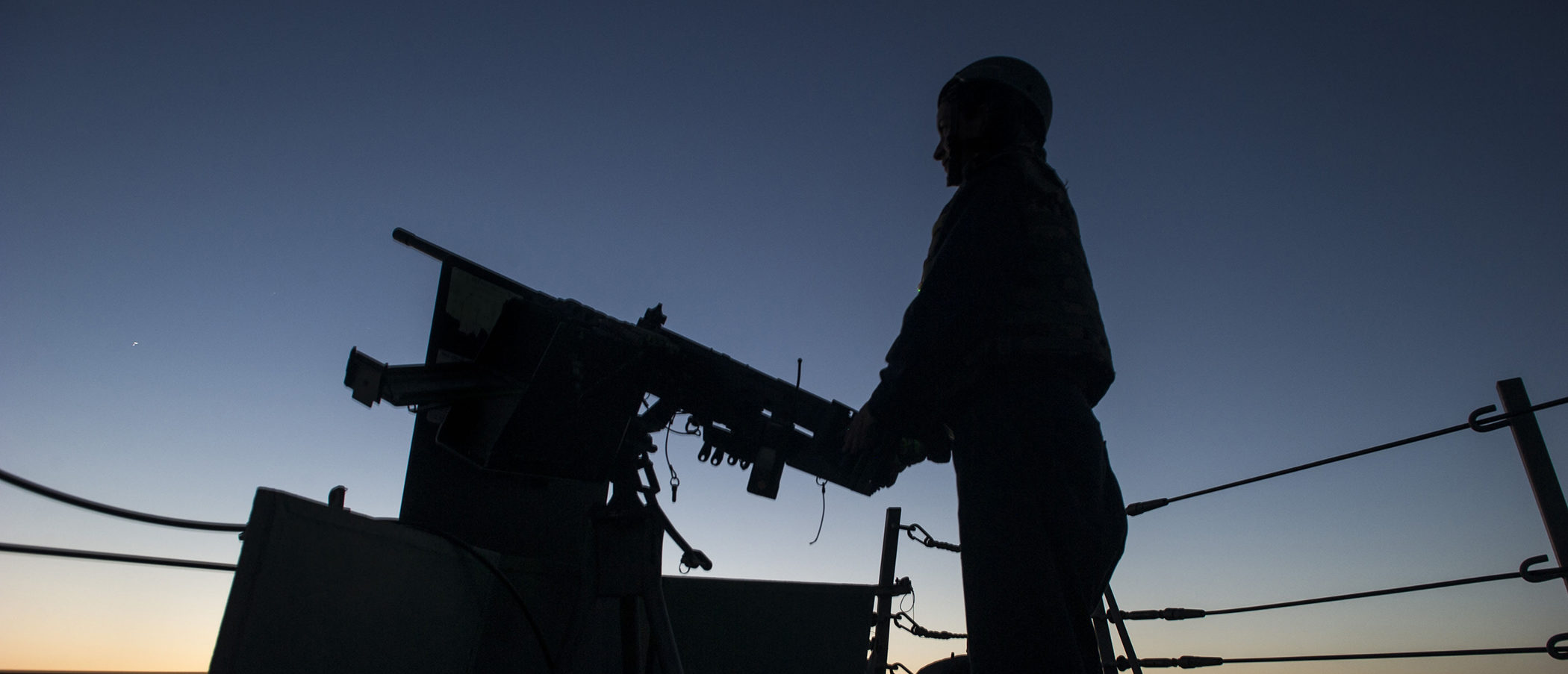
(DoD photo by Mass Communication Specialist 3rd Class Scott Barnes, U.S. Navy/Released)
The cost of moving oil around the world is exploding as the Iran war forces tankers onto longer routes and strains the ships still willing to operate near some of the world’s most important energy chokepoints.
Earnings for supertankers traveling from the Middle East to China reached a record $759,969 per day in September, while the cost of shipping crude from the U.S. Gulf Coast to China hit a record $29.5 million per voyage on Sept. 4, according to S&P Global.
“The wars in Ukraine and Iran remain the big elephants in this particular living room, and prices aren’t likely to go much lower until those elephants are killed,” energy public policy analyst David Blackmon told the Daily Caller News Foundation.
Brent crude climbed above $100 per barrel this week as continued disruptions around the Persian Gulf tightened global supplies, according to Reuters.
The benchmark crossed $100 Wednesday — for the first time since July — after American forces destroyed five Iranian tankers. American forces destroyed five Iranian crude oil tankers Tuesday after Iran targeted a U.S. Navy warship, according to U.S. Central Command (CENTCOM). CENTCOM also destroyed three Iranian crude carriers on Sept. 5.
The turmoil is also hitting American drivers. The national average price for regular gasoline reached $4.22 per gallon Wednesday, up from $2.98 two days before the war began on Feb. 28, while diesel reached a record $5.94 per gallon, according to American Automobile Association (AAA) data.
Shipping costs have also surged. The Baltic Exchange tracks tanker rates across major global routes, including shipments from the Middle East Gulf and U.S. Gulf to China. Its latest tanker report showed the U.S. Gulf-to-China rate jumping by more than $3.6 million in one week to nearly $28 million, while estimated daily earnings on the Gulf of Oman-to-China route topped $261,000.
Traffic through the Strait of Hormuz fell to its lowest level since May in early September following attacks involving American and Iranian forces, according to Reuters. Kpler data showed an average of just 10 commodity vessels per day crossed the strait over a 10-day period. Just six commodity vessels crossed the Strait of Hormuz on Tuesday, according to preliminary Kpler data.
“Tanker traffic through the Strait of Hormuz slowed once more after U.S. and Iranian strikes on vessels over the weekend,” Stuart Turley, president and CEO of the Sandstone Group and host of the Energy News Beat podcast, told the DCNF. “Kpler data showed a 10-day moving average of just 10 commodity ships per day, the lowest since May. Pre-war daily transits ran 125–140.”
Kpler is a global trade intelligence and analytics firm that tracks commodity flows and vessel movements using maritime and other market data.
However, disrupted tanker traffic is no longer the only major problem facing global fuel markets, Turley argued.
“The waterway still matters, roughly one-fifth of seaborne oil used to move through it, but flows have been constrained for months. Markets have already priced much of that risk,” Turley told the DCNF. “The sharper pressure on pump prices is coming from the refining side.”
Despite efforts to keep crude moving, roughly one-third of Gulf oil exports remained missing from global markets compared with pre-war levels as of Wednesday, according to Reuters.
The shipping crunch extends beyond Hormuz. Iran-backed Houthi militants attacked southwestern Saudi Arabia Tuesday, striking oil infrastructure and wounding at least 73 people. Saudi Arabia has routed most of its crude exports through the Red Sea port of Yanbu since Iran effectively shut the Strait of Hormuz, according to preliminary Kpler data.
Conflict around the Red Sea and the Bab el-Mandeb strait has further complicated another major shipping corridor, while Asian refiners are increasingly searching farther afield for crude. Chinese independent refiners have recently snapped up oil from West Africa, Canada and South America as supplies from Iran and Russia tighten, according to Reuters.
Blackmon pointed to the war in Ukraine as another source of pressure on global diesel markets, arguing that attacks on Russian refineries have removed substantial fuel production from the market.
“Russia was one of the major exporters of diesel globally prior to Ukraine’s successful drone campaign that has decimated Russia’s refining industry,” Blackmon told the DCNF. “Now, Russia is a net importer of both diesel and gasoline, mainly from India.”
The strain is not limited to crude supplies or the tankers carrying them. Turley said unusually high refining margins indicate that turning available crude into gasoline and diesel has become another major bottleneck.
The result is a refined-products shortage even when crude itself is available. There is little spare capacity left to rebuild inventories,”” Turley told the DCNF. U.S. refiners have been operating near 96% utilization as refining margins have soared, Turley mentioned.
China, meanwhile, has increased crude purchases while also sending more refined fuels onto the international market, according to Turley.
“China is acting as a swing buyer of crude and a swing seller of products at the same time,” Turley told the DCNF. “That supports crude prices while it does little to relieve the product tightness felt at U.S. pumps and loading racks.”
“Tanker fees should start coming down in a few months, but we are months from rebalancing physical delivery costs to refineries,” he added.
All content created by the Daily Caller News Foundation, an independent and nonpartisan newswire service, is available without charge to any legitimate news publisher that can provide a large audience. All republished articles must include our logo, our reporter’s byline and their DCNF affiliation. For any questions about our guidelines or partnering with us, please contact [email protected].