

Energy
The Appliance Rules The Trump Administration Is Trying To Kill, And What It Means For Your Kitchen
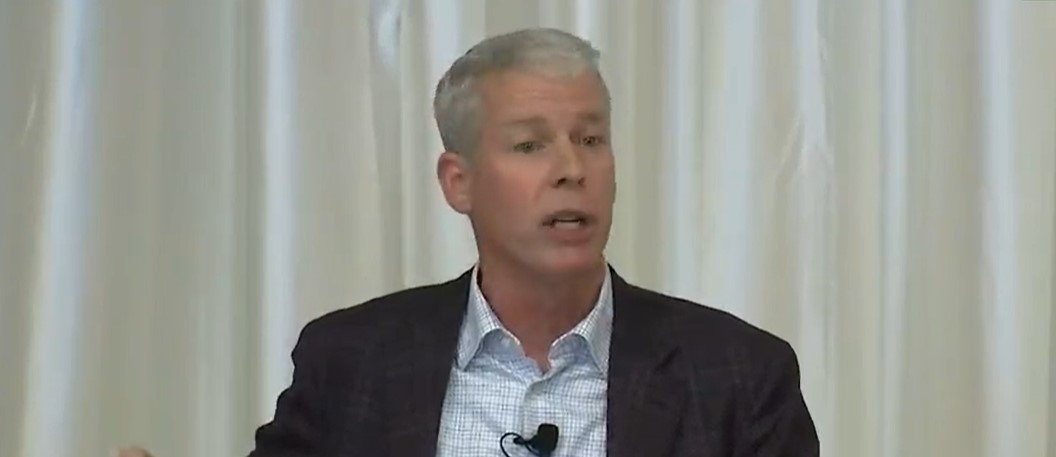
Energy Secretary Chris Wright (Screen Capture/CSPAN)
The Department of Energy wants to make it harder for the federal government to set new efficiency rules for household appliances —but it still has more work to do.
None of the 17 product standards the Department of Energy (DOE) proposed to rescind in 2025 has been finalized, Joanna Mauer, deputy director of the Appliance Standards Awareness Project (ASAP), told the Daily Caller News Foundation. The department also has not finalized the process rule it proposed in July, and public comment on a related DOE request ends Tuesday, according to its rulemaking page.
Republican Utah Sen. Mike Lee, chairman of the Senate Energy and Natural Resources Committee, introduced the Energy Efficiency Reform Act on Aug. 6 to write the changes into law and void two Biden-era gas appliance standards, the first of which takes effect Oct. 6. The bill has no cosponsors and no reported action since the Senate referred it to his committee that day, according to Congress.gov.
The committee has not yet scheduled a markup, a spokesperson told the DCNF.
The spokesperson for the committee said that the legislation would not roll back any existing efficiency standard. The bill has no House counterpart, though the House has moved several smaller bills with similar goals, the spokesperson said. Lee “welcomes support from any of his Democratic colleagues who agree that appliance standards should protect consumer choice,” the spokesperson said.
The bill text posted by the committee states that two 2023 final rules, setting standards for consumer furnaces and commercial water heating equipment, “shall be null and void” on the date of enactment. The text would also let the DOE issue a less stringent standard if it shows “clear and convincing evidence” the change is necessary for reasons including “to prevent the influx into the United States of foreign market competitors.”
The furnace rule requires compliance for products manufactured on or after Dec. 18, 2028. The bill would repeal both standards, Mauer told the DCNF. The furnace standards would save consumers about $50 a year on heating bills, Mauer said, citing a DOE estimate.
The Senate committee spokesperson said that although some may read those provisions as nullifying the two Biden-era rules, the committee considers them “deregulatory efforts to provide congressional clarity in place of further judicial decisions.” Both rules are tied up in a lawsuit that the Supreme Court sent back to a lower court in June, and the bill would settle those questions without waiting on the courts, the spokesperson said.
“The process rule and Senator Lee’s bill would both mean higher utility bills for consumers,” Mauer told the DCNF. “Blocking new standards, even as technology continues to improve, may benefit a utility that sells you more electricity or gas, but it’s costly for families.”
The Supreme Court on June 8 vacated a D.C. Circuit ruling that upheld both standards in a challenge brought by the American Gas Association and other gas industry groups. The order sent the case back for further consideration without ruling on the standards themselves. The bill would address the issues in that case “without having to rely on a federal court decision,” the spokesperson said.
The DOE said in a May 5 enforcement policy that it will not seek civil penalties under the commercial water heater standards for equipment manufactured before Oct. 6, 2027, citing the Supreme Court case.
The association supports the bill, which its president, Karen Harbert, said in a statement “rolls back harmful standards that would eliminate access to natural gas furnaces and water heaters.
Energy Secretary Chris Wright announced the proposed rule, which would rewrite how the DOE develops standards for products including air conditioners, gas stoves, washers, dryers, water heaters and refrigerators, in a press release on July 2. The change would
“permanently end home appliance and equipment mandates that raise costs and disrupt consumer choice,” DOE said in the release.
The proposal would change the DOE’s procedures rather than repeal any existing standard, according to the notice. It would instead make the department’s process rule binding for certain actions, add a definition of “significant energy savings,” reinstate a “walk-up” analysis that compares progressively stricter standards and set economic thresholds a new standard would have to clear, the notice states.
Appliances now sold in stores would not change under the proposal, which does not itself repeal any product standard. The new requirements would apply when the DOE writes future standards, the notice states.
Manufacturers of the products covered by the 2025 rescission proposals and their trade associations filed more than 30 comments opposing the rollbacks and none in support, and some warned that foreign-made products would flood the market.
The DOE sets efficiency standards for roughly 60 household and commercial products under the Energy Policy and Conservation Act, according to the committee’s press release on the bill.
“Climate alarmism turned ordinary appliances into political targets,” Lee said in the release.
The bill would end a six-year review cycle that has led to repeated litigation against the DOE, the spokesperson said. It would also let the department recognize differences between product classes and strengthen federal preemption so states such as California and New York cannot effectively dictate standards for consumers nationwide, the spokesperson said. Because the bill changes the process rather than any specific regulation, “it would be difficult to provide an accurate estimate of household savings,” the spokesperson said.
The Association of Home Appliance Manufacturers did not respond to the DCNF’s request for comment. The DOE did not immediately provide a comment on the record.
Wright postponed seven Biden-era appliance rules in February 2025, according to Columbia Law School’s Sabin Center for Climate Change Law. President Donald Trump signed resolutions in May 2025 repealing three of them, covering gas tankless water heaters, walk-in coolers and freezers and commercial refrigerators, according to the House Energy and Commerce Committee.
The DOE proposed that same month to eliminate or scale back 47 regulations, including water-use standards for dishwashers and federal coverage of portable air conditioners, and estimated the actions would save $11 billion, according to the department. ASAP put the cost to consumers in higher utility bills at $43 billion, a figure Mauer said comes from a dozen standards for products including air purifiers, dehumidifiers and microwave ovens.
The DOE listed in its April 2023 air purifier rule annual operating costs of $57 for a baseline purifier and $34 at the second-tier standard, a difference of about $23, Mauer said, citing the rule. Those standards took full effect Dec. 31, 2025, and the manufacturers had supported them, Mauer said.
Domestic manufacturers told E&E News in 2025 that repealing standards could open the market to cheaper, less efficient imports. A provision of the Energy Policy and Conservation Act bars DOE from weakening a standard once it is final, and efficiency advocates have said they will sue over the rescissions, the outlet reported.
The DOE accepted public comments on the process proposal through Aug. 21 after extending the deadline at the request of trade groups, according to the department.
All content created by the Daily Caller News Foundation, an independent and nonpartisan newswire service, is available without charge to any legitimate news publisher that can provide a large audience. All republished articles must include our logo, our reporter’s byline and their DCNF affiliation. For any questions about our guidelines or partnering with us, please contact [email protected].