

Commentary: Big Tent Ideas
Is It Time For The Nuclear Option In The AI Race?
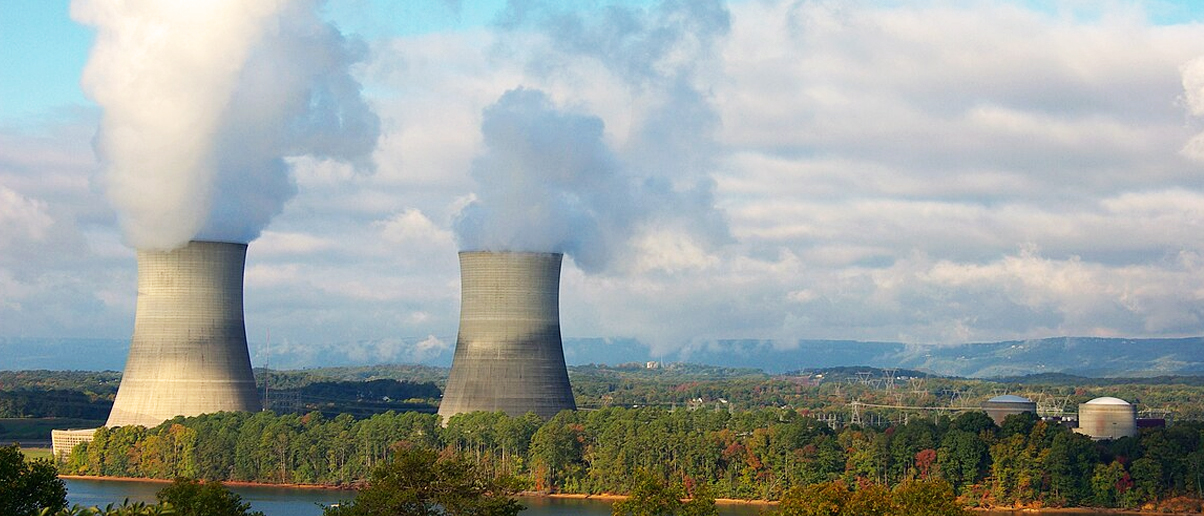
(Photorush / Wikimedia Commons)
AI needs vast amounts of electricity, more than America can reliably deliver. That is becoming hard to miss as data centers spread across the country to feed the AI boom. The trouble is that America has not built enough dependable power for them, much less for the factories, defense production and mineral-processing projects politicians keep promising to bring home.
Nuclear power should be an obvious part of the answer. It generates enormous quantities of electricity on a compact footprint, around the clock. It can power data centers, factories and defense production without blanketing the countryside with windmills, solar farms, batteries and miles of transmission lines.
China is building while America dithers.
Nine of the 10 nuclear reactors whose construction began in 2025 were in China. Chinese and Russian designs accounted for 94 percent of global reactor construction starts over the past decade. While China is building nuclear reactors, America is still buried in paperwork.
The first U.S. nuclear plant took four years to build and ran 25 years. Now the regulatory process is the project. Plant Vogtle’s two newest reactors were supposed to cost about $14 billion and open in 2016 and 2017. They came years late and cost more than $30 billion. Vogtle’s cost overruns and delays do not indict nuclear power. They indict the system that has made building it a costly slog.
America is also sitting on an energy asset it treats as a burden: used nuclear fuel. Near 100,000 metric tons of used nuclear fuel are stored around the country. That fuel contains the energy equivalent of roughly 1.2 trillion barrels of oil. Rather than leave it in place indefinitely, America should put it to work.
Used fuel deserves intelligent management. Recycling can recover valuable material for new fuel, while the remaining fraction can be permanently managed. Recycling can also reduce the waste-management timeframe from more than 100,000 years to less than 300 years. America has already paid for this fuel, already stored it and already knows how to use more of its energy. It is time to treat it like the asset it is.
The right model is a Nuclear Lifecycle Innovation Campus in willing states. Bring used-fuel storage, recycling, fuel fabrication, advanced reactors, long-term management of remaining material and major power customers together. Put the components of the nuclear fuel cycle in one place rather than scatter them across the country. That reduces needless transportation, avoids a chain of separate approvals and gives power users a direct stake in getting the project built.
The payoff is straightforward. Data centers could obtain dependable power near their operations. Manufacturers could locate where electricity is plentiful instead of fighting for scarce grid capacity. Communities could gain jobs, investment and tax revenue. Investors could finance projects with customers, contracts and revenue rather than another federal subsidy pitch.
America should not choose one company or one reactor design. It should welcome multiple developers, competing technologies and states that want the jobs and investment. Oklo’s interest in an integrated fuel-cycle campus is worth watching because it reflects a broader point: the future of nuclear power is not merely another stand-alone reactor project. It is a full system: fuel, power generation, customers and responsible management of what remains.
Nuclear power cannot become the next green energy grift: endless subsidies, endless delays and too little power. Projects should succeed because they deliver electricity that businesses want to buy.
The AI race will not pause while Washington debates used fuel. China is building reactors at a pace America has forgotten is possible. America can keep storing fuel with plenty of energy left in it, delaying projects and hoping an overstretched grid carries a larger load. Or it can build the integrated nuclear system an industrial superpower requires.
All content created by the Daily Caller News Foundation, an independent and nonpartisan newswire service, is available without charge to any legitimate news publisher that can provide a large audience. All republished articles must include our logo, our reporter’s byline and their DCNF affiliation. For any questions about our guidelines or partnering with us, please contact [email protected].