

Energy
Trump’s USDA Wants To Throw Decades-Old Rule On Scrap Heap
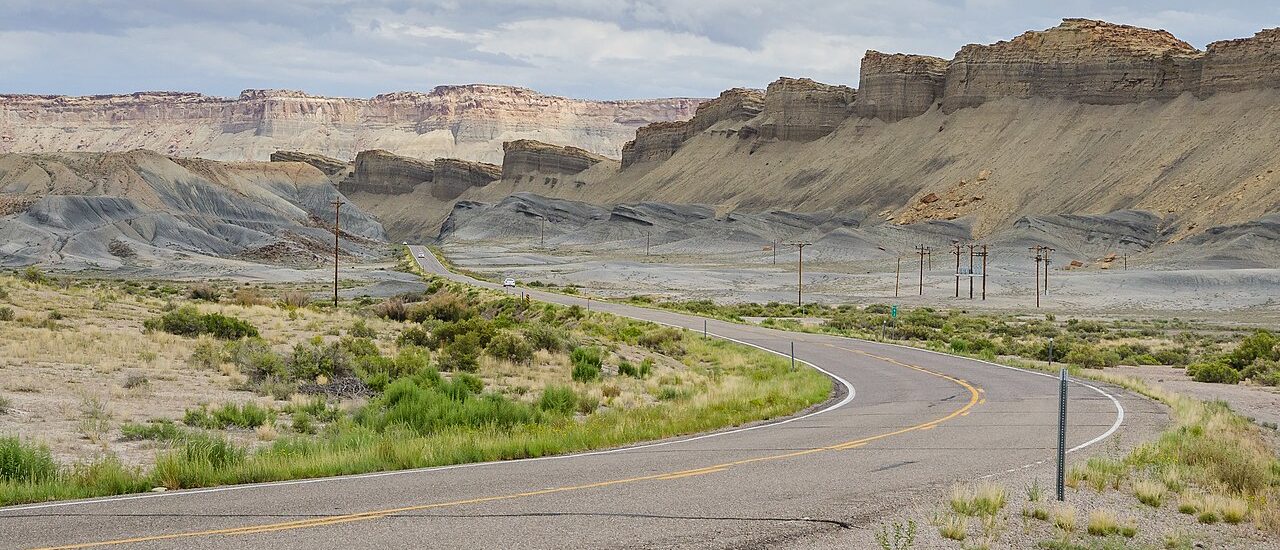
DXR, CC BY-SA 3.0 <https://creativecommons.org/licenses/by-sa/3.0>, via Wikimedia Commons
The Trump administration paved the way for new roads Tuesday, moving to demolish a “roadless rule” with its origins in the waning days of the Clinton era.
Agriculture Secretary Brooke Rollins announced that the U.S. Forest Service filed a proposal to fully rescind the 2001 Roadless Area Conservation statement, which restricts road construction and certain timber activities in designated national forest areas.
The Roadless Rule currently covers more than 44 million acres of the 193-million-acre National Forest System, according to the Department of Agriculture (USDA).
USDA did not immediately respond to the Daily Caller News Foundation’s request for comment.
“For too long, outdated restrictions have kept tens of millions of forested acres off-limits to the very treatments that improve forest health and reduce wildfire risk to our communities,” Rollins said in a Tuesday USDA press release. “It’s time to turn the page on the failed roadless rule and return our forests to health and productivity.”
“Currently, forty percent of lands within inventoried roadless areas have a high or very-high wildfire hazard potential, ranging from 5 percent in the Eastern Region to 60 percent in California,” according to the Federal Register.
“Active forest management is not an option. It’s essential,” U.S. Forest Service Chief Tom Schultz said in the press release.
There have been more fires in 2026 alone than in the past 10 years, burning more than 7.2 acres, according to The National Interagency Fire Center.
The Roadless Rule dates back to the final days of the Clinton administration, when the Forest Service moved to protect roughly 58.5 million acres of largely undeveloped national forest land, according to Forest Service Roadless Area Conservation Final Environmental Impact Statement in 2000.
The proposed rollback comes amid another destructive wildfire season across North America. Oregon surpassed one million acres burned by late July after lightning and dry conditions fueled large fires across the state.
Wildfire smoke has also repeatedly crossed international borders. Canadian wildfires sent smoke into the United States earlier this summer, degrading air quality across parts of the country. Some fires burned through carbon-rich peat soils, which can smolder underground and produce smoke long after surface flames have subsided.
The administration has increasingly emphasized forest management as a way to curb wildfire risks, arguing that thinning vegetation, removing hazardous fuels and improving access to federal forests can reduce the severity of fires, according to the Department of Agriculture.
Rescinding the rule would not automatically authorize logging or road construction, according to the USDA’s Forest Service. Instead, the administration says decisions governing roadless areas would be returned to individual national forests and made through existing land-management planning processes.
More than 95% of the country’s inventoried roadless areas are concentrated in Alaska, Arizona, California, Montana, Nevada, New Mexico, Oregon, Utah, Washington and Wyoming, the press release noted. Adding that Colorado and Idaho would not be affected by the proposed rescission because their national forests operate under separate state-specific roadless rules.
Republican Western governors praised the proposal, arguing the existing rule has prevented states and local land managers from properly managing forests.
“For 25 years, the heavy thumb of Washington D.C. has hindered Montana’s ability to properly manage wildfire risk and road development on nearly 60 percent of Forest Service land across the Treasure State,” Republican Montana Gov. Greg Gianforte said in the Tuesday USDA press release.
Republican Utah Gov. Spencer Cox similarly argued in the press release that the rule “tied the hands of local land managers with a one-size-fits-all federal policy.”
All content created by the Daily Caller News Foundation, an independent and nonpartisan newswire service, is available without charge to any legitimate news publisher that can provide a large audience. All republished articles must include our logo, our reporter’s byline and their DCNF affiliation. For any questions about our guidelines or partnering with us, please contact [email protected].