

Commentary: Big Tent Ideas
Reagan Was Right When It Comes To Summer Airfare — Biden Not So Much
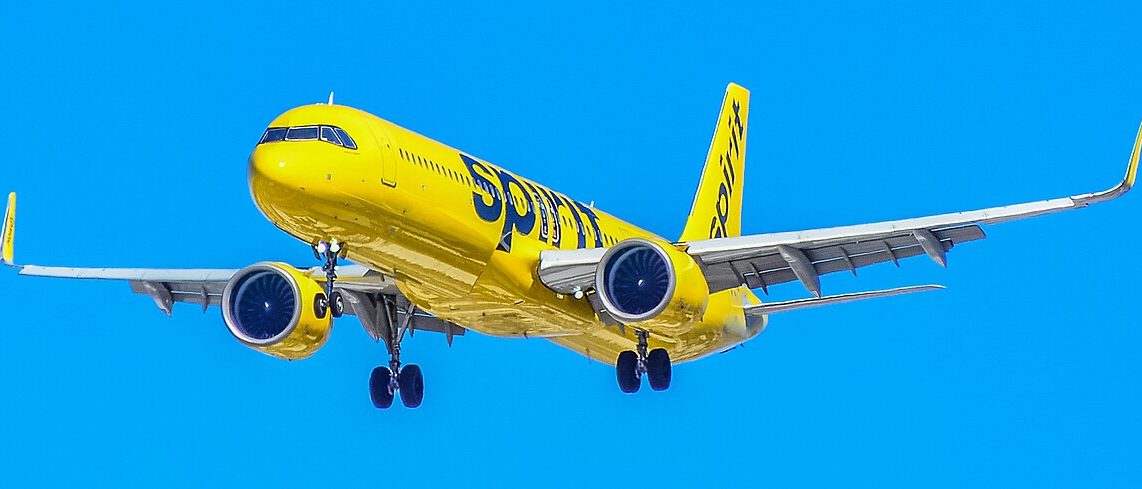
Tomás Del Coro, CC BY-SA 4.0 <https://creativecommons.org/licenses/by-sa/4.0>, via Wikimedia Commons
Spirit Airlines was once the choice of many American airline travelers who associated its yellow planes and “no frills” flights with cheap airfares.
The sight of those yellow planes probably annoyed executives from other airlines who had to keep their fees low to compete with Spirit. Now, Spirit is one more example of why President Ronald Reagan was right: the scariest words in the English language are, “I’m from the government and I’m here to help.”
During the Biden years, overly zealous antitrust regulators halted Spirit’s merger with fellow discount airline JetBlue. This merger might have rescued and strengthened Spirit. Thankfully, other budget carriers are now stepping into the void Spirit left behind.
Frontier Airlines just announced they are taking over Spirit’s old routes and expanding new services across the United States, from Boston to Orlando to Vegas. This is how markets work with businesses rushing to fill demand.
So, would you believe government regulators once tried to crush Frontier too?
In 2025, on their way out the door, the Biden administration abruptly announced it was fining Frontier $650,000 over alleged flight delays. This was only the second time in history such a fine had been charged.
Never mind that those delays weren’t necessarily Frontier’s fault. Tarmac delays across airlines have been rising steadily in recent years, suggesting government-run airports were as much, if not more, to blame than any airline.
But the departing Biden administration’s antitrust team was determined to take at least one more business down and their crosshairs were set on Frontier.
The government’s campaign against Frontier actually began years earlier. In 2022, Frontier made known it was planning to merge with Spirit. The deal made sense: budget airlines operate with extremely thin profit margins, meaning a new Frontier-Spirit company would have more financial security plus the scale to compete globally with the likes of Southwest. Talk about a win-win for consumers.
Then politicians butted in. Progressives such as Democratic Massachusetts Sen. Elizabeth Warren and Independent Vermont Sen. Bernie Sanders demanded that antitrust regulators scrutinize the Frontier-Spirit deal. Left-wing lawmakers also sent a letter to then-Secretary of Transportation Pete Buttigieg arguing the agreement was a dangerous mega-merger.
Colorado Attorney General Phil Weiser went even further. Despite Frontier sustaining tens of thousands of jobs in his home state, Weiser demanded that the government take action against the airline. His reasoning parroted that of the American Economic Liberties Project, a left-wing advocacy group, which argued that the merger would “kneecap competition.”
Progressive pressure, plus a counteroffer from JetBlue, saw Spirit ultimately call off their acquisition of Frontier. That summer, Spirit announced it would instead merge with JetBlue.
This is where the federal government truly jumped the rails (or runway). Egged on by lefties, Joe Biden’s Department of Justice sued to stop the Spirit-JetBlue merger.
The airlines fought back but ultimately lost in court after a Massachusetts judge ruled against them. Spirit had been flailing thanks to (government-caused) rising fuel costs: it accounted for only 1.8% of domestic flights in 2026 after hitting 5 percent in 2023. Deprived of the cash flow JetBlue would have provided, Spirit filed for bankruptcy and was forced to close their doors.
The entire ordeal was a case of left-wing antitrust zeal run amok. Frontier wasn’t allowed to merge with Spirit; Spirit wasn’t allowed to merge with JetBlue. No one was allowed to merge with anyone and so Spirit, in need of capital, was grounded for good.
Every big-government Democrat who attacked these mergers claimed they were trying to protect competition. Instead, they reduced competition by removing one fewer carrier, guaranteeing that prices would go up.
Thankfully, the Trump administration’s antitrust team is allowing markets to work. Frontier Airlines is picking up where their former merger partner left off—with lower fares hopefully to follow. Yet no one should forget that politicians once tried to clobber Frontier too.
Even if you think preventing monopolies is a proper function of government, Frontier and Spirit are not monopolies. Under the Biden administration, antitrust regulators stopped trying to do what was in the consumer’s interest and started crusading against businesses for its own sake.
President Donald Trump has taken a somewhat saner approach to antitrust—he even waived the fine imposed by Biden on Frontier. His approach is giving the airline industry more room to breathe so it can meet consumer demand and let Americans enjoy affordable air travel.
Norm Singleton is a senior fellow at the Market Institute.
The views and opinions expressed in this commentary are those of the author and do not reflect the official position of the Daily Caller News Foundation.
All content created by the Daily Caller News Foundation, an independent and nonpartisan newswire service, is available without charge to any legitimate news publisher that can provide a large audience. All republished articles must include our logo, our reporter’s byline and their DCNF affiliation. For any questions about our guidelines or partnering with us, please contact [email protected].