

Commentary: Big Tent Ideas
When OPEC Quotas Don’t Matter Anymore
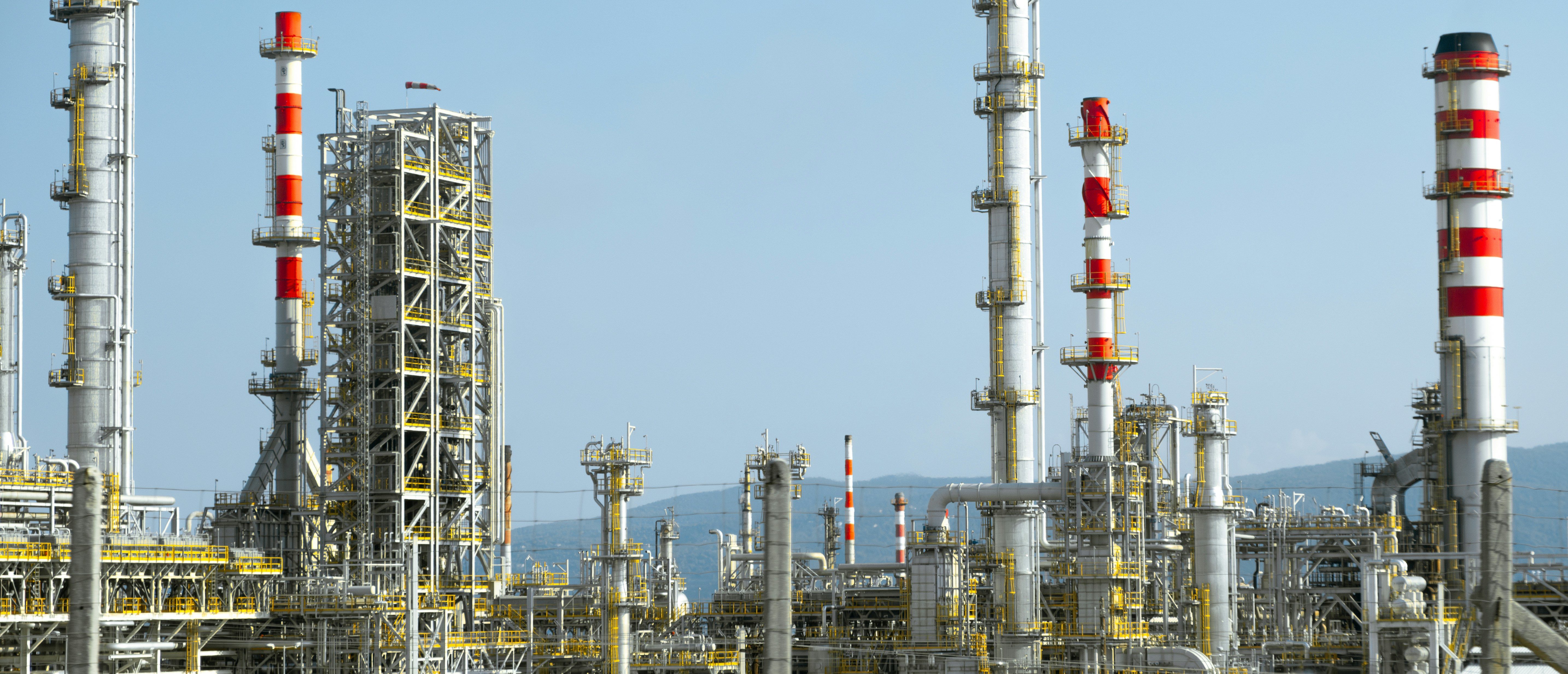
Unsplash/Christian Harb
Lost in much of the discussion about the current global deficit of crude oil is a new reality that had been brewing for some time even before the Iran Conflict began on March 1: The fact that OPEC — and its bigger sister, OPEC+ — has lost its teeth.
Worse for its member nations, the most famous — and sometimes infamous — cartel of the 20th century has no obvious way to recover its bite.
Signals from key members have led to reports that OPEC+ plans to fully unwind what remains of the voluntary production quota cuts the group implemented during the post-COVID crisis years. Those reductions of several million barrels per day were intended to avoid a full collapse of global crude prices like the one seen in April 2020, when the West Texas Intermediate index price briefly traded in negative numbers as the global economy largely shut down.
OPEC+ saw the problem: There was too much oil production chasing too little demand and the cartel responded with agreed-to cuts by all members. When those reductions proved inadequate, eight of its bigger members beefed the program up with further voluntary cuts of their own.
The strategy was effective to some extent but lost its impact over time amid rising production levels from the United States, Guyana and other non-OPEC+ nations.
Throughout 2025 and the early weeks of 2026, it was obvious that the cartel really had little control over global crude prices, as the WTI index dropped to as low as $55/barrel in mid-January 2026. Again, OPEC+ members faced the reality that there was too much oil chasing too little demand on the market, and this time they had no effective way to address the matter.
Then came the war between the U.S. and Iran, and the equation radically reversed. OPEC+ has responded by gradually unwinding its millions of barrels in cuts, and now will apparently abandon what little is left at its Aug. 2 meeting, mainly because it has no other tool at its disposal. The problem there is that its Persian Gulf members — some of which, like Saudi Arabia, Kuwait, Iraq, Oman and the United Arab Emirates — remain under attack from Iran’s Revolutionary Guard and held hostage at various levels to the closure at the Strait of Hormuz.
They have little means to raise production regardless of any quotas theoretically imposed by their cartel.
Making matters worse, Saudi Arabia is now being impacted by the Iran-sponsored Houthi effort to shut down the Bab el Mandeb Strait at the southern exit to the Red Sea. The cartel’s largest producer has been bypassing the Strait of Hormuz problem by shipping as much as 7 million barrels of oil per day through its east-west Petroline Pipeline to the King Fahad Industrial Port at Yanbu.
That workaround had helped keep a lid on crude price spikes since March. The Houthi threat escalated overnight Friday when the Yemen-based Houthis claimed to have hit a major Saudi refinery at the port city of Jazan, which sits near Saudi Arabia’s border with Yemen.
Should the Bab el Mandeb choke point remain effectively closed for an extended time, Saudi Arabia would be left to try to ship out as much of its production as possible northwards into the Mediterranean Sea via the Suez Canal. But the Suez cannot accommodate fully loaded VLCCs, the largest class of crude tankers.
The other problem would be that Saudi tankers serving Asian markets would then have to transit the African continent to reach their destinations, adding about four weeks to their journey.
The Saudis also maintain access to the Sumed pipeline system, which cuts across Egypt to the Mediterranean. Sumed is a twin set of pipelines each with a capacity to move 1.25 million barrels per day. This all would radically complicate Saudi Arabia’s logistics, but oil does tend to find its way onto the market one way or another.
Back to OPEC+, what this all means is that its quotas and cuts to them have been rendered irrelevant to the market. Four years ago, the decision to fully unwind those cuts would have been major market news.
Now, it will be a blip on the screen, because it just doesn’t really matter in the grand scheme of things. My, how times change.
David Blackmon is an energy writer and consultant based in Texas. He spent 40 years in the oil and gas business, where he specialized in public policy and communications.
The views and opinions expressed in this commentary are those of the author and do not reflect the official position of the Daily Caller News Foundation.
All content created by the Daily Caller News Foundation, an independent and nonpartisan newswire service, is available without charge to any legitimate news publisher that can provide a large audience. All republished articles must include our logo, our reporter’s byline and their DCNF affiliation. For any questions about our guidelines or partnering with us, please contact [email protected].