

Foreign Affairs
Warning Signs Flash As America’s Oil Reserves Bleed For Iran War
Flickr/U.S. Department of Energy
Just when you thought gas prices could not get any higher, the real oil crisis is beginning to brew underground in America’s key oil reserve.
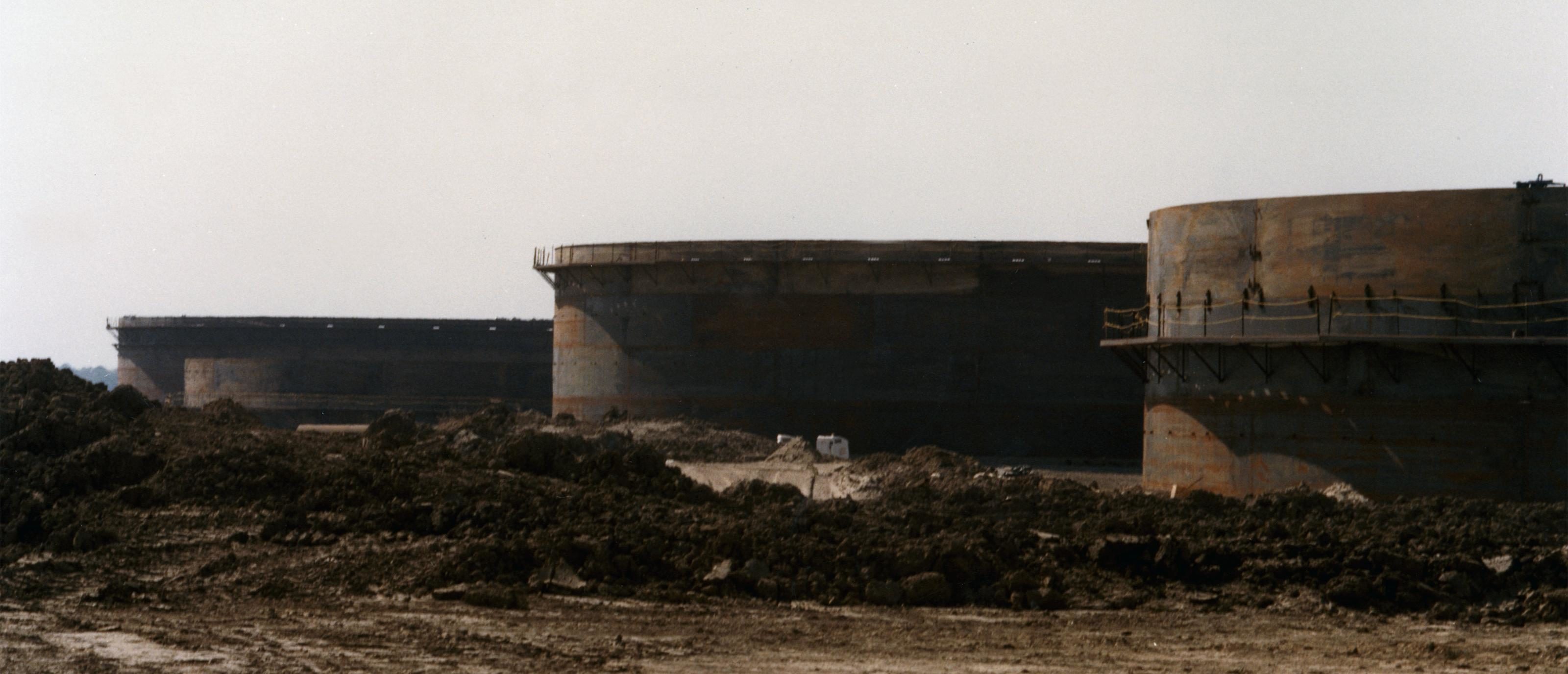
The U.S. Strategic Petroleum Reserve (SPR) is intended to maintain a stockpile of crude oil for periods of wartime or economic instability. The Iran War has pushed the U.S. to drain the SPR, which is now reaching critical levels, U.S. Energy Information Administration data shows.
The price of oil has surged past $100 per barrel as Houthi rebels have begun attacking ships in the Red Sea, Reuters reported, putting even more pressure on an already-constrained oil market.
Some analysts argue that the amount of usable oil in the SPR is much smaller than the official EIA numbers suggest.
The SPR has been drained by nearly 25% over the last 17 weeks, according to the EIA data, declining from 415.4 million barrels on March 20, 2026, to 311.4 million barrels on July 17, 2026.
The Biden administration broke the record for the largest drawdown from the SPR during its time in office, according to the U.S. Government Accountability Office (GAO). The Trump administration is now releasing even more oil from the SPR after it only added roughly 20 million barrels in 2025, according to the EIA, which brought total stocks to 413 million barrels at the beginning of 2026.
President Joe Biden authorized a 200 million-barrel release of oil from the reserve, with a 180 million-barrel emergency release on March 31, 2022, following Russia’s invasion of Ukraine, and outright selling off 20 million barrels, marking the largest sustained drawdown from the SPR to date, according to the GAO.
AAA reported a national average of $2.98 on Feb. 26 and lists the current national average at $4.06 as of July 22, an increase of $1.08 per gallon, or roughly 36%.
“The current drawdown is a direct result of the Iran war. At 311.4 million barrels, the lowest level since 1983, the SPR cannot sustain repeated drawdown cycles without approaching dangerously low levels,” Steve Hanke, a professor of applied economics at Johns Hopkins University, told the Daily Caller News Foundation. “The U.S. release was an emergency response to the closure of the Strait of Hormuz. Since the U.S. started a war of choice with Iran, the U.S. caused its own emergency which required releases from the SPR.”
On top of this, the U.S. GAO has reported that the infrastructure needed to operate and maintain the SPR is in a state of disrepair.
“The reserve’s aging infrastructure also needs further updates to ensure it remains capable of receiving and releasing oil as designed,” the GAO report states. “However, Congress hasn’t specified its priorities or identified a target size for the reserve, and DOE doesn’t have a long-term plan to inform operational and investment decisions.”
“With regard to the massive use and drawdown of the SPR, the U.S. is basically making a bet that the conflict in the Middle East will be resolved before the SPR is fully depleted. If not, the U.S. would be left without a safety net,” Hanke told the DCNF.
The White House is pushing back on the notion that it “irresponsibly” drained the SPR.
“The SPR is a critical national security asset that President Trump tapped into to help stabilize the oil markets and mitigate short-term supply disruptions,” White House spokeswoman Taylor Rogers told the DCNF. “While the Biden administration irresponsibly drained the SPR for political gain, the Trump administration exchanged the barrels for lower-cost barrels that will be delivered back to the SPR. Domestic oil and gas production levels have hit record highs thanks to President Trump’s energy dominance agenda.”
“[Currently] the Iran war has resulted in a net reduction of a little more than 100 million barrels by the Trump administration,” energy public policy analyst David Blackmon told the DCNF. “That compares with the more than 250 million drawn out of the reserve by Biden in 2022-23.”
Trump announced on March 11 that the Department of Energy (DOE) would release 172 million barrels of oil from the Strategic Petroleum Reserve as part of a coordinated 400 million-barrel release by International Energy Agency member nations aimed at lowering energy prices and offsetting supply disruptions caused by the Iran war.
The return of this oil will occur in early 2027, U.S. DOE Under Secretary of Energy Kyle Haustveit told the DCNF.
“America relies on the flow of crude produced from wells and the flow from inventory drawdowns,” Hanke told the DCNF. “If the SPR is depleted, a huge inventory flow is cut off, and so is America’s precautionary margin of safety.”
Haustveit explained the U.S. SPR is stored in salt caverns. If the U.S. SPR is drained low enough, it could cause damage to the reserve’s infrastructure in the caverns; however, Haustveit said the DOE closely monitors these levels.
“We inject fresh water into the cavern to displace the oil, and when you inject fresh water into the salt cavern, it dissolves the interior of the cavern,” Haustveit told the DCNF. “So we don’t want fresh water contacting that point where the casing [of the SPR] intersects, so we’re a long ways from that number, and we have no plans to go anywhere near that number.”
“Repeated large drawdown-and-refill cycles beyond what the SPR was engineered for have already caused documented damage to the SPR,” Hanke told the DCNF. “We don’t have a precise number for the SPR inventory ‘floor,’ but draining the SPR too aggressively or too often risks structural degradation that can permanently damage the SPR.”
Testing New Limits?
The GAO said that the SPR could be drained completely, but this has never been tested before.
“The SPR was designed for full drawdowns in the event of severe energy supply disruptions, but even the largest drawdowns to date haven’t tested this capability,” a U.S. GAO spokesperson told the DCNF. “This would mean releasing as much crude oil as technically feasible (more than 4 million barrels per day) for up to 90 days until fully drawn down (up to 90 percent of site inventory, per the SPR’s technical and performance criteria). Additionally, the effective drawdown rate declines as the oil inventory declines.”
The GAO stated that advisors to the SPR have identified weaknesses in the SPR infrastructure.
“Sandia National Laboratories, the geotechnical advisor for the SPR, found in 2024 that well deformations are outpacing DOE’s ability to adequately reduce the risk of potential well failures with corrective actions at current resource levels,” a GAO spokesperson told the DCNF.
“DOE is concerned about the integrity of the SPR’s wells due to a combination of aging, breaking, and single-entry wells that may limit access to the SPR’s crude oil at some sites,” a GAO spokesperson told the DCNF.
One expert previously pointed out that a time will come when further withdrawals can no longer continue.
“The U.S. SPR is reaching critically low levels now that threaten the operational integrity and infrastructure of its underground caverns and transmission lines,” Blackmon previously told the DCNF. “The DOE will have to make some hard choices about whether it can safely continue these large withdrawals in the near future.”
“It is doubtful that Secretary Wright would even contemplate a full drawdown of the SPR,” Blackmon told the DCNF. “Such an action would almost certainly destroy the structural integrity of the system. It would also without question result in a major blowout in both crude oil prices and gasoline prices at the pump.”
Another aspect that could affect the price of oil on the global marketplace is China. China has sharply reduced its crude oil imports since the Iran war began, with June shipments falling to roughly 40% of prewar levels, Reuters reported.
“If China were to start importing oil at the same pace it did prior to this situation, I think that would be extremely problematic,” the head of petroleum analysis at Gas Buddy, Patrick De Haan, told the DCNF. “But aside from that, you know, China is not exactly transparent in its numbers and its data and its needs, so it’s really hard to know what China’s needs are.”
De Haan has also pointed out the Russo-Ukrainian war affects the global price of oil, as Russia is a major oil exporter.
“Ukraine attacking major Russian oil refineries is becoming more problematic and almost equally as problematic as the entire U.S. situation with Iran, with the Strait remaining closed,” De Haan told the DCNF. “It’s becoming more of a challenge with global refining capacity diminished because of those Ukrainian attacks. That’s just about [an] equal part of the story in my mind in the last four weeks has been how those refining attacks have diminished Russia’s ability to export diesel and gasoline to a global market that is battling [the] needing of it, so I would mention that as a wild card here.”
Some experts are questioning whether the U.S. needs a government-directed SPR at all.
“We have outgrown the SPR. America’s real strategic reserve is the vast oil and natural gas resources stored in U.S. shale formations,” Travis Fisher, the director of energy and environmental policy studies at the Cato Institute, told the DCNF. “The best response to volatile global energy markets is to remove government interventions and allow the private sector to respond quickly with more supply. That means permitting more exploration, production, transportation, and refining in the US.”
The SPR has not held this little oil since March 1983, while the only period when the reserve came closer to being empty was during its initial buildup beginning in 1977, according to EIA data.
“We’ve never seen the SPR at such low levels, so you know obviously there’s a lot of uncertainty over exactly, you know, the infrastructure questions,” De Haan told the DCNF. “You know, you mentioned could there be damage? We’ve never run through this process before, so it’s always hard to put some of these details together on these unique situations.”
All content created by the Daily Caller News Foundation, an independent and nonpartisan newswire service, is available without charge to any legitimate news publisher that can provide a large audience. All republished articles must include our logo, our reporter’s byline and their DCNF affiliation. For any questions about our guidelines or partnering with us, please contact [email protected].