

National Defense
Pentagon Wants To Make Military-Industrial Complex’s Revolving Door Spin Even Faster
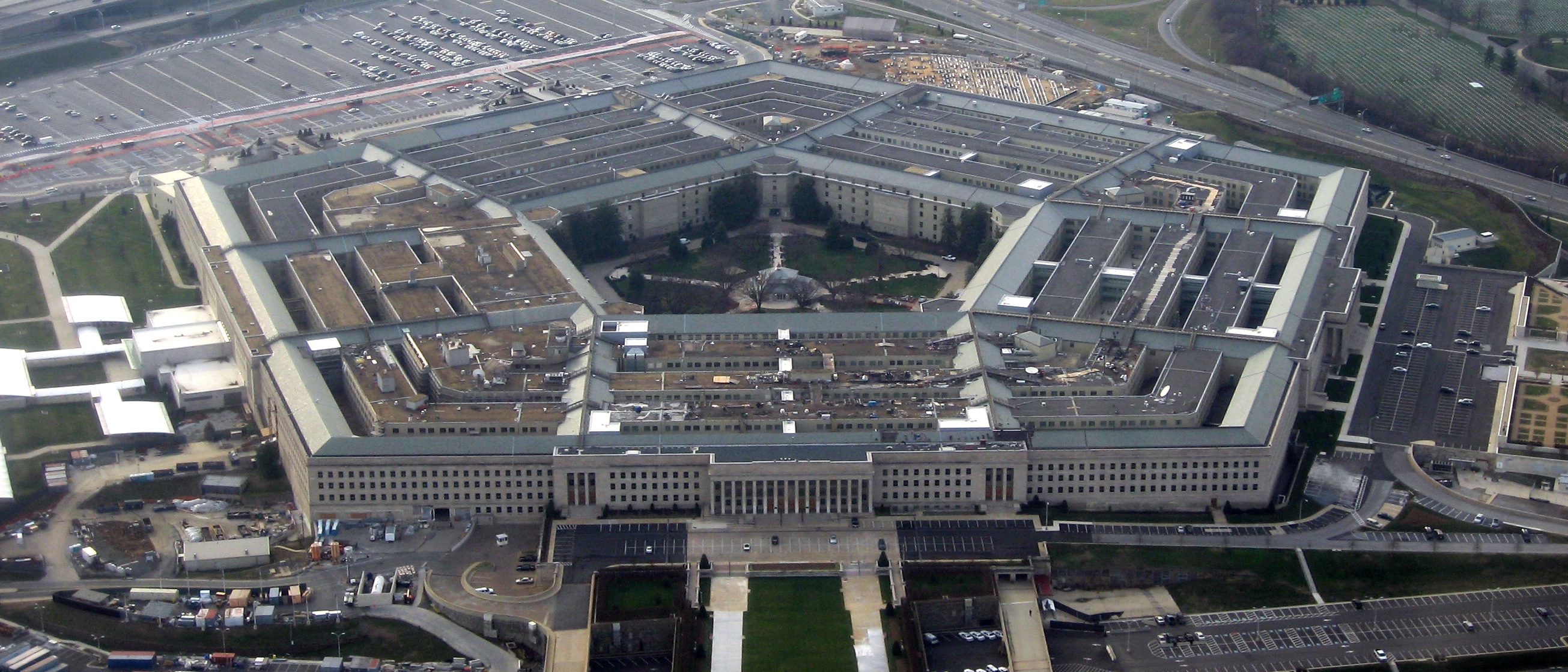
Image by David B. Gleason/Flickr
The Pentagon is asking Congress to relax lobbying restrictions for some senior defense officials and civilians formerly employed by the department.
A new Department of War (DOW) proposal aims to remove portions of the “cooling off” period that certain former Pentagon officials and civilian employees must wait through before lobbying for the military-industrial complex. The Pentagon is making this move as conflicts around the globe create record-breaking profits for defense manufacturers.
The proposal would remove the “one-year restriction on O-7/O-8 military officers and their civilian equivalents and the one-year restriction on all senior officials.” It goes on to note that the “more stringent two-year restriction on the Department’s most senior personnel in O-9/O-10 grades and equivalent civilian levels would remain.” However, the waiting period for “behind the scenes” activities would also be nixed.
The proposal stands in contrast to Secretary of War Pete Hegseth’s pledge to clean up DOW and its gargantuan budget, which has so far failed to pass eight consecutive audits since beginning the practice in 2018. A top official said in December that the department plans to finally pass an audit in 2028, Reuters reported.
“[DOGE is] here, and they’re going to be incorporated into what we’re doing at DOD to find fraud, waste and abuse in the largest discretionary budget in the federal government,” Hegseth said in a statement on Feb. 20, 2025.
The Pentagon’s lobbying restriction rollback has been submitted for consideration in the 2027 National Defense Authorization Act (NDAA). If the proposal becomes law, it would amend Section 1045 of the 2018 NDAA, which was introduced by late Republican Sen. John McCain.
“Section 1045 [the amendment in question] is incongruent with the robust and well-understood framework of executive branch ethics laws and regulations,” a DOW official told the Daily Caller News Foundation. “Section 1045 creates an acute risk of confusion that could undermine compliance and enforcement by using slightly different language that has no direct counterpart in executive-branch-wide ethics laws.”
Aspects of McCain’s Section 1045 can be tied to “adverse effect” on “recruitment and retention,” the Pentagon argues, citing an independent report, and it creates a “significant risk of reducing government access to the knowledge and expertise of former Department of Defense officials and more generally to private-sector expertise in support of technology development, supply chain security, and other national security matters.” The section is inconsistent with other executive branch ethics laws, DOW claims.
“There is not a strong reason to treat former DoW officials more stringently than officials in other federal agencies who make decisions that have a comparable financial impact on the private sector,” a DOW official told the DCNF. “The limitation on behind-the-scenes activities is “particularly problematic” as it appears to have only an attenuated relationship to potentially unethical contact while posing a significant risk of reducing government access to the knowledge and expertise of former DoW officials.”
The Pentagon tried amending McCain’s provision in 2020, but failed, Roll Call reported.
This new proposal comes as the White House seeks a budget of nearly $1.5 trillion for the Pentagon, the biggest in its history. Meanwhile, the Government Accountability Office is investigating significant DOW waste and recently released a report on the DOW procurement processes.
The proposed language change to Section 1045 would narrow the ban to communications or appearances before the department or agency where the individual served within one year before leaving government.
Follow The Money
Defense contractors are already positioned to benefit from that shift. As regional conflicts heat up around the world, the newfound demand for expendable munitions has become staggering.
The Iran War and the Russo-Ukrainian conflict have burned a significant amount of U.S. munition stockpiles, which have long replenishment wait times.
Since the Iran war began, the U.S. military has used somewhere between 45% and 61% of its Patriot missiles, according to a Center for Strategic and International Studies report. Ukraine is using more munitions than the U.S. military industrial base could replenish, Jens Stoltenberg, the North Atlantic Treaty Organization (NATO) Secretary-General, said on Feb. 13, 2023, during a press conference.
The U.S. Army is seeking funding for 857 Terminal High Altitude Area Defense (THAAD) missiles in the 2027 NDAA, while it only sought funding for 55 THAAD missiles in the previous year, Breaking Defense reported. Each THAAD interceptor costs $15.5 million, according to a report from the Center for Strategic and International Studies.
At $15.5 million per missile, 857 THAAD missiles would cost roughly $13.3 billion.
As the demand grows, so do profits for companies in the U.S. military-industrial complex. Executive salaries at these companies also grow in turn.
Boeing executive compensation sharply rose between 2024 and 2025, according to the company’s 2026 proxy statement. The company saw a 14% increase in its revenues for “defense, space and security.”
Revenue ballooned for Boeing between 2024 and 2025. In 2025, the company’s revenue grew to roughly $89.5 billion, a 34% increase from 2024, according to Boeing’s 2025 annual report.
The company received multiyear contracts valued at approximately $2.7 billion to produce seekers for the Patriot missiles, according to a press release from Oct. 14, 2025. It was also awarded a $2.34 billion Air Force contract in March for modifications to the E-7A Wedgetail aircraft fleet, according to the DOW.
RTX Corp., formerly Raytheon Technologies Corporation, saw its sales increase by 10% over the same period, PR Newswire reported on Jan. 27. RTX executive compensation increased by an average of about 26% from 2024 to 2025 among named executive officers listed in the company’s 2026 proxy statement.
Raytheon, an RTX business, received a $3.5 billion DOW contract in July 2025 for AMRAAM missile production, according to the DOW. RTX also announced five agreements with the DOW in February to expand production of Tomahawk, AMRAAM, SM-3 and SM-6 missiles.
Boeing and RTX Corp. did not reply to requests for comment.
The Inspector Is In The House
While representing the Pentagon’s Office of Inspector General at a House Oversight Committee meeting in June, Carmen Malone directly called out specific examples of inefficient government procurement during her opening statement.
Malone cited the F-35 program, where $1.7 billion was paid for sustainment efforts on a fleet of planes that did not meet Military Service aircraft readiness requirements.
“For example, the average air vehicle availability for all Military Service F-35 aircraft was 50 percent in FY 2024, which is 17 percent lower than the average minimum requirements,” Malone said at the meeting.
Malone also referenced a specific example of the U.S. Navy dumping money into old, outdated airframes.
“The Navy spent $83.1 million to retrofit two MQ-4C Triton unmanned aircraft to the latest version and will need to spend additional money to further retrofit the MQ-4C Triton to correct the open deficiencies,” Malone said during the hearing. “When production begins before problems are understood and mitigated, the result is predictable: redesigns, delays, and inefficiencies.”
Editor’s note: This article has been updated to include comment from the Pentagon.
All content created by the Daily Caller News Foundation, an independent and nonpartisan newswire service, is available without charge to any legitimate news publisher that can provide a large audience. All republished articles must include our logo, our reporter’s byline and their DCNF affiliation. For any questions about our guidelines or partnering with us, please contact [email protected].