

National Defense
The Pentagon Gears Up For An Internet-Based War
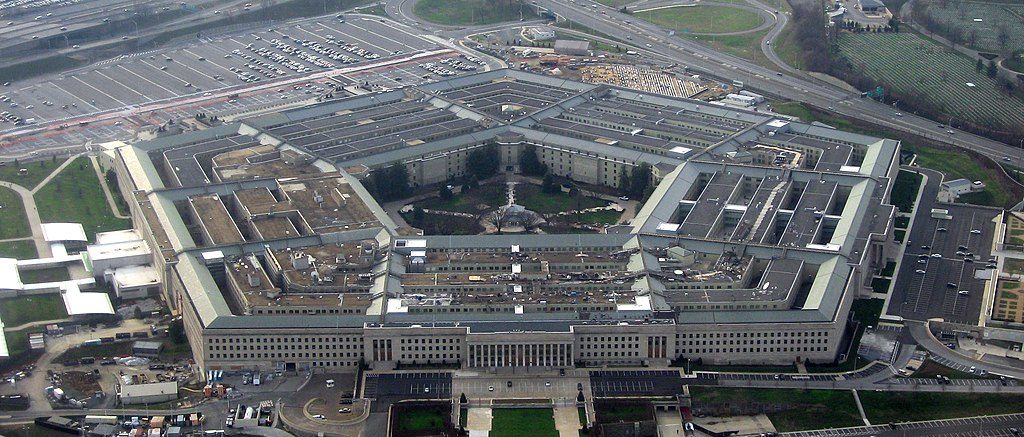
(Wikimedia Commons/Public/David B. Gleason from Chicago, Illinois, CC BY SA 2.0)
As the world moves deeper into the digital age, the Pentagon is building a new command structure to handle cybersecurity.
The Defense Cyber Defense Command (DCDC) is one of the newest agencies in the Department of War. It has one mission: to protect America from all digital threats that could undermine U.S. national security.
“I’m currently assigned there to build out a … framework and command and control footprint, because the most important thing, besides understanding the technology, the people, the processes, is who’s in control, who’s executing, what’s the common rail amongst all the authorizations that we have between CISA (Cybersecurity and Infrastructure Security Agency), FBI, Coast Guard, Department of War writ large,” Col. Adolph Rodriguez, director of Defense Critical Infrastructure at the DCDC, told Breaking Defense during the TechNet Cyber conference Wednesday.
DCDC was formerly known as the Joint Force Headquarters-Department of Defense Information Network. It was elevated to a new sub-unified structure under U.S. Cyber Command (CYBERCOM) in May 2025, according to the DCDC history page.
“Given the dynamic nature of cyber capabilities, fast and continuous, once again addressing these questions is welcome, absolutely essential, and will not be [the] last time it happens,” Heritage Foundation Visiting Fellow and former Pentagon official Steven Bucci told the Daily Caller News Foundation in an email. “If we get to the point that we think we have ‘solved’ this challenge, we will be [in] grave danger. So, are we prepared? Yes. Do we need to be constantly endeavoring to become more prepared? Absolutely.”
“How do we continue to operate before, during, and after the attack?” Breaking Defense reported, citing Rodriguez.
CYBERCOM and the Pentagon did not immediately respond to a request for comment. The White House referred the DCNF to the Pentagon.
‘State-Sponsored Cyber Actors’
The move to unify DCDC as its own subcommand under CYBERCOM was initially put forth in the 2025 National Defense Authorization Act.
This command has newfound importance in U.S. national defense as Chinese hackers begin to target infrastructure in the U.S., CISA reported on Feb. 7, 2024.
“People’s Republic of China (PRC) state-sponsored cyber actors are seeking to pre-position themselves on IT networks for disruptive or destructive cyberattacks against U.S. critical infrastructure in the event of a major crisis or conflict with the United States,” according to the CISA report.
“Why don’t we build a cyber campaign plan that’s enduring that we can utilize those NORTHCOM authorities with Cyber Command’s authorities, build out the sectors very similar to FEMA so this way we don’t have to change any of the infrastructure and now execute that muscle memory of training, assessments, and then identify where the key infrastructure is?” Breaking Defense reported, citing Rodriguez.
Not all experts were supportive of the new command structure.
“Infrastructure, cyberspace, and civilian systems are treated by the PLA as an asymmetric battlespace that can escalate up to and including kinetic warfare. As these are war plans, NorthCom and Cybercommand should be the lead—not CISA,” Piero Tozzi, senior director of China policy at the America First Policy Institute, told the DCNF. “Our preparation has been hampered by limited threat perception and reliance on integrated Chinese-origin technology and components, including cellular modules and the Internet of Things, creating structural vulnerabilities dating back to the 1990s that are only now being fully recognized and belatedly addressed.”
DCDC also protects power, water and transportation systems, Rodriguez told Breaking Defense.
Volt Typhoon is a Chinese-sponsored hacker group that is known to target these systems, the National Security Agency reported on Feb. 7, 2024. “The PRC has already compromised these systems,” the NSA report says.
“Such an attack could also trigger disruptions of the wider global economy that would ultimately do irreparable damage to China given our [economic] interconnectivity,” Bucci told the DCNF.
Some “cyber-actors” have been living inside these systems for years while waiting for their chance to strike, according to the NSA report.
“Our adversaries (China clearly prominent among them) are constantly working to overcome our defenses, so we need to work to stay ahead. Most of the time we are, occasionally an adversary will get a step on us, and we must work to regain the lead,” Bucci told the DCNF.
All content created by the Daily Caller News Foundation, an independent and nonpartisan newswire service, is available without charge to any legitimate news publisher that can provide a large audience. All republished articles must include our logo, our reporter’s byline and their DCNF affiliation. For any questions about our guidelines or partnering with us, please contact [email protected].