

Politics
EXCLUSIVE: Trump’s Pollster Found Voters Were Highly Concerned About Vaccines. The Poll Never Saw Daylight
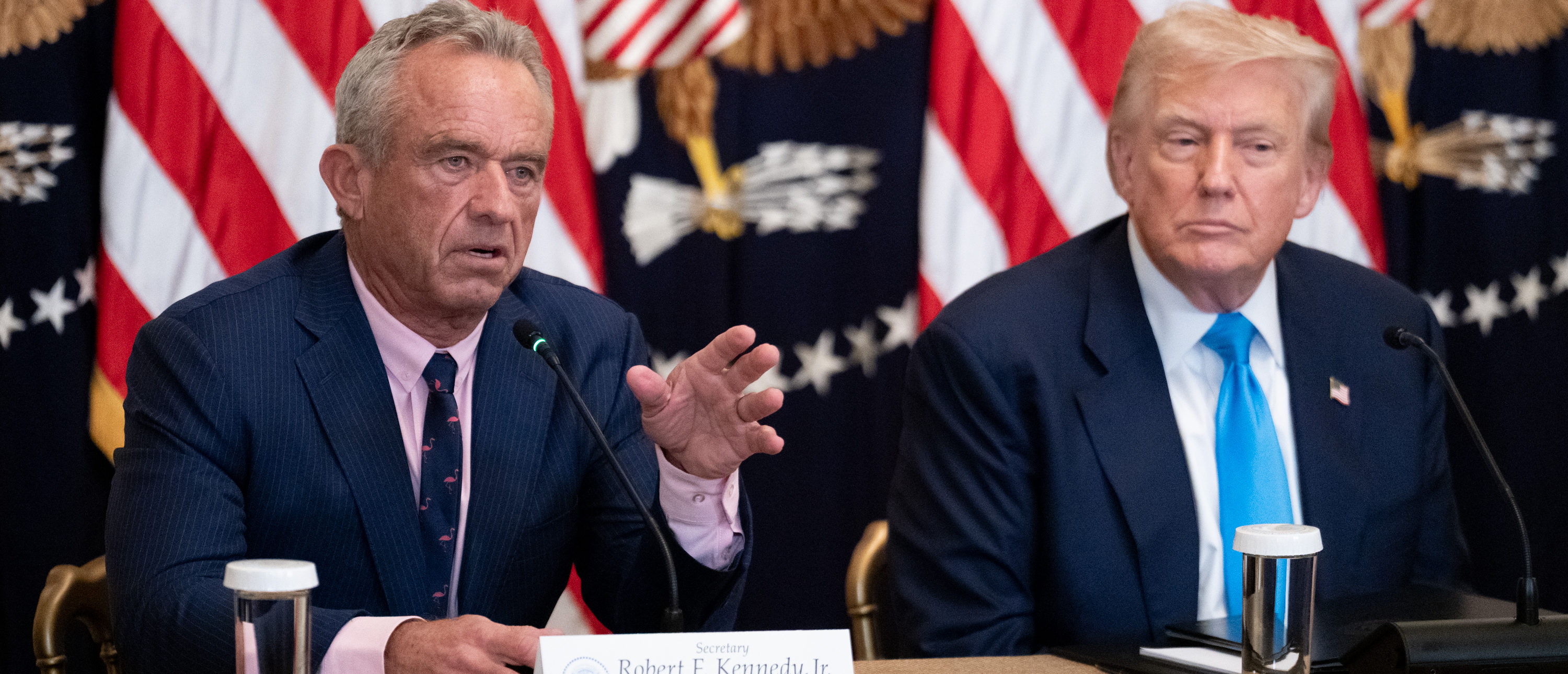
White House Intern Photo by Jack Power
An unreleased poll appears to undermine the White House’s stated rationale for pivoting away from policies that inflame pharmaceutical companies.
The Daily Caller News Foundation obtained a secret poll conducted in October 2025 by President Donald Trump’s longtime pollster Tony Fabrizio finding that 73% of voters expressed concern about childhood vaccine mandates, while a whopping 90% of voters expressed concern about the pharmaceutical industry’s corrupting influence.
The October poll was never released. White House officials in media reports have instead cited a more limited poll Fabrizio conducted a month later concluding the issue is a political loser to justify Health and Human Services (HHS) Secretary Robert F. Kennedy Jr.’s election-year pivot to food policy. The shift away from vaccines at Kennedy’s health department culminated last week in the termination of the lead author of the Trump administration’s policy on the childhood vaccination schedule.
The secret Fabrizio poll, which has not been previously reported, tells a different story. It shows voters’ top health concern is the drug lobby’s influence on public policy, on medical research and on news coverage, and that nearly seven in ten voters want more research on vaccines’ cumulative effect in infants. The DCNF has obtained the poll but is not publishing it at the request of its source, who does not have permission to release it.
Fabrizio’s firm, Fabrizio Lee, did not respond to requests for comment.
FDA Bloodbath
Since April 30, the three top officials leading drug policies at Food and Drug Administration (FDA), including Commissioner Marty Makary — all prominent critics of the Biden’s administration’s COVID vaccine policies who sought to improve agency standards — have been squeezed out of the administration.
Kennedy and the White House have in recent days remade the FDA after tensions emerged with Makary over flavored vapes and regulating injectable peptides, according to a senior administration official not authorized to speak publicly. Kennedy had sought to mimic older vaccine safety studies using existing FDA databases, while Makary wanted stronger clinical trials from vaccine manufacturers themselves, according to a former administration official who asked for anonymity to speak candidly.
The FDA overhaul also came amid a covert lobbying effort from pharma companies, who turned to allies in the press, on Capitol Hill and in the White House, Endpoints News reported. The White House was eager to dial down the “noise,” according to other press reports.
White House Chief of Staff Susie Wiles and HHS Chief Counselor Chris Klomp have championed other initiatives like TrumpRx, a direct-to-consumer website to buy discounted drugs, and an executive order on studying psychedelics to treat mental illness.
A side-by-side comparison of the secret poll and two published ones shows a stark contrast. In the polls that were made public, questions appear designed to dilute perceived support for the issue by prompting voters to consider “established” vaccine schedules and “longstanding” vaccine policies. That framing contrasts with Trump’s own messaging as recently as December: That the U.S. childhood vaccination schedule is unusual compared to other Western nations and that the total impact has not been well studied.
Trump reiterated that view in an interview on May 10.
Thank you for this @SusieWiles Couldn’t more proud to be one of these “Musketeers!” pic.twitter.com/8aa6W1Mag0
— Tony Fabrizio (@TonyFabrizioGOP) November 23, 2024
Rewriting Poll Questions On Vaccines
While the unpublished poll found that nearly three fourths of voters expressed concerns about “childhood vaccination requirements and mandates,” a public poll conducted by Fabrizio’s firm a month later instead asked whether the administration should “remove established childhood vaccine recommendations for diseases like whooping cough, measles, hepatitis and others.” Support plummeted to 22%.
The secret poll gauged voter sentiment on the pharmaceutical industry. Just 18% of voters reported a favorable view.
Voters expressed broad support for curbing the power of vaccine manufacturers, more parental decision-making and more research.
A bipartisan majority of voters, 68% or more, agreed with each of the following statements: That the National Institutes of Health should study potential complications of infants taking too many vaccines too quickly; that the government should not provide blanket immunity to vaccine manufacturers; and that the government and the individual share responsibility over vaccinations or the government has no role at all.
Just 11% of voters said the government alone should make decisions on vaccines.
Thirty-seven percent of voters said they believe there is no reason to change how children are given vaccines, while 45% said families should have the choice to spread out the schedule and 8% said they are outright unsafe.
In the published polls, Fabrizio did not ask these questions. Instead the president’s pollster asked about support for individual vaccines: The MMR vaccine, the TDAP vaccine, the Hepatitis B vaccine and the shingles vaccine for people over 50, for which there were broad support.
Fabrizio published the first of these MAHA polls in August 2025. Fabrizio’s team was approached by Kennedy supporters about conducting a much more detailed poll in October 2025. The poll was commissioned by the MAHA Action, its title slide shows. It was never published. Fabrizio then conducted a third poll in November 2025 that once again asked about support for individual vaccines and “established” vaccine policies.
In the secret October poll, Fabrizio surveyed 1,500 registered voters. The August poll surveyed 1,000 voters nationally. The December poll surveyed 1,000 voters in the 35 most competitive congressional districts. All of the polls used cell phones, landlines and text messages, and polled approximately equal numbers of Republicans, Independents and Democrats. Every poll had a 95% confidence level and a sampling error between 2.5% to 3.1%.
Corporate Media’s Full Court Press For Medical Establishment
The unpublished poll did signal a communications challenge: Awareness of the MAHA movement was highest among voters who already support the president.
Republicans asked to recall a MAHA policy were more likely to name action on artificial ingredients, dyes and processed foods, while Democrats were more likely to recall negative headlines and posts about the administration’s initiatives on autism and Tylenol, the secret poll shows.
“Most voters are concerned about a variety of general health issues, but just a third of voters call themselves a part of the MAHA movement,” Fabrizio’s firm concluded. “Voters who have heard about MAHA recently are being positively impacted by its actions on artificial ingredients and food dyes, but recent mentions surrounding autism causes and vaccines have led many to believe MAHA isn’t science/evidence based.”
The DCNF reported last year on internal company and FDA documents revealing longstanding private concerns about Tylenol and neurological harm in infants, but the corporate media uniformly dismissed these concerns.
Makary resigned on May 12 under pressure from the White House and after months of relentless criticism from the biotech industry and business press over individual drug rejections. For example, the Wall Street Journal published several editorials about the FDA’s rejection of an experimental melanoma drug alone. FDA rejected the drug after the company declined to take up the FDA’s recommendation to ensure the clinical trial had a control arm.
Fervor from the business press over Makary ally Center for Biologics Evaluation and Research Director Vinay Prasad putting up regulatory obstacles for an mRNA flu vaccine and an experimental drug injected through the skull precipitated an announcement that he would complete his government service on April 30. And Center for Drug Evaluation and Research Director Tracy Beth Høeg, who championed paring down the childhood vaccination schedule to the most essential shots, was shoved out of the agency last week by unnamed higher-ups who did not identify themselves to Høeg, according to a former administration official.
In January, Høeg led a 34-page scientific review recommending that the Centers for Disease Control and Prevention (CDC) harmonize the U.S. schedule more closely with 20 other developed nations by paring down from 17 to ten “consensus vaccines” for which the analysis found broad international precedent. Administration officials’ stated purpose was to increase confidence in these core immunizations. A Gallup poll found a precipitous drop in people who consider childhood vaccines “extremely important” or “very important” from 94% in 2001 to 69% in 2024.
Though a flurry of negative headlines in the business press dogged Makary and his top staff for months, the number of drug approvals under Makary were on par with prior years.
All content created by the Daily Caller News Foundation, an independent and nonpartisan newswire service, is available without charge to any legitimate news publisher that can provide a large audience. All republished articles must include our logo, our reporter’s byline and their DCNF affiliation. For any questions about our guidelines or partnering with us, please contact [email protected].