

Technology
Pope Leo XIV Issues Sweeping Teaching On Upholding Human Worth In A World Embracing Artificial Intelligence
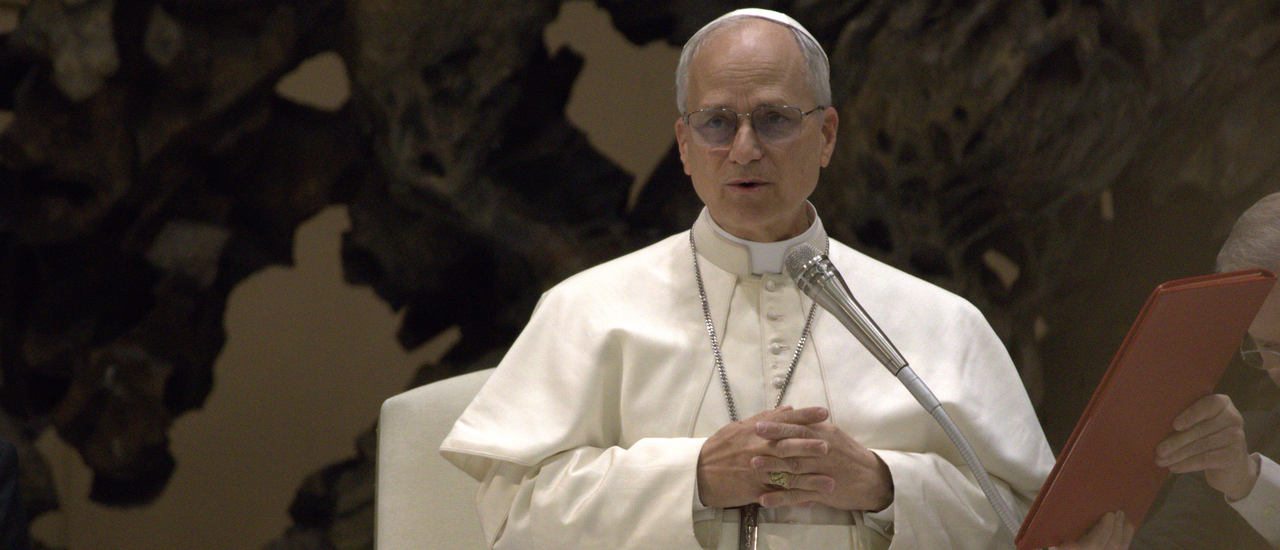
Edgar Beltrán, The Pillar, CC BY-SA 4.0 <https://creativecommons.org/licenses/by-sa/4.0>, via Wikimedia Commons
Pope Leo XIV officially released the most significant document of his pontificate Monday to address the sweeping impacts of the digital revolution and emerging technologies such as artificial intelligence on the modern world and human dignity.
The first American pope entitled his debut papal encyclical Magnifica Humanitas (Latin for “Magnificent Humanity”): “On the Protection of Human Dignity in the Age of Artificial Intelligence.” Spanning more than 42,000 words (in English; the main text is roughly 37,000 words) across an introduction, five chapters, conclusion, and many references, it represents the Roman Catholic Church’s most extensive response to the effects of generative artificial intelligence — popularized by ChatGPT’s November 2022 release — and other contemporary technologies on human civilization and interpersonal relationships. Leo’s papal predecessor, Francis, previously approved the January 2025 publication of a doctrinal “Note on the Relationship Between Artificial Intelligence and Human Intelligence,” Antiqua Et Nova (“Ancient and New”), by the Dicastery for the Doctrine of the Faith and the Dicastery for Culture and Education.
In the era of #ArtificialIntelligence, when human dignity is threatened by new forms of dehumanization, ours is the pressing duty to remain profoundly human. We must lovingly safeguard the grandeur of humanity bestowed upon us and revealed in its fullness in Christ, the splendor…
— Pope Leo XIV (@Pontifex) May 25, 2026
Pope Leo, in particular, began addressing the rise of artificial intelligence just two days after his May 8, 2025 election, telling cardinals who had gathered in Rome, “In our own day, the Church offers to everyone the treasury of her social teaching in response to another industrial revolution and to developments in the field of artificial intelligence that pose new challenges for the defense of human dignity, justice and labor.” The pope, who graduated from Villanova University with a degree in mathematics in 1977, continued to speak and write on the issue throughout his yearlong papacy, including for events specifically addressing such technologies.
Encyclicals (from the Greek enkyklios, meaning “circular”) are formal pastoral letters issued by a pope and circulated widely, historically primarily to the bishops of the world but, in modern times, also to Catholics and the broader public. They are important sources of Catholic teaching and reflect upon Church doctrine, tradition and Scripture while addressing major moral or social issues, such as peace and human fraternity, the environment, human life and sexuality, and labor and capital, as well as the Church’s liturgy, sacramental life, and devotions.
Most Rev. Paul S. Coakley, Archbishop of Oklahoma City and president of the U.S. Conference of Catholic Bishops, welcomes Pope Leo XIV’s first encyclical, Magnifica humanitas, on safeguarding the human person in the time of artificial intelligence.
All are encouraged to read the… pic.twitter.com/rbZtT4E0Oa
— U.S. Conference of Catholic Bishops (@USCCB) May 25, 2026
Pope Leo XIV signed the encyclical May 15, 2026, the 135th anniversary of Rerum Novarum (“Of New Things”), which was issued by his namesake predecessor and pontifical model, Leo XIII, in 1891. Rerum Novarum is considered the foundational document of modern Catholic social teaching, outlining amid the upheaval of the Industrial Revolution relationships between labor and capital, the rights of workers and the role of the state.
In his first #encyclical “#Magnificahumanitas“, on the Church’s social doctrine in the era of #ArtificialIntelligence, Pope Leo XIV appeals for the safeguarding of humanity, promotion of truth, dignity of work, social justice, and peace.https://t.co/4Mev5jVPxD pic.twitter.com/EtoMGByPFe
— Vatican News (@VaticanNews) May 25, 2026
The Holy Father officially released his work Monday at the Vatican’s Synod Hall in the presence of high-ranking prelates, Catholic theologians, journalists, and the atheist co-founder of American AI company Anthropic, Christopher Olah.
“We need more of the world — religious communities, civil society, scholars, governments, and indeed all people of good will — to do what His Holiness has done here: to take this seriously, to look closely, and to push events in a better direction. We need informed critics who will tell the labs when we are failing. We need moral voices that the incentives cannot bend,” Olah, whose company developed the Claude AI assistant, said. “Today is just the beginning — the start of a long collaboration between those of us who are building this and those who can see what we, from inside, cannot. Today is a powerful illustration of the form this global project of good will might take. Let it also be a decisive first step toward a hopeful future for magnificent humanity.”
Speaking before Pope Leo XIV at the presentation of Magnifica Humanitas, @AnthropicAI co‑founder Christopher Olah @ch402 asks for something unusual from the tech world: more “earnest, thoughtful critics.” He calls on the Church, religious communities, scholars, civil society, and… pic.twitter.com/nsYkVFPimH
— EWTN News (@EWTNews) May 25, 2026
— Chris Olah (@ch402) May 25, 2026
“What a great sign of hope that, with our differences, we can listen to one another,” Leo remarked. “This interchange clearly bespeaks the gravity of the moment, as well as confidence that, together, we can discern the major questions of our time, and so, the future of humanity. Like the earlier ‘Leo,’ I feel entrusted to look upon another huge transformation with eyes of faith, with lucidity of reason, with openness to mystery, and with cries of the poor and the earth resounding in my heart.”
During the presentation of Magnifica Humanitas, Pope Leo XIV gave thanks to Anthropic co‑founder Christopher Olah – and, in the name of the Church, accepted his invitation “to walk together” in this time of artificial intelligence. pic.twitter.com/IL0RkM6sPo
— EWTN Vatican (@EWTNVatican) May 25, 2026
“Magnifica Humanitas was born from listening like Leo XIII did,” he continued. “I have listened to scientists and engineers who work with sincere enthusiasm on technologies capable of alleviating immense suffering; to political leaders and public officials who have perseveringly sought just rules; to parents and teachers who are deeply concerned for the future of younger generations.”
He also stated, “[A]rtificial intelligence needs to be disarmed. The word [“disarmed”] is strong, I know, but deliberately chosen because this moment needs words capable of attracting attention, awakening consciences and indicating paths forward for humanity.”
Pope Leo XIV at the presentation of Magnifica Humanitas, his first encyclical: “Artificial intelligence needs to be disarmed — freed from logics that turn it into an instrument of domination, exclusion, and death.” pic.twitter.com/WAfy1YnYIC
— EWTN Vatican (@EWTNVatican) May 25, 2026
Magnifica Humanitas, the pope likewise writes in his encyclical’s introduction, fulfills his “wish to add my own voice to this living tradition, invoking the help of the Spirit of wisdom, who has dwelt in the world since its beginning.”
“When some objected that the Church should not waste energy on worldly matters, but instead focus on communicating the message of eternal life, Leo XIII responded with realism and wisdom, saying that the proclamation of the Gospel cannot overlook the concrete lives of people,” Leo XIV reflects. “Today, the Social Doctrine of the Church is a legacy of wisdom, where we find principles for thought, criteria for discernment and judgment, and concrete guidelines for action. Founded on Sacred Scripture and Tradition, and in engagement with the sciences, it helps us clearly interpret the challenges of the present and identify appropriate ways for living out a clear Christian witness, with joy and in service to the world.”
“Humanity, created by God in all its grandeur, is today facing a pivotal choice: either to construct a new Tower of Babel or to build the city in which God and humanity dwell together,” the pope primarily establishes, referencing a recognized biblical account to illustrate the harm of seeking power and stability in the name of progress without consideration of man’s sacred identity. The Tower of Babel was a massive vanity building project of an ancient population seeking to reach the heavens; for their hubris, God confused their hitherto common language, bringing the effort to an abrupt halt and resulting in the scattering of the peoples throughout the world.
Humanity, created by God in all its grandeur, is today facing a pivotal choice: either to construct a new Tower of Babel or to build the city in which God and humanity dwell together. In Jesus Christ, this humanity in its grandeur becomes the Way, the Truth and the Life, opening…
— Pope Leo XIV (@Pontifex) May 25, 2026
He goes on to recall how each generation of humanity shares the responsibility of shaping its own era and history in pursuit of civilizational achievements while safeguarding human dignity and justice.
Built amid the earliest days of humanity’s origin out of fear of being scattered, the biblical Tower of Babel “was a project conceived without reference to God, supported by a uniformity that eliminated diversity and that chose homogenization over communion,” Leo adds.
Accomplishments for the sake of “pride and the claim to self-sufficiency,” the pope warns, threatens the breaking down of communication, confusion of languages and the inhibition of people to understand each other.
“The result is not unity, but dispersion,” Leo states. “Babel thus reveals the limits of any effort that, however grandiose, arises from self-affirmation, sacrifices human dignity for efficiency and aspires to reach heaven without God’s blessing.”
In contrast, the pope calls to mind a biblical account of the Jewish people’s vulnerability during the Babylonian Exile of 597 to 538 B.C. following the destruction of Jerusalem and Solomon’s Temple. Nehemiah, a Jew in the service of the Persian King Artaxerxes, obtains permission to join other exiles who have returned to their ancestral home. After fasting, praying and careful consideration, he becomes instrumental in rebuilding the holy city. He does not issue unilateral decrees, but gathers families to coordinate specific responsibilities, hear their concerns and address opposition. The gradual success is therefore not the fruit of one individual but the combined efforts of a people united in a common identity.
“It is an undertaking with God at the center, which rebuilds relationships before rebuilding with stones,” Leo reflects. “Thus, ancient Jerusalem rediscovers a common language — not one of uniformity, but one of communion, namely the harmony that arises when all persons assume their own role and recognize that their strength comes from the Lord.”
“Whenever humanity is in danger of marring its true identity, we Christians lift our eyes to the Incarnate God, knowing that it is ‘only in the mystery of the Word made flesh that the mystery of humanity truly becomes clear,” he continues. “In Jesus Christ, this humanity in its grandeur becomes the Way, the Truth and the Life, opening the path for each of us to grow toward fullness.”
Citing the rapid development and huge potential of modern technology to impact the human experience, Leo notes “we cannot limit ourselves simply to repeating … insightful teachings,” but “[i]nstead, we must ask God for the wisdom to interpret the great trends of our time, particularly technological advances. … Technology should not be considered, in itself, as a force antagonistic to humanity. On the contrary, it has formed part of our history since the beginning as ‘a profoundly human reality, linked to the autonomy and freedom of man.'”
At the presentation of his first social encyclical, Magnifica Humanitas, Pope Leo XIV appealed for artificial intelligence to be placed firmly at the service of humanity, warning against technologies that foster domination, exclusion and war. https://t.co/fiGYDBX96Q
— Vatican News (@VaticanNews) May 25, 2026
CHAPTER ONE: “A Dynamic Approach Faithful to the Gospel”
Pope Leo opens the first chapter of his encyclical by outlining a long history of how the Church, as a sign of unity and not as an outsider, accompanies humanity and “actively participates in the processes by which society grows and is organized.” Furthermore, rather than interfering in so-called worldly affairs or imposing an unwelcome morality from above, as her [the Church’s] critics accuse, “she offers her own contribution to the creation of a more just and fraternal society.”
Concerns about AI are especially common in the U.S., Italy, Australia, Brazil and Greece, where about half of adults say they are more concerned than excited. pic.twitter.com/K1NV5XEMPz
— Pew Research Center (@pewresearch) October 17, 2025
Across 25 countries surveyed, a median of 55% of adults have at least some trust in their nation’s ability to regulate AI, while 32% do not. 🧵👇
Full analysis here: https://t.co/bdBq0gmFu6 pic.twitter.com/9zqmjO1JJm
— Pew Research Center (@pewresearch) October 16, 2025
The Church, he continues, continually engages with — and not in spite of — philosophy and the social sciences in seeking truth, goodness and beauty. Her teachings, by nature and in practice dynamic rather than static, draw insights from them to better fulfill its teaching authority, or Magisterium, without claiming to author definitive political or economic answers to the challenges of the day. Her goal is to improve humanity’s relationships within itself, the world it exists in and the God who created and gives meaning and identity to both.
As such, the Church’s consideration of artificial intelligence and other modern technologies is not to be dismissed “as merely yet another theme to be studied or a crisis to be managed, but rather as a development that challenges the categories of Social Doctrine from within, calling for their further development in fidelity to the Gospel.”
“In reality, it stems from a Church that walks alongside humanity, recognizing the autonomy of earthly realities and the distinction between ecclesial and political communities,” Leo writes. “Indeed, it is for this very reason that she strives to serve the common good.”
CHAPTER TWO: “Foundations and Principles of the Social Doctrine of the Church”
The second chapter of Magnifica Humanitas establishes the foundation for the rest of the encyclical to “interpret the ‘new things’ of our time, particularly in view of the inherent dignity of the human person.”
Observing human dignity is “neither acquired nor earned, nor does it need to be justified,” Leo cites Pope John Paul II’s view that every human being’s worth is infinite, “first, because the love of God, who calls us to friendship with him, is infinite; and second, his love is absolutely unconditional, in the sense that, even if we search endlessly, we will never find anything that can erase or deny it.”
“In order to protect the human person in the age of artificial intelligence, I believe that today we must once again reflect on the common good, the universal destination of goods, subsidiarity, solidarity and social justice,” the pope writes. He then warns that, due to failure to recognize the universality of human rights, technological progress has at times facilitated public or concealed violations of human dignity. Any lasting recognition of equal dignity and rights between men and women likewise requires its implementation in law, education, civil and social responsibilities and access to employment. In addition, the pursuit of an individual’s progress without caring for others is insufficient for and an “illusion” of contributing to the common good.
With regard to private property, the pope states it is the Church’s view that such rights, while permissible under their own specific meaning and purpose, are not “absolute or inviolable.” As nations increasingly consider wealth to involve knowledge and technology, there exists an imbalance which widens between those able to participate and access in their utilization and those excluded or left on the margins of such economic transformation.
“Justice demands that we prevent the emergence of new forms of exclusion and deprivation of freedoms: individuals and peoples hindered or denied access to basic technologies, communities exposed to invasive surveillance and social groups penalized by opaque algorithms that perpetuate prejudice and discrimination,” Leo observes. “In the digital age, a just social order guarantees everyone equal access to opportunities, protects the youngest and weakest members of society, combats hate and misinformation and subjects the use of data and technology to public oversight, so that the guiding principle is not solely profit but the dignity of every person and the common good of all people.”
“Technological innovations, including artificial intelligence, are not neutral, for they can either foster participation and justice or exacerbate inequality, control and exclusion,” he continues. “For this reason, they must be evaluated by asking a crucial question: Do they truly help individuals and peoples to become more humane and fraternal, while respecting our common home and future generations?”
CHAPTER THREE: “Technology and Dominance. The Grandeur of Humanity in Light of the Promises of AI”
The third chapter begins by characterizing the encyclical’s reflections on the contemporary challenges shaping human existence — particularly involving technology — as a building project.
“We are called to reflect on the great ‘construction sites’ of our era and ask: What are we building?” Leo writes. “As technological development rapidly transforms languages, relationships, institutions and forms of power, we believers must and can choose which projects to work on and in what manner, so as to safeguard and value the grandeur of humanity that has been given to us as a gift. This is a choice not only for our future but also for our present, since artificial intelligence and other emerging technologies are already part of our daily lives.”
The pope then clarifies his intention for writing is not to “offer a comprehensive treatment of artificial intelligence, nor to give an overview of the extensive relevant literature, such authoritative contributions already exist, including within the ecclesial context.”
It is appropriate to preface this discussion with two considerations. First, any statement regarding AI risks becoming quickly outdated, given the remarkable pace at which these systems are developing. Second, all of us, including those who design them, possess only a limited understanding of their actual functioning. Indeed, current AI systems are more “cultivated” than “built,” for developers do not directly design every detail, but instead create a framework within which the intelligence “grows.” … There thus emerges an urgent need for a twofold commitment: on the one hand, a deepening of scientific research; on the other, the exercise of moral and spiritual discernment.
It is not possible to provide a single, comprehensive definition of AI. What can be stated, however, is that we must avoid the misconception of equating this type of “intelligence” with that of human beings. These systems merely imitate certain functions of human intelligence. In doing so, they often surpass human intelligence in speed and computational capacity, offering tangible benefits across many fields. Yet this power remains entirely tied to data processing. So-called artificial intelligences do not undergo experiences, do not possess a body, do not feel joy or pain, do not mature through relationships and do not know from within what love, work, friendship or responsibility mean. Nor do they have a moral conscience, since they do not judge good and evil, grasp the ultimate meaning of situations, or bear responsibility for consequences. They may imitate language, behavior and analytical skills, or even simulate empathy and understanding, but they do not understand what they produce, for they lack the affective, relational and spiritual perspective through which human beings grow in wisdom. Even when these tools are described as capable of “learning,” their way of doing so is different from that of a human person. It is not the experience of those who allow themselves to be shaped by life and grow over time through choices, mistakes, forgiveness and fidelity. Rather, it is a form of statistical adaptation based on data and feedback, which can be very effective, but does not imply inner growth.
The pope goes on to acknowledge artificial intelligence as “a valuable tool that requires vigilance,” as it increasingly consumes resources and dominates infrastructure allocated to serve the common good. Furthermore, engagement with artificial intelligence tools can imitate positive human communication but ultimately offers the illusion of a real relationship and meaningful bonds. The immediate availability of tailored answers may also “weaken personal creativity and judgment” and lessen “the very desire to form genuine human connections.”
Leo then argues artificial intelligence cannot be morally neutral as “every technical tool embodies choices and priorities through what it measures, ignores and optimizes and how it classifies people and situations.” On the other hand, advocating for a measured approach, review, or even slower pace of adopting artificial intelligence technology does not signify being opposed to progress; rather it is “an exercise of responsible care for the human family.”
🇺🇸 Republicans are more likely than Democrats to trust the U.S. to regulate the use of AI effectively.
🔴 54% of Republicans trust, 38% distrust
🔵 36% of Democrats trust, 56% distrust pic.twitter.com/Z406EXVAOx— Pew Research Center (@pewresearch) November 12, 2025
“If a system is designed or used in a way that treats some lives as less worthy, or excludes them without the possibility of appeal, then it is not merely a tool ‘to be used well,’ since it has already introduced criteria that contradict the inalienable dignity of the human person,” he writes. In addition, rather than allowing for those who control artificial intelligence to be able to impose their moral vision or there being a limit on who can contribute to its development versus those who can merely be its recipients, regulations should enable a political means to slow perceived runaway developments, address data ownership as a shared good of participation rather than a marketed commodity and protect rights of inquiry.
CHAPTER FOUR: “Safeguarding Humanity at a Time of Transformation. Truth, Work, Freedom”
Shifting from previous chapters’ analysis to more concrete applications, Pope Leo identifies truth as a common good and critical for democratic society. In the context of democracy, for example, technology can allow for wider participation in dialogue and access to information, but also distort narratives or blur facts with opinions, biases, or misinformation. Through artificial intelligence, disinformation can be amplified and deployed against democratic society “since the quality of public communication depends directly on social trust and, in turn, shapes it.” Truthful information, Leo notes, is therefore not to be solely controlled by specific or automated entities, but to be verified, debated and responsibly argued in the public exchange of ideas; trust is built in such exchanges with others and the outside world.
In many countries, World Communications Day is being marked today, whose theme this year I have chosen as “Preserving Human Voices and Faces.” In this era of artificial intelligence, I encourage everyone to commit themselves to promoting forms of communication that always respect…
— Pope Leo XIV (@Pontifex) May 17, 2026
“The search for truth is an essential element of democracy, which is itself a means of contributing to the common good,” Leo observes. “When questions about what is true lose their appeal, and a pragmatism takes hold that is content with what appears useful or effective, then democratic life is weakened. After all, democracy does not consist of rules and procedures alone, but above all of a solid concordance with the facts and a genuine commitment to the good of individuals and society as a whole. Indifference to the truth leads, slowly but surely, to a descent into totalitarianism.”
As Americans navigate an increasingly complex information environment – one shaped by rapid advancements in #AI – some wonder whose job it is to ensure people know what information they can trust and how to check whether news is accurate. https://t.co/S1uZBeJpdX pic.twitter.com/c1LeH4jjRF
— Pew Research Center (@pewresearch) February 16, 2026
The pope then turns to how it is essential for Christians to commit themselves to fostering transparency and the pursuit of truth, no matter where it leads. He also admits the Church herself has not always followed this practice, especially when it came to confronting the grave scandals involving clerical sexual abuse of minors entrusted to their care.
“We have witnessed with shame the emergence of painful truths concerning even members of the Church and ecclesial realities. In particular, some journalists, driven by a passion for truth, have played a crucial role in bringing injustices and abuses to light,” Leo acknowledges. “Yet vigilance and transparency remain first and foremost a grave responsibility for the Church herself, and we must not wait for others to compel us to confront uncomfortable truths about ourselves.”
Artificial intelligence and other digital tools are also already transforming educational practices, evaluations and environments, for both students and professional teachers alike. Longstanding teaching practices and curricula may be rapidly made obsolete by the advance of such technology, while students may lose the desire to deepen their understanding of the world through independent, thoughtful analysis, collaborative engagement and even silent reflection. Students may even lose their desire to seek direction for their lives, or to embrace new challenges and set new horizons as they grow in their identity. In any case, Leo notes, parents are reminded they have the responsibility of being the primary educator of their children.
Q: Are you excited about the encyclical?
A: Ah…what’s the encyclical?
I know we’re all ready to share hot takes about the encyclical. Reminder. I think most Catholics wouldn’t even know what that means. So maybe start there.
full story @EWTNews: https://t.co/CBs7MsFCuw pic.twitter.com/wSt8QvhBLp
— Mark Irons (@MarkIronsMedia) May 24, 2026
“Without careful attention, an educational system lacking in a love for truth may emerge, in which an incessant flow of information replaces the essential exercise of research, reflection and discernment,” the pope writes. “As knowledge becomes increasingly fragmented, it becomes difficult to grasp reality as a whole, to ask profound questions about meaning, or to develop authentic, critical and creative thought.”
In addition, artificial intelligence and automation are actively transforming the nature of labor, unemployment, deskilling and even reducing workers to data points. While addressing job displacement, the need for reskilling, just transitions and an economy which prioritizes human dignity over pure efficiency, the encyclical reaffirms previous papal wisdom that the value and dignity of work are themselves participation in God’s creative action, not merely a commodity. Families and young people require stable conditions to foster hope, the pope adds.
A growing share of U.S. workers say at least some of their work is done with AI. 🖥️ pic.twitter.com/CxHdf6GRvW
— Pew Research Center (@pewresearch) March 13, 2026
Americans are more optimistic about #AI’s impact in medical care but pessimistic about its impact on education and jobs. pic.twitter.com/IhHKaG13l2
— Pew Research Center (@pewresearch) May 19, 2026
“Instead of waiting for the benefits of growth to reach the poor ‘eventually,’ decisions need to be taken to ensure that growth becomes inclusive from the outset,” Leo argues. “The experience of recent decades shows that in economic and financial crises, it is always the poor who pay the highest price, while the theories that promise automatic general prosperity often prove to be illusory. … More than ever, in the age of AI and robotics, it is no longer possible to rely solely on the ‘invisible hand’ of the market.”
Also of note, the pope calls to mind “a wound in Christian memory” in apologizing for the Church’s assent to and belated condemnation of slavery. Though several voices in the Church opposed human trafficking and enslavement throughout her history, it was not until the 19th century that the papacy prominently decried the practice, most forcefully in Pope Leo XIII’s 1888 encyclical, In Plurimis (“Among the Many”): “On the Abolition of Slavery.”
“It is impossible not to feel deep sorrow when contemplating the immense suffering and humiliation endured by so many in stark contrast to their immeasurable dignity as persons infinitely loved by the Lord,” Leo admits. “For this, in the name of the Church, I sincerely ask for pardon. This is why the memory of past complicity and blindness in the face of the injustice of slavery becomes a call to vigilance.”
CHAPTER FIVE: “The Culture of Power and the Civilization of Love”
The final chapter of the encyclical recognizes the impact of artificial intelligence and other advanced systems on global conflicts. Beyond providing decisions involving life and death rapidly and impersonally, these tools can enhance methods of digital warfare such as cyberattacks, manipulation of information and the automation of strategic decisions.
“Consequently, what is created for defense can be rapidly repurposed for offense, and the fine line between protection and aggression becomes blurred,” Leo acknowledges. “While AI can enhance the defense and protection of civilians, it can also lower the threshold for the use of force, shield people from responsibility and foster a culture in which the enemy is reduced to a statistic and the victim to ‘collateral damage.'”
Returning to the context of the two biblical stories, the pope reminds of the two approaches to shaping humanity’s future: temptation to advance, solely relying on power and pride, like in the construction of the Tower of Babel, or patience to rebuild “piece by piece,” the holy city of God, as in the time of Nehemiah, to uphold the common good and humanity in its sacred identity and dignity.
“All too often, we are unwitting builders and clumsy architects of this city [of peace and coexistence], capable of generous gestures but lacking an overall vision,” the pope writes. “This building project is slower, less visible and less spectacular, and awaits a better understanding and greater coordination so that it may become the conscious and clear responsibility of every community, from families to States, and the relations between Nations. It is this prospect of commitment, this construction site of hope, that we call the ‘civilization of love.'”
Warning that humanity lives at “a time of significant spiritual and cultural blindness,” Leo goes on to decry how digital tools risk instilling in society a “false pragmatism [which] urges us to sever the roots of our history, as if it were possible to inaugurate a kind of ‘new creation’ detached from the past.” Likewise, the pope writes that, while the horrors of war and other atrocities from the 20th century must never happen again, “in reality, the same dynamics are re-emerging under new guises.”
The Holy Father goes on to state the challenges of the day, while serious, are not reasons for despair. Though grace from God “does not magically eliminate conflict,” human history, Leo notes, is full of examples of those inspired to actively resist evil and display “astonishing creativity in doing good.”
Indeed, Christians take comfort, sustained by theological hope, in confronting evil as it is, knowing suffering does not have the final word, he continues.
This way of portraying our current situation may seem bleak or pessimistic, yet I consider it necessary to do so. The Christian perspective, however, is not limited to denouncing evil. We view history in the light of the crucified and risen Lord, to whom the Father has given “all authority in heaven and on earth” (Mt 28:18). We do not consider the present as a predetermined fate, but an opportunity for personal and collective conversion. Moreover, we believe in the power of the Kingdom, which grows from the tiny size of a mustard seed, which, once sown, sprouts and grows (cf. Mk 4:26-32). While the tumult of confusion is all around us, goodness grows silently from the earth. In the words of the prophet Isaiah: “Behold, I am doing a new thing; now it springs forth, do you not perceive it?” (Is 43:19).
While not everyone has the same power or influence to affect a difference, the pope urges a resistance, sustained by prayer, against the temptation that contemporary problems are too big, or individuals are too inadequate to take action. “[N]o one is without responsibility,” he states.
Pope Leo concludes his encyclical “as a believer among believers,” with an invitation for “everyone to contemplate, in the face of the Son of God, the grandeur of humanity that shines a light also on the era of AI.” Invoking again the theme of building, the pope urges that such work towards the future “must place our relationship with God at its center.” Despite the promise of technology’s advancement, such endeavors by man must acknowledge “the acceptance of human limitations as a natural and positive reality and should be characterized by shared responsibility and a language characterized by the Gospel.”
Ending on a note of hope, Leo observes “the construction site appears to be already up and running, thanks especially to the many living stones solidly united to Christ the cornerstone:”
In Christ, we are called to cooperate in the work of creation, rather than be disinterested observers of technological processes that limit our freedom and responsibility. The dignity inscribed in each of us by the Holy Spirit can also be seen in our capacity to reflect critically, choose and love freely, and form authentic relationships. No computational system, however sophisticated, can create a heart that gives itself, or a conscience that discerns good from evil. Even when machines excel in efficiency, a human face that asks to be gazed upon remains the center of our history. This human face is the fullness toward which history is moving. It is the mystery of “recapitulation”: the certainty that the Father has decreed to bring all things, those in heaven and those on earth, back to Christ, the one Head (cf. Eph 1:10). In this plan, nothing will be lost that is authentically human. Indeed, everything will be purified and reunited in the One, who gathers every fragment of life, every tear and every authentically human achievement, rescuing them from nothingness and delivering them, redeemed, to the Father.
Here are some thoughts on Pope Leo XIV’s new encyclical, Magnifica humanitas. pic.twitter.com/aIrTSo16m8
— Bishop Robert Barron (@BishopBarron) May 25, 2026
The attitudes of Americans with respect to artificial intelligence as its use becomes more widespread — in 21% of workplaces, for example — have been cautious while open to its potential benefits, according to recent surveys by the Pew Research Center.
Half of U.S. adults described experiencing more concern than excitement observing the increased use of such technologies, according to a June 2025 survey, up from 37% in 2021. Those who expressed concern and excitement equally totaled 38% of respondents; 10% were more excited than concerned. Roughly half believed artificial intelligence harms human capacity to form relationships or think creatively, though they expressed an openness for it to solve problems involving data analysis.
Half of U.S. adults say the increased use of AI in daily life makes them feel more concerned than excited. 🤖 pic.twitter.com/QboWXCMf4C
— Pew Research Center (@pewresearch) March 13, 2026
In a shift, Republicans and Democrats are now about equally concerned about the increased use of AI in daily life. https://t.co/5fuuR0GTm1 pic.twitter.com/gZLIBRtwKb
— Pew Research Center (@pewresearch) November 6, 2025
Whereas apostolic constitutions are the Church’s most solemn legal documents used for dogmatic definitions and establishing or modifying laws and ecclesiastical structures, encyclicals represent the highest standard a pope utilizes for general teachings and are part of his everyday authority, or “ordinary magisterium.” The absolute highest authority for a pope is an infallible — but rare — ex cathedra (Latin for “from the chair”) declaration, though encyclicals are not then merely letters or expressions of opinion, but carry significant doctrinal and moral weight.
While not themselves normally infallible definitions of faith, encyclicals are signed and promulgated by the pope alone as the sole author of record, though Vatican theologians and consultants may advance the drafting process. Catholics are not required to believe or adhere to every word of an encyclical but should give serious and respectful consideration to the writings of the Holy Father as the spiritual shepherd of the Catholic Church. Less formal papal communications, often giving specific pastoral advice, include apostolic exhortations, letters and messages.
Pope John Paul II wrote 14 encyclicals during his 26-year pontificate between 1978 and 2005. Pope Benedict XVI released three between his 2005 election and his 2013 abdication. Pope Francis wrote four — the first having been started by Benedict XVI — between 2013 and 2025. Notably, in what Vatican officials called a “heinous act,” a draft of Pope Francis’s most famous encyclical — Laudato Si’ (“Praise be to you”): “On Care For Our Common Home,” which addressed care for the environment, human ecology and consumerism — was published in violation of a press embargo three days ahead of its scheduled release.
Editor’s note: This breaking news report was updated with additional details.
All content created by the Daily Caller News Foundation, an independent and nonpartisan newswire service, is available without charge to any legitimate news publisher that can provide a large audience. All republished articles must include our logo, our reporter’s byline and their DCNF affiliation. For any questions about our guidelines or partnering with us, please contact [email protected].