

Video News Clips: In Their Own Words
Scott Bessent Swats Down Jonathan Lemire’s Gotcha Questions On Fed Chair
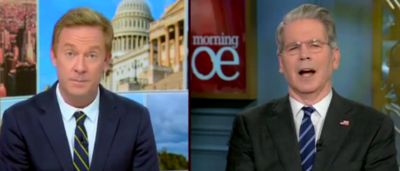
Screenshot/Rumble/MSNBC
Treasury Secretary Scott Bessent dismissed MSNBC host Jonathan Lemire’s negatively framed questions on Wednesday about President Donald Trump’s stance against Federal Reserve Chair Jerome Powell.
Trump has called for Powell to resign from his role, but has also indicated that he would not fire him. Lemire asked Bessent questions on “Morning Joe,” suggesting Trump’s strong opposition to Powell is negative for the economy, but Bessent argued his queries were unfounded.
WATCH:
“President Trump has made no secret of his dislike for Fed Chair Jerome Powell … disagrees with a lot of the decisions he has made. You, though, have said you believe the Fed chair should remain in his post, despite the president saying that he’d prefer him to be ousted,” Lemire said. “Should the president just simply say, ‘I’m going to let the Fed chair finish his term’? Wouldn’t that supply a degree of comfort and stability to the markets that seem to rattle every time the president suggests that Powell should go?”
“Well, I’m not sure where that question comes from, because President Trump has repeatedly said he is not going to fire Chair Powell,” Bessent replied. “He might like for him to resign, but he’s not going to fire him. He said that on numerous occasions. I think he may have even said it again yesterday.”
Lemire followed up by asking if the “pressure” Trump is applying on Powell benefits the U.S. economy.
“If that’s the case, then do you think the pressure campaign, which is a fairly incessant pressure campaign from the president on the Fed chair, is that a good thing for the stability of the nation’s economy?” he asked.
“I think anyone who goes into public service should expect pressure. I get pressure — you know, from the president, from the Congress, from constituents,” Bessent said. “I put pressure on myself. So I think everyone’s used to that. And Chair Powell has been around a long time.”
Tensions between Trump and Powell have mounted as the central bank has yet to reduce interest rates, despite the president’s calls to do so.
Since the president announced widespread tariffs, Powell has expressed concerns about the economic uncertainty they could cause. Powell said on July 1 that the Fed would have lowered rates had Trump had not implemented the tariffs, CNBC reported.
Many economists predicted that Trump’s sweeping tariffs could cause higher inflation and other negative effects, but several key economic indicators have shown strength.
For instance, manufacturing output rose 0.1% in June after an upwardly revised 0.3% increase in May, the Federal Reserve Board reported on July 16. U.S. jobless claims for the week ending July 12 also plunged by 7,000 to 221,000, the Department of Labor reported on July 17, marking the fifth straight week of decline.
Moreover, U.S. retail sales growth rebounded more than anticipated in June, rising 0.6%, according to advance estimates from the U.S. Census Bureau released July 17. The stock market surged to new highs during the week of July 14 based on the positive data, The Wall Street Journal reported on July 18.
All content created by the Daily Caller News Foundation, an independent and nonpartisan newswire service, is available without charge to any legitimate news publisher that can provide a large audience. All republished articles must include our logo, our reporter’s byline and their DCNF affiliation. For any questions about our guidelines or partnering with us, please contact [email protected].