

National Defense
Trump, Putin, Xi Unveil Historic ‘Peace’ Declaration, But Major Wars Remain Unresolved
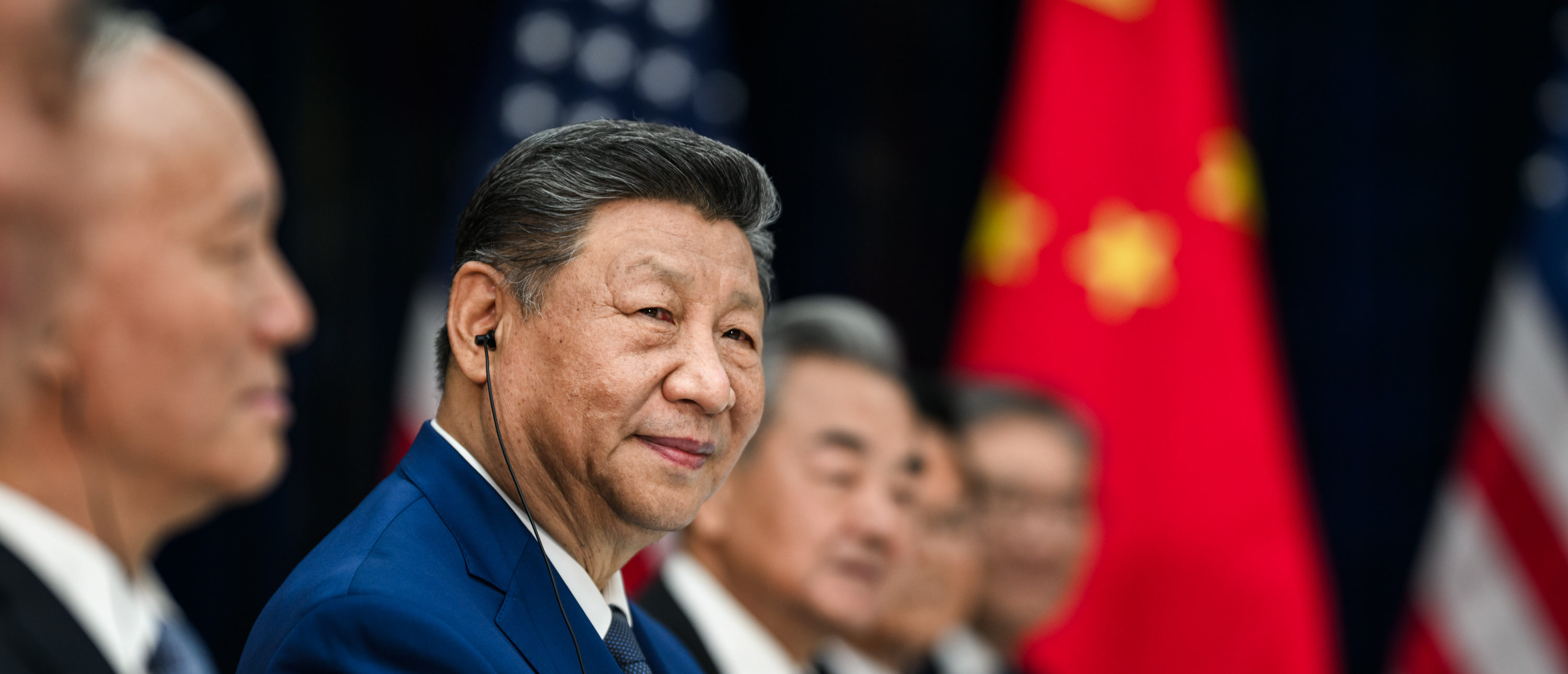
Official White House Photo by Daniel Torok
President Donald Trump joined Russian President Vladimir Putin and Chinese President Xi Jinping on Thursday in announcing a historic agreement to pursue nuclear talks, increase global oil supplies and reform international institutions.
The three leaders issued a four-point declaration following their unprecedented summit in Shenzhen, China, according to the White House. However, the agreement contains no binding nuclear weapons reductions, implementation deadlines or concrete plans to end ongoing wars in Ukraine and Iran.
Trump is scheduled to hold a press conference at the White House on Friday following his return from China. The president described his trip as “Great and Highly Consequential” and said he would also discuss trade agreements with Thailand, the Philippines and other countries in a Truth Social post Thursday.
China hosted the summit, with the American and Russian presidents thanking Beijing for organizing the meeting. The leaders discussed international security and maintaining strategic stability, according to the White House.
Perhaps the most significant development was a joint commitment to reducing the risk of nuclear conflict.
The three leaders reaffirmed that a nuclear war “cannot be won and must never be fought,” according to the White House.
Washington, Moscow and Beijing also pledged to begin discussions on preventing nuclear proliferation and reducing nuclear risks. However, the declaration does not specify when negotiations will begin or whether the countries intend to establish binding limits on their arsenals, according to the White House.
The announcement follows the Feb. 5 expiration of New START, the last major nuclear arms control treaty between Washington and Moscow. The agreement previously imposed limits on deployed American and Russian strategic nuclear weapons, according to the United Nations.
The trilateral commitment also brings China into discussions on nuclear risks as Beijing continues expanding its arsenal.
China possessed more than 600 operational nuclear warheads in mid-2024 and was projected to surpass 1,000 by 2030, according to the Department of War.
Beyond nuclear security, the three governments committed to reforming the United Nations to improve its ability to address international crises, according to the White House.
All three countries hold permanent seats on the U.N. Security Council and possess veto power over substantive resolutions. France and the United Kingdom hold the remaining permanent seats, according to the United Nations.
Reforming the United Nations could prove difficult even with cooperation from Washington, Moscow and Beijing. Amendments to the U.N. Charter require approval from two-thirds of the General Assembly and ratification by two-thirds of U.N. members, including all five permanent Security Council members, according to the United Nations.
The declaration also leaves unanswered whether the three countries intend to change Security Council membership, voting procedures or the veto powers held by permanent members.
The leaders also pledged to increase the production and supply of refined petroleum products while maintaining stable global energy flows, according to the White House.
The provision specifically concerns refined petroleum products rather than crude oil production. Such products include gasoline, diesel and aviation fuel, which support civilian transportation, commercial activity and military operations, according to the Energy Information Administration.
However, the three governments did not specify whether increased supplies would come from expanded refining capacity, additional exports or changes to existing production. The declaration also provides no production targets, deadlines or mechanisms for determining whether the promised increases are achieved, according to the White House.
Another significant provision concerns the International Criminal Court (ICC), which the three governments warned against exceeding its jurisdiction.
The leaders emphasized national sovereignty, state consent and protections for government officials, arguing that international judicial institutions must respect those principles, according to the White House.
Notably, none of the three countries belongs to the ICC, which currently has 125 member states. The United States, Russia and China are absent from the court’s membership roster, according to the ICC.
The agreement’s emphasis on legal protections for government officials also raises questions about the court’s existing authority. Article 27 of the Rome Statute states that official government positions and associated immunities do not prevent prosecution before the court, according to the International Committee of the Red Cross.
Furthermore, countries do not necessarily escape ICC jurisdiction simply because they have not joined the court. The institution can exercise jurisdiction over qualifying crimes committed on the territory of member states, including those allegedly committed by foreign nationals, according to the ICC.
The ICC issued an arrest warrant for Putin in March 2023 over allegations involving the unlawful deportation and transfer of Ukrainian children into Russia, according to the International Criminal Court.
The court also issued arrest warrants for Israeli Prime Minister Benjamin Netanyahu and former Israeli Defense Minister Yoav Gallant in Nov. 2024 over alleged war crimes and crimes against humanity in Gaza, including the use of starvation as a method of warfare, according to the International Criminal Court.
Trump previously imposed sanctions on the ICC in February 2025, accusing the institution of improperly asserting jurisdiction over American and allied personnel, according to a White House executive order.
Despite the declaration’s emphasis on international peace, the document notably omits any direct reference to Russia’s war against Ukraine, the American-led war against Iran or tensions involving Taiwan.
The agreement also contains no ceasefire proposals, territorial settlements or enforceable nuclear disarmament measures.
For now, the declaration establishes broad diplomatic commitments between three competing global powers without resolving the military conflicts and strategic disputes that continue to divide them, according to the White House.
All content created by the Daily Caller News Foundation, an independent and nonpartisan newswire service, is available without charge to any legitimate news publisher that can provide a large audience. All republished articles must include our logo, our reporter’s byline and their DCNF affiliation. For any questions about our guidelines or partnering with us, please contact [email protected].