

Politics
Foreign Wars And So-Called Groyper Revolt: Inside Libertarian Think Tank’s ‘America First’ Event
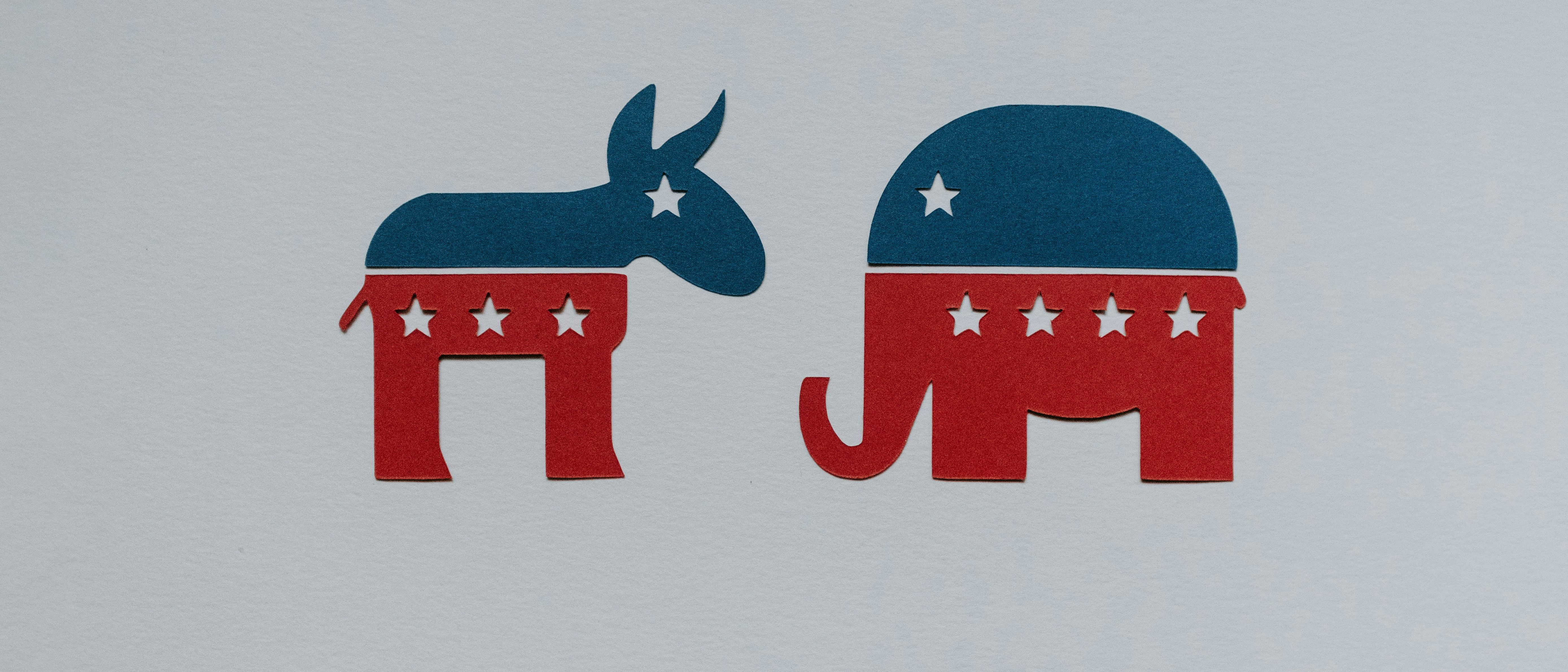
(Photo via Kelly Sikkema / Unsplash)
WASHINGTON, D.C. — Foreign policy analysts gathered in Washington on Tuesday with Republican Ohio Rep. Warren Davidson to examine whether President Donald Trump’s “America First” movement has abandoned its founding principles following a disastrous midterm election and months of war with Iran.
America’s most prominent libertarian think tank, the Cato Institute, hosted its “Reclaiming America First” event Nov. 17, bringing together foreign policy scholars to examine the Republican Party’s electoral defeat and Washington’s growing military commitments abroad. The discussions focused on whether Trump’s interventionist policies have undermined his promise to end America’s prolonged foreign wars.
“If Republicans had delivered on what they said they would do in the 2024 election, this fragile coalition that unites the GOP, that holds America First, that holds the neoconservatives, that holds conservative-leaning libertarians, and frankly, some just pragmatic people, that make up a lot of America’s middle class that want results,” Davidson said during the opening remarks of the event. “If that had happened, then I think we would be talking about a different post-election analysis. And it didn’t happen. And I think the most common denominator is a lot of people felt unheard. They felt unheard on the Iran war. They felt unheard on the economy.”
Democrats regained control of both chambers of Congress in the Nov. 3 midterms, flipping nine Republican-held Senate seats and securing a 56-44 majority in the upper chamber. Democrats also gained 42 House seats as of Tuesday, according to the Associated Press.
The event featured two panel discussions examining the political consequences of the Iran war and the future of American foreign policy. Participants included representatives from the Carnegie Endowment for International Peace, the Quincy Institute, Stand Together and the Institute for Peace and Diplomacy, according to Cato.
“The war in Iran in particular was on voters’ minds. It was, I would say, a probably top three issue, depends how you slice and dice what’s an issue and what’s not, but it was a major issue in this campaign,” Stephen Wertheim, senior fellow in the American Statecraft Program at the Carnegie Endowment for International Peace, said during the panel. “And I think actually this election stands out as being one about which you can say that … It was a war they did not want; they did not vote for Donald Trump to do. They thought it was the kind of thing he would not do, and it represented a kind of betrayal.”
The debate follows months of growing public dissatisfaction with the Iran war, which began in February and has contributed to higher energy prices and broader economic uncertainty.
Approximately 74% of voters said the Iran war was either a crucial or major factor in their congressional vote, according to the ABC News Voter Poll. Thirty-four percent called the conflict crucial, while another 40% described it as a major factor.
The Voter Poll by SSRS was designed to survey more than 75,000 voters nationally between Oct. 19 and Nov. 3 through online, telephone and in-person interviews, with an expected national margin of sampling error of plus or minus 0.6 percentage points, according to the poll’s methodology.
Among voters who considered the war crucial, 73% supported Democratic House candidates, compared with 26% who backed Republicans, according to the same poll.
Economic concerns were even more widespread.
Approximately 89% of voters identified the cost of living as a crucial or major factor in their congressional decisions, including 49% who considered it crucial, according to ABC News. Government corruption ranked similarly high, with 90% describing it as a crucial or major consideration.
Gasoline prices also weighed heavily on voters, with 87% expressing concern about the cost of gasoline and diesel, according to the poll.
The national average price of regular gasoline was approximately $4.15 per gallon during election week, nearly a dollar higher than the previous year, according to the Energy Information Administration.
A separate pre-election survey found 44% of American adults were less likely to support a congressional candidate who backed the Iran war, compared with just 13% who said such support would make them more likely to vote for the candidate, according to the Institute for Global Affairs.
The internal struggle over “America First” has also exposed divisions between mainstream Republicans and the movement surrounding Nick Fuentes, a commentator whose followers are commonly known as Groypers.
Fuentes urged his followers to vote Democratic on Election Day after repeatedly criticizing Trump’s foreign policy, particularly the Iran war. He subsequently claimed his movement had contributed to the Republican defeat, although the extent of its actual electoral influence remains unproven.
“There was an interesting piece of reporting in New York Magazine this morning about a group of young conservatives at Clemson University who were, by and large, Trump ’24 voters sympathetic to Fuentes, and many of them voted either Democratic or stayed home,” Washington Post reporter Ian Ward said during the panel. “Which aligns with – Fuentes has articulated a desire to chip away, I think, in his, as he frames it, between 5% and 10% of the young male Republican vote, just enough to hurt Republican candidates in the general election.”
Young voters shifted sharply toward Democrats in the midterms, with 74% of voters ages 18 to 29 backing Democratic House candidates compared with 24% supporting Republicans, according to a Fox News Voter Poll.
When asked by the Daily Caller News Foundation about conservatives’ generational divide, a panelist joked that aging boomers would eventually die.
“To some extent, the problem solves itself demographically, right,” Reid Smith, vice president of foreign policy at Stand Together, said during the panel. “But you’re absolutely correct, right? There is a yawning divide between boomer conservatives who are hooked to a morphine drip of Fox News and younger conservatives who feel passionately. It might be the defining issue for them, no new wars, and maybe a correction, as they would term it, to the relationship between the United States and Israel as well, too.”
“I think it gets uglier before it gets prettier,” Justin Logan, director of defense and foreign policy studies at the Cato Institute, said during the panel. “There’s a certain unstoppable force meets an immovable object here, where in the first year of the second Trump administration, Benjamin Netanyahu came to the White House seven times in one year. I would venture he wasn’t talking about humanitarian issues in Gaza or other sort of UN reform questions, right?”
Foreign policy may have been more consequential in the midterms because the Iran war’s economic consequences affected voters directly, according to a Nov. 4 analysis by Logan.
“Benjamin Netanyahu’s, I don’t want to say his life’s work, but he himself said after the war started, I think the direct quote is, ‘This combination of our forces is what allowed us to do what I’ve been trying to do for 40 years’,” Logan said. “To the extent young conservatives or young anybody, young people with a pulse are told, ‘Shut up, it’s an anti-Semitic conspiracy theory to think that Benjamin Netanyahu wanted this to go off.’ People don’t like being gaslit, right?”
However, the economic fallout from the war was not the only explanation for Republican losses, with immigration and trade policies also contributing to higher prices, Logan acknowledged in the analysis.
The Iran conflict also represents a departure from Trump’s original foreign policy promises, particularly his 2024 pledge to end wars rather than initiate new ones, according to a Nov. 3 commentary by Cato senior fellow Katherine Thompson.
The incoming Congress will face pressure to reassert its constitutional authority over military intervention and address the war’s continuing economic consequences, Thompson argued.
All content created by the Daily Caller News Foundation, an independent and nonpartisan newswire service, is available without charge to any legitimate news publisher that can provide a large audience. All republished articles must include our logo, our reporter’s byline and their DCNF affiliation. For any questions about our guidelines or partnering with us, please contact [email protected].