

Commentary: Big Tent Ideas
Is This The ‘Second Coming’ Of The US-Russia Detente?
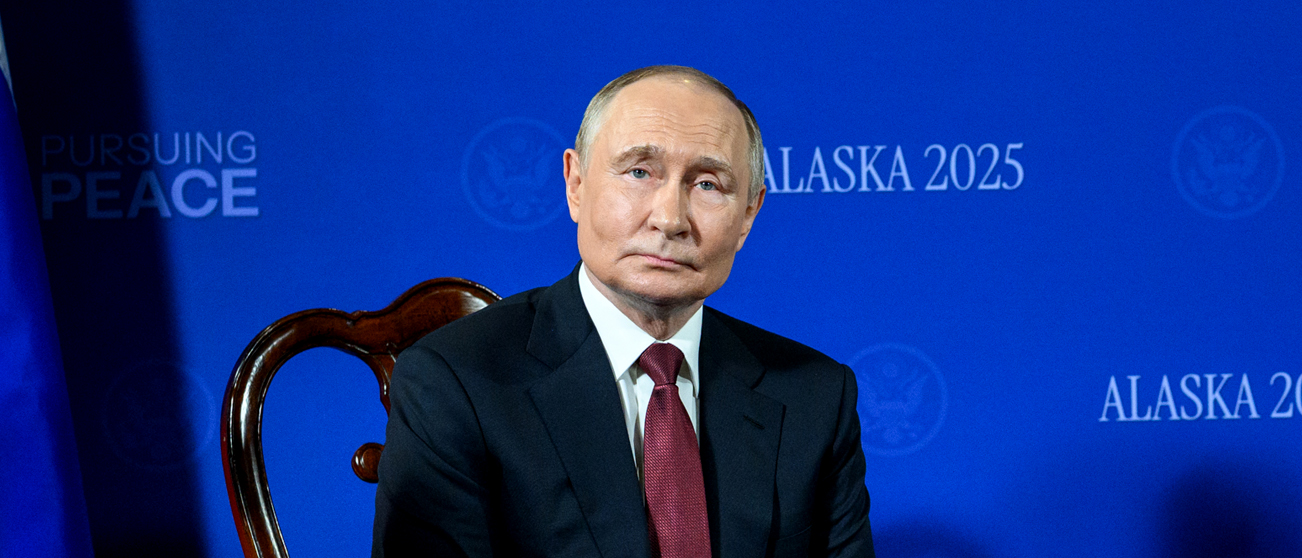
Vladimir Putin (Image via The White House)
Stephen James Hubbard was around 74 years old, a retired American from Michigan, once living happily with his Ukrainian lover in Cyprus, when he later found himself in trouble with the Russian government. In 2021, according to a New York Times account of his retelling, he moved to the east Ukrainian city of Izium one year prior to the Russian invasion of the Donbass.
He and his girlfriend, named Inna, then broke up. She returned to Cyprus. He stayed in Izuium and was arrested by the Russian military in April 2022, charged with fighting as a mercenary. He was sentenced to roughly seven years in jail in October 2024. He spent the last two years of his life in a Russian penal county when he could have been home with his family.
But lucky for Hubbard, a few years later, the Russians opted to let him go. Why? What did Russia get out of the exchange? What can be hoped for out of the release of an elderly American citizen most of us never knew was in prison, until only a few weeks ago.
Hubbard came home last week thanks, in part, to the efforts of pro-bono Russian and American lawyers working side by side to free him.
U.S. law firm Boies Schiller Flexner and Russian law firm EPAM Law both issued statements on Oct. 21 confirming their work on Hubbard’s release. EPAM specifically reports that its lawyers located Hubbard, helped arrange humanitarian assistance and represented him in Russian courts, including a parole application. Some say it was Hubbard’s religious affiliation that helped. He was Eastern Orthodox Christian, according to his son in a statement posted by EPAM.
“It moves me deeply that the father who introduced me to Russian Orthodoxy has now been released through an act of mercy involving Russia,” wrote his son Joseph Coleman.
“My affection for the Russian Orthodox Church and the Russian people is neither recent nor political. It comes from a spiritual conviction, personal experience, and friendships across borders,” he said.
Putin released Hubbard without getting a Russian prisoner in return. It is unclear of this religious affiliation had anything to do with Putin’s sudden feeling of mercy, but according to the New York Times, Coleman, who is a Greek Orthodox priest, wrote a long letter to Putin in September, making a point of his Orthodox faith, similar to Russian Orthodox, and pleading for his father’s release.
“We were glad to contribute to a broader effort that brought Stephen Hubbard home,” said Dmitry Afanasiev, co-founder of EPAM. “His release is a small but meaningful step toward peace and cooperation, and we hope it encourages further progress.”
The case required sustained work by a large team of lawyers from both sides. EPAM lawyers helped locate Hubbard in a Russian prison after contact with his family had been lost, assisted with humanitarian and health-related needs, helped restore communication with relatives, and late represented him through the Russian legal process, including the pardon process.
“Those efforts were one part of a wider initiative involving the U.S. and Russian governments, and it was their representatives that ultimately made the release possible,” Afanasiev said.
Lawyers cannot secure a political prisoner pardon or a release by themselves. That takes political will and diplomacy. Hubbard’s return came through the combined effort of people working in different roles, on both sides in spite of NATO hawks in Europe, the U.K., and on Capitol Hill. According to an Oct. 30 Reuters report, citing unnamed sources, Pentagon policy chief Elbridge Colby has asked several NATO countries to tone down their rhetoric regarding the threat posed by Russia, especially the Baltic states, which are forever insisting the Russians are coming.
Hubbard as Symbolism of Detente 2.0?
Another Russian reset? Hard to know, for sure. I’m going to say a mini-reset is being tested.
Of course, the Russia critics are right that one humanitarian gesture does not resolve the war in Ukraine. But American diplomacy should be judged in part by whether it can win tangible results: Americans returned to their families, communication restored and channels kept open for further negotiations. That approach fits an America First policy when it serves clear U.S. interests, even if allies in the U.K. and European Union hem and haw about it; or Reagan-era national security hawks think it’s appeasement. Maintaining contact with a rival is not an endorsement of its government. In this case, it was a way to protect Americans. It was a test as to whether limited agreements are possible given the four year war with Ukraine – a war mostly everyone sees as a West vs Russia proxy war at this point.
Hubbard’s release therefore raises an important question: Was this simply a humanitarian gesture to Trump, or an early indication that Moscow sees value in improving relations with Washington?
Those possibilities aren’t mutually exclusive.
There are four relevant developments worth connecting. On Oct. 9, Trump announced a Russian diesel agreement, accompanied by limited sanctions relief. Days later, on Oct. 21, Putin releases Hubbard, and Moscow indicates it is prepared to resume trilateral Ukraine peace talks with the U.S. Recently, on Oct. 31, Secretary of State Marco Rubio cautioned that the United States was not close to a negotiated settlement despite all the noise that Trump was embracing Putin — a back-to-2016 narrative. Rubio also defended Russia’s attendance at the G20 meeting. And on Tuesday, Nov. 2, The Wall Street Journal reported that U.S. negotiators were exploring the restoration of Russian gas exports to Europe through Ukraine, although significant European opposition remains.
These events don’t establish a détente. But they do suggest that Washington and Moscow are testing whether narrowly defined cooperation can produce broader diplomatic results and end a war most of us have had enough of already.
American, Russian and Ukrainian negotiators will meet in Abu Dhabi in the United Arab Emirates (UAE) later this month.
An unusual collaboration between American law firm Boies Schiller Flexner and Russian law firm EPAM Law, both working for free, helped secure Stephen Hubbard’s freedom. His release could represent an early, tangible step toward a U.S.—Russia détente, but the real test is whether Washington can turn limited cooperation into meaningful concessions on Ukraine in the weeks ahead in the UAE.
Those who question renewed engagement should distinguish between diplomacy that makes concessions without results and diplomacy that produces measurable gains. Equally, Washington must distinguish gestures of goodwill from genuine changes in Russian conduct.
The importance of Hubbard’s release is not that it proves peace in Ukraine is approaching. It is that it demonstrates the diplomatic channel is functioning at least. Whether that channel can produce an end to the war is anybody’s guess.
Kenneth Rapoza covered the BRIC countries for Forbes up until 2023.
The views and opinions expressed in this commentary are those of the author and do not reflect the official position of the Daily Caller News Foundation.
All content created by the Daily Caller News Foundation, an independent and nonpartisan newswire service, is available without charge to any legitimate news publisher that can provide a large audience. All republished articles must include our logo, our reporter’s byline and their DCNF affiliation. For any questions about our guidelines or partnering with us, please contact [email protected].