

Politics
Foreign AI Firm With Alleged China Ties Strikes Deal With US Tech Giant
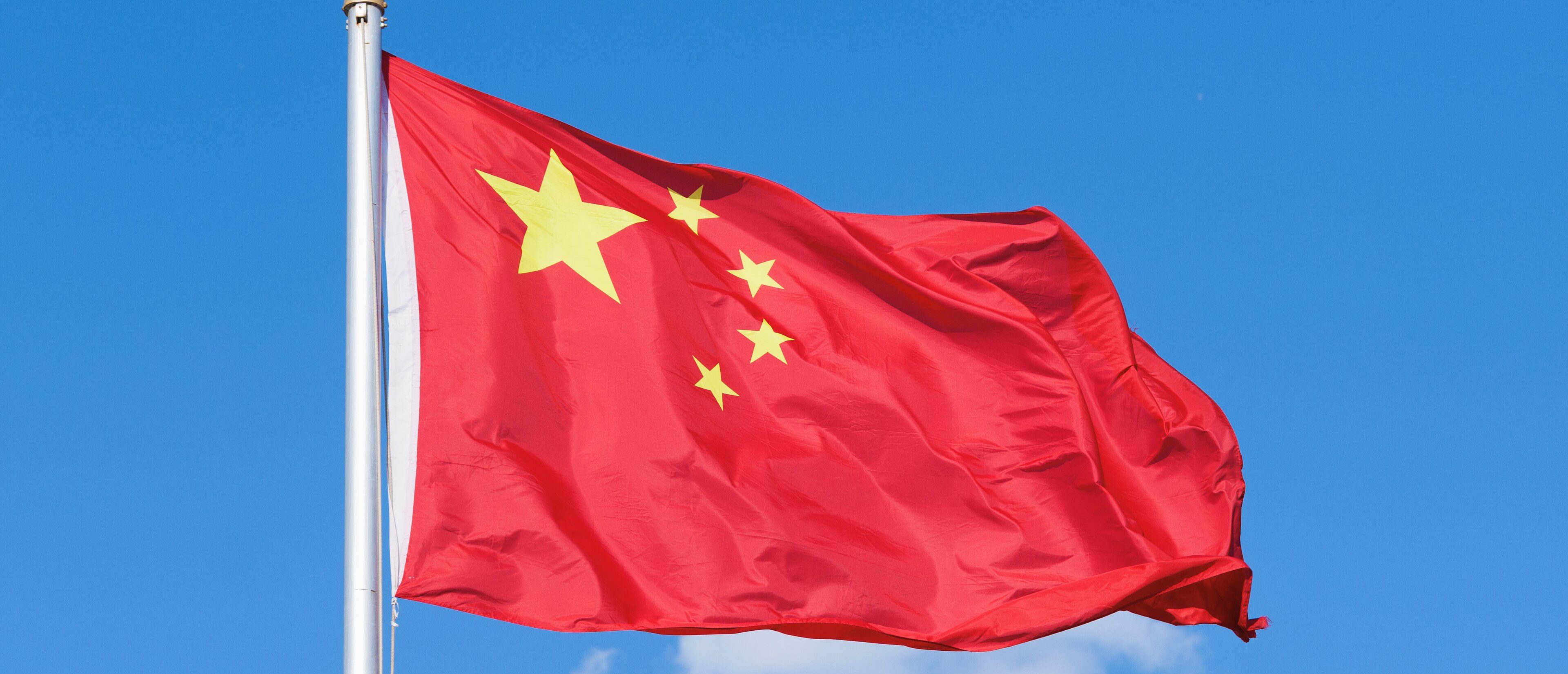
[Wikimedia Commons/Public/TurnOnTheNight, CC BY 1.0, <https://creativecommons.org/publicdomain/zero/1.0/deed.en>]
OpenAI is joining an Abu Dhabi oil deal alongside an Emirati tech firm that House Republicans once scrutinized over ties to China.
The Abu Dhabi National Oil Company (ADNOC) announced Monday a multi-year deal with OpenAI and G42, an agreement the company says makes it the first energy firm anywhere to adopt OpenAI’s Frontier platform.
“OpenAI Frontier will be deployed on G42’s sovereign AI infrastructure in the UAE,” the ADNOC Media Team said in a statement to the Daily Caller News Foundation.
Former Republican Wisconsin Rep. Mike Gallagher, who chaired the House Select Committee on the Chinese Communist Party at the time, asked Biden-era Commerce Secretary Gina Raimondo in a January 2024 letter to weigh adding G42 to the department’s trade blacklist, known as the Entity List.
“Following my letter, I’m glad to see G42 reduce its investment exposure to Chinese companies,” Gallagher said in a Feb. 11, 2024, statement after G42 said it had sold its stakes in Chinese firms.
Republican Michigan Rep. John Moolenaar, who succeeded Gallagher as the select committee’s chairman, joined Texas Rep. Michael McCaul, a fellow Republican then leading the House Foreign Affairs Committee, in a July 2024 letter asking for an intelligence assessment of G42’s ties to the Chinese Communist Party.
G42 and its affiliates have active ties to entities linked to the People’s Republic of China, “including ones working to evade U.S. sanctions and export controls,” the lawmakers wrote to then-National Security Adviser Jake Sullivan.
Asked about the ADNOC agreement, a spokesperson for the select committee pointed the DCNF to Moolenaar’s past concerns about G42.
A Commerce Department rule that took effect in July cleared G42 to receive advanced computing chips without a license. G42 must become an American company by April 6, 2027, or seek separate approval to keep that status, according to the rule.
OpenAI and G42 did not respond to the DCNF’s requests for comment. A spokesperson for the department’s Bureau of Industry and Security referred the DCNF to the rule.
Many countries now require that data from within their borders be handled and kept in domestic data centers, Mark Mills, founder and executive director of the National Center for Energy Analytics, said in a statement to the DCNF.
“There is no inherent security risk in terms of U.S. data being over there, since the U.S.-built data center will be processing non-U.S. data,” Mills said. “Do we want nations friendly to us forced to seek (AI) technology from China instead of the U.S. in order to build/process data inside their own country?”
“That said, there is the issue about giving other nations access to using the underlying (AI) technology — but that horse long ago left the barn,” he added.
“By combining frontier AI, sovereign infrastructure and industry expertise, this first-of-its-kind partnership will help ADNOC move faster, operate more efficiently and make better decisions across the energy value chain,” OpenAI CEO Sam Altman said in ADNOC’s announcement.
The platform “will connect intelligence across ADNOC’s integrated value chain, from production and processing to refining, logistics, sales and trading,” the ADNOC Media Team added.
Khaled bin Mohamed bin Zayed Al Nahyan, the crown prince of Abu Dhabi, met with Altman and watched the signing, according to the emirate’s media office. Mubadala, the emirate’s sovereign investor, struck its own deal with OpenAI and G42 subsidiary Inception42 to apply AI to investment analysis, the office said.
The first two projects will focus on planning the development of whole oil fields and on AI agents that forecast crude prices, margins, supply and demand. People will keep oversight of the biggest decisions, according to ADNOC’s announcement.
More than 40,000 ADNOC employees already have access to ChatGPT Enterprise, the company said in its announcement.
OpenAI is looking for as much as $20 billion in new funding, with UAE investors leading the round alongside investment firm Coatue, CNBC reported Oct. 31.
MGX, an Abu Dhabi investment firm, was a co-lead investor when OpenAI raised $122 billion in March, CNBC reported Monday.
G42 “maintains relationships with blacklisted entities including Huawei and Beijing Genomics Institute (BGI),” the select committee said on its website at the time, which also named OpenAI among the American companies doing business with G42.
Microsoft agreed in April 2024 to put $1.5 billion into G42 in exchange for a minority share, backed by an agreement worked out “in close consultation with both the UAE and U.S. governments,” the company said in a blog post.
In May 2025, OpenAI announced Stargate UAE, a 1-gigawatt computing hub planned for Abu Dhabi with G42, Nvidia, Oracle, SoftBank and Cisco as partners. The company said in a blog post that the agreement “was developed in close coordination with the U.S. government.”
The July rule also lets the UAE’s government and other approved companies there receive advanced computing chips and servers without a license, the Commerce Department’s Bureau of Industry and Security said in a release.
All content created by the Daily Caller News Foundation, an independent and nonpartisan newswire service, is available without charge to any legitimate news publisher that can provide a large audience. All republished articles must include our logo, our reporter’s byline and their DCNF affiliation. For any questions about our guidelines or partnering with us, please contact [email protected].