

National Defense
Trump Eyes New Iran Blitz After Midterm Elections
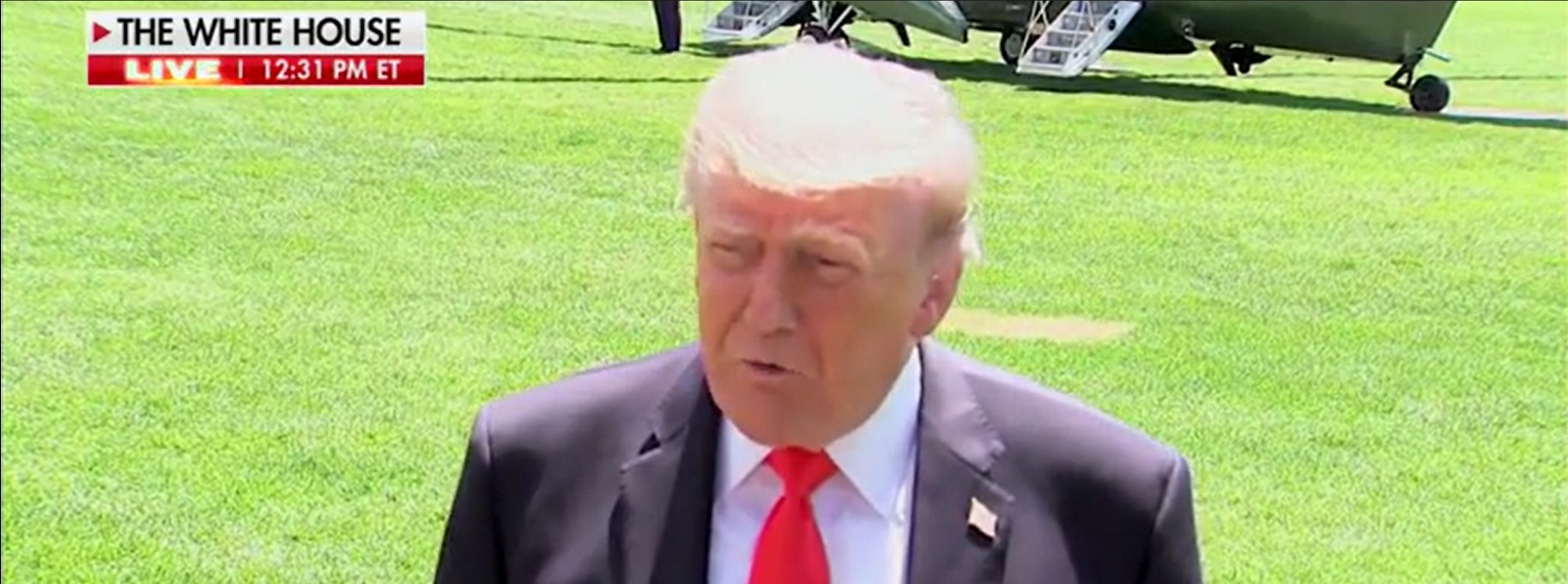
Screenshot/Rumble/Fox News
The Trump administration has privately warned several Gulf Arab governments to prepare for another intensive American military campaign against Iran following the Nov. 3 midterm elections.
U.S. forces are reinforcing Israel’s missile defenses, restocking weapons and shifting troops away from exposed bases as preparations for another confrontation accelerate, the Wall Street Journal reported Wednesday, citing people briefed on the discussions. President Donald Trump has not officially approved an operation but is leaning toward attacks on Iranian infrastructure and nuclear facilities, the outlet reported, citing people familiar with his thinking.
Trump publicly raised the prospect of renewed hostilities at a campaign rally in Florida on Friday.
“We may do another little Epic Fury, or they’ll agree,” Trump said, according to a rally transcript.
No attacks will happen before the midterm elections, the White House previously told the Daily Caller News Foundation. However, it never said strikes would not happen after the elections are finished.
The warnings were conveyed through diplomatic and military channels to several Gulf governments. American and Israeli planners are weighing an offensive intended to weaken Tehran and pressure its leaders to negotiate, according to the Journal.
“The forces pulling matters toward another round of war are much stronger than the forces pushing back,” Trita Parsi, executive vice president of the Quincy Institute for Responsible Statecraft, previously told the Daily Caller News Foundation.
The warnings follow an exclusive report revealing that American military operations against Iran could rapidly intensify, according to a senior military official who spoke to the DCNF.
“Things are about to get spicy,” the senior military official told the DCNF.
The Pentagon is sending another Patriot air defense system from Texas to Israel, the Journal reported, citing flight-tracking records and two officials familiar with the transfer. U.S. bombers and fighter jets are also being prepared for potential strikes, officials told the outlet.
Approximately 9,000 additional sailors and Marines began deploying aboard the USS Theodore Roosevelt carrier strike group and USS Makin Island amphibious ready group, potentially bringing the regional American naval presence to three aircraft carriers and more than 20,000 personnel, the Associated Press reported on Oct. 1, citing an anonymous U.S. official.
Another carrier strike group and Marine expeditionary unit could join approximately 20 American warships in the Middle East in November, although some vessels may rotate out, the Journal reported.
The White House declined to discuss potential military operations while insisting Iran must never obtain nuclear weapons, the Journal reported. Trump has previously said there would be no fresh American attack before the midterms, according to the outlet.
Israeli Prime Minister Benjamin Netanyahu is also pressing for renewed strikes, with Israeli officials preparing targets for another operation, the Journal reported. Netanyahu reportedly views military pressure as a way to further erode the Iranian regime’s power.
The possible offensive would follow months of American sanctions and a naval blockade that have squeezed Iran’s oil exports and trade.
The American naval blockade has prevented Iranian crude tankers from successfully escaping enforcement in the Gulf of Oman since July 12, leaving at least 53 oil-laden tankers clustered along Iran’s coastline as of Oct. 27, according to United Against Nuclear Iran.
Washington also imposed additional sanctions on foreign shipping agents, cargo vessels and financial facilitators involved in Iranian trade as part of its campaign to cut off Tehran’s oil revenue, according to the Treasury Department.
The conflict had cost the United States an estimated $47.1 billion by mid-October, including approximately $29 billion in expended weapons, according to estimates shared with lawmakers and described by the Journal. That figure excludes damage to American bases.
However, the war’s true cost is likely substantially higher, as Iranian strikes damaged or destroyed hundreds of buildings and structures at American military bases across eight Middle Eastern countries, according to the Pentagon inspector general.
The watchdog also documented approximately $184 million in damage to U.S. diplomatic facilities, while the cost of repairing damaged military infrastructure remains uncalculated, according to the report.
Meanwhile, the International Atomic Energy Agency (IAEA) has identified no repairs or reconstruction at Iranian nuclear facilities damaged in the 2025 and 2026 attacks, IAEA Director General Rafael Grossi told the United Nations Security Council on Tuesday.
However, Iran has not granted inspectors the access required to verify its nuclear material, including approximately 440 kilograms of highly enriched uranium, Grossi told the Security Council. Inspections are continuing at the Bushehr nuclear power plant, according to Grossi.
Iran still holds hundreds to thousands of missiles and is assembling new ballistic weapons from stockpiled components, the Journal reported. Tehran has threatened to strike economic and civilian targets throughout the Gulf if the U.S. attacks again.
Those threats come as Washington and its regional partners work to replenish air defense interceptors expended during earlier Iranian attacks.
“Otherwise, at the moment, the U.S. has a winning hand through maintaining sanctions and the blockade. It should stay the course,” Behnam Ben Taleblu, senior director of the Iran program at the Foundation for Defense of Democracies, told the Journal.
Regional mediators are still attempting to revive negotiations, but Washington and Tehran remain divided over the nuclear program and conditions for renewed talks.
All content created by the Daily Caller News Foundation, an independent and nonpartisan newswire service, is available without charge to any legitimate news publisher that can provide a large audience. All republished articles must include our logo, our reporter’s byline and their DCNF affiliation. For any questions about our guidelines or partnering with us, please contact [email protected].