

Business
Ranchers Say Trump’s Beef Imports Have GOP Senator Mike Rounds ‘Treading Water’ In South Dakota
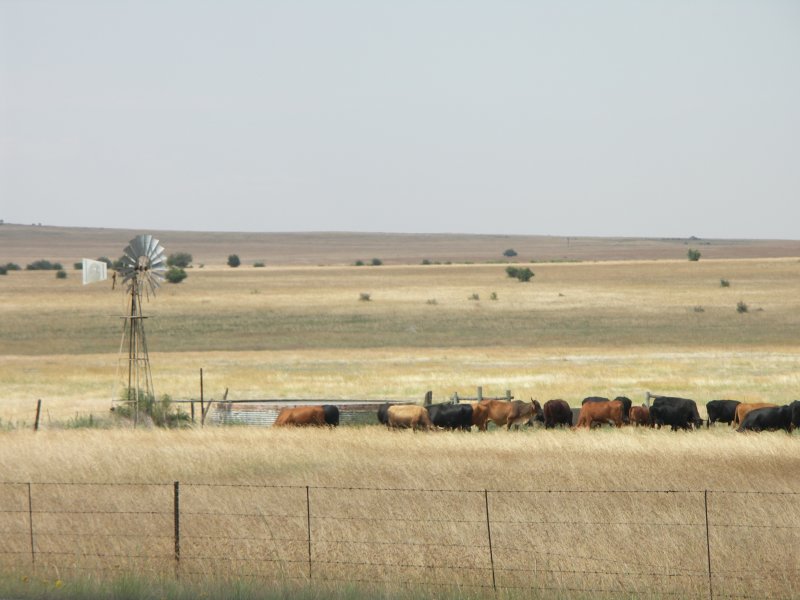
Phot credit: commons.wikimedia.org
President Donald Trump’s foreign beef imports have backfired on Republican South Dakota Sen. Mike Rounds’ reelection campaign, South Dakota cattle ranchers told the Daily Caller News Foundation.
Rounds faces a competitive race against independent South Dakota Senate candidate Brian Bengs in a state that Trump won by nearly 30 points in 2024. South Dakota ranchers told the DCNF that Trump’s import of 300,000 metric tons of foreign-raised beef and high prices weren’t helping their business, with one arguing that Rounds is paying the price over his association with Trump.
Many polls showed Rounds holding a single-digit lead in a state where Republicans tend to win by landslides.
Doug Sombke, the president of the South Dakota Farmer’s Union, told the DCNF that ranchers were frustrated with Trump’s beef policies.
“[South Dakota ranchers are] just really tired of the lies,” Sombke told the DCNF. “That’s really the biggest thing. I mean, and [Trump] just does what he wants. He doesn’t listen to Congress, he doesn’t listen to judges. He appeals and appeals and appeals, and it’s done nothing but make things more expensive for all of us.”
Trump said on Aug. 21 he would allow 300,000 metric tons of ground beef to be imported from foreign countries into the U.S. for 90 days. He claimed the imports would lower prices for Americans and address the supply shortage for the domestic herd, which fell to its lowest levels in 75 years.
“President Trump has done more for American agriculture than anyone by negotiating new trade deals, expanding foreign market access, lowering input costs, bolstering the farm safety net, doubling the death tax exemption, ending taxes on rural property loan interest, creating rural opportunity zones, and more,” White House spokesperson Anna Kelly told the DCNF. “At the same time, he is delivering on his promise to consumers by reducing beef prices while allowing our American beef herd to grow. The President will continue taking actions to support our great farmers while driving economic prosperity for all Americans.”
Sombke said that while Rounds backed ranchers in the state on the beef imports, his association has made his candidacy vulnerable. The Republican senator removed Trump’s name and any mention of the president’s endorsement from his campaign website weeks before Election Day.
“Mike has defended our position on the beef policy, he spoke out against it,” Sombke said. “But Mike is treading water pretty hard right now. He’s got a big challenger, and you know, his association with Trump is not good. Matter of fact, Mike took off his website that Trump endorsed him.”
Rounds said in an Aug. 21 statement that the policy was not “America First” and only harmed American ranchers.
“This hurts! American cattle producers have been disadvantaged for far too long,” Rounds said on X. “What our market really needs is a stable, America-First national policy that promotes American beef rather than continuing to import foreign beef as a quick “fix.” This instability harms hardworking American ranchers and consumers who want American-made beef. This is the exact opposite approach we take compared to manufacturing, and it doesn’t make sense.”
“Now more than ever, we need Mandatory Country of Origin Labeling. Opening the market to even more foreign beef, which American consumers cannot differentiate because of current labeling rules, will only exacerbate the problem and hurt domestic producers. Our producers will compete all day long, but only if there is a level playing field. Beef prices will come down when American ranchers have a greater ability to supply more product. There isn’t a silver bullet but MCOOL and the RANCH Act are common sense solutions.”
Sombke argued that the Iran war is largely responsible for the rise of beef and Diesel prices, arguing it has only made ranchers’ jobs more difficult and financially draining. Diesel prices jumped roughly 70% since the start of the Iran war, exceeding $6 per gallon during the week of Oct. 12, according to AAA.
The South Dakota Cattlemen’s Association said in an official statement they were “frustrated” with the “misguided” attempts to lower beef prices, arguing it would not succeed.
“Frustrated, disappointed, and concerned,” the association said. “The South Dakota Cattlemen’s Association is frustrated by President Donald J. Trump’s statement on Truth Social announcing yet again another trade related decision that will have negative impact on the U.S. cattle industry. In a misguided attempt to lower consumer beef prices, the United States will allow up to 300,000 metric tons of ground beef into the supply chain.”
“SDCA is disappointed that despite countless attempts from industry leaders and producers to collaborate and educate the White House on the cattle/beef industry, the President continues to make trade decisions that hurt not only American cattlemen, but also consumers,” the statement continued.
Craig Bieber, the vice president of the South Dakota Cattlemen’s Association, told local outlet KOTA Territory that Trump had not been transparent on the imports.
“The market’s been crazy. It’s been down every day since then,” Bieber said. “The problem is the president hasn’t told us anything about the deal that he supposedly had. It’s hard to make recommendations when you don’t have any information.”
The South Dakota Cattlemen’s Association declined to comment to the DCNF.
Amanda Radke, a fifth-generation cattle rancher in South Dakota, told the DCNF that rural America, including South Dakota, has long suffered from the “damaging, real-world consequences” from rising beef prices.
“Imported beef is nothing new in this country; however, this recent purchase of foreign beef has effectively put a spotlight on the issues that have crippled the American cattle rancher for the last 30 years and decimated our nation’s cattle herd to a 75-year low,” Radke told the DCNF. “President Trump recognizes that ranchers exist within a monopoly of four major packers (two foreign-owned) that control 82% of our beef supply. I am very thankful that this administration has listened to the concerns of independent producers across the country and has directed the Department of Justice to investigate the packers.”
“Here is what we are really facing in the heart of rural America — A lack of pricing transparency and free market competition in the beef industry has stifled true price discovery in our cattle markets and opened the door for manipulation where traders prey on emotionalism for their own gains, which ultimately has damaging, real-world consequences on our cattle prices,” Radke continued.
The meatpacking industry faced scrutiny over whether consolidation reduced competition in the cattle market, with companies including Tyson Foods and Smithfield Foods controlling significant portions of the nation’s meat-processing capacity. The Department of Justice opened an investigation into the meatpacking industry for potential antitrust violations, which added to concerns that larger companies wielded too much influence over the market.
Radke called for all foreign-imported beef to be labeled with its country of origin, which she argued is “true America First policy.” There is currently no federal mandate for country-of-origin labeling of beef in grocery stores.
“Ultimately, beef-loving families deserve to know where their beef comes from, which is why I believe it is so important for all imported beef to be clearly labeled with its country of origin to ensure we have honest labeling for shoppers to consider at the meat case,” Radke said. “That is what President Trump has urged Congress to do. And as midterms draw near, I will continue to push for our elected officials to recognize this critical issue that should be addressed now to help both American cattle ranchers and the people we serve.”
Republican-aligned spending totaled nearly $1.2 million in support of Rounds between the weeks of Aug. 11 and Monday, while independent-aligned groups spent nearly $516,000 in support of Bengs, according to a media-buying firm’s data reviewed by the DCNF. Spending in support of Rounds surged from just under $18,000 during the week of Sept. 15 to over $285,000 the following week, mirroring a national trend across red states in the 2026 cycle as voters remained dissatisfied with Trump’s economic policies.
Cook Political Report labeled the race as “solidly Republican.” Rounds won his 2020 Senate race by over 30 points, 65.7% to 34.3%, against Democratic South Dakota Senate nominee Dan Ahlers.
Since the Iran war began, Trump’s approval rating in South Dakota dropped from 54% to 47%, according to Civiqs’ rolling online tracking survey. Forty-five percent of those surveyed in South Dakota disapproved of Trump, while 48% disapproved of Rounds.
Rounds’ office did not respond to the DCNF’s request for comment.
Senate Majority Leader John Thune’s polling numbers were significantly stronger than Rounds’ during his 2022 reelection bid against Bengs, who ran as a Democrat at the time. A South Dakota State University poll from late September and early October 2022 showed Thune leading Bengs 53% to 28%, while earlier polls showed similar results.
Thune defeated Bengs by a margin of 43.5 points, 69.6% to 26.2%.
South Dakota last had a Democratic senator on Jan. 3, 2015, when former Democratic South Dakota Sen. Tim Johnson retired from office. Republicans currently control the governor’s and attorney general’s offices, as well as the state Legislature.
Republican PACs spent millions on races in red states, including over $200 million to support Republican Attorney General Ken Paxton. The Senate Leadership Fund, the top campaign arm for Senate Republicans, planned to spend $14 million to help Republican Kansas Sen. Roger Marshall and $5 million for Republican South Carolina Sen. Darline Graham.
All content created by the Daily Caller News Foundation, an independent and nonpartisan newswire service, is available without charge to any legitimate news publisher that can provide a large audience. All republished articles must include our logo, our reporter’s byline and their DCNF affiliation. For any questions about our guidelines or partnering with us, please contact [email protected].