

Legal/Law/Criminal Justice and Reform
How 1 Gun Magazine Could Upend How Judges Sentence Criminals
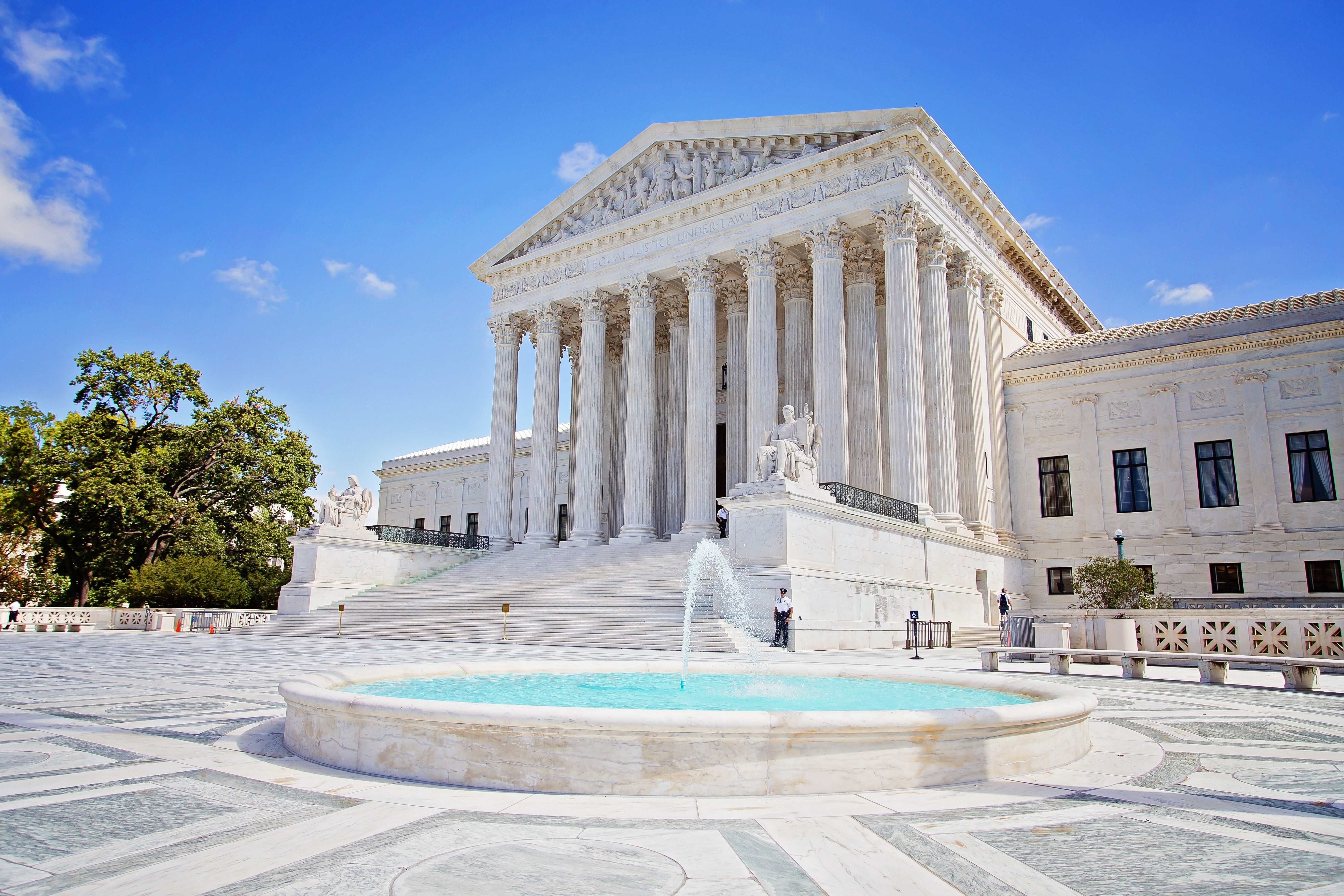
[Wikimedia Commons/Public/Sunira Moses, CC BY 3.0, <https://creativecommons.org/licenses/by-sa/3.0/deed.en>]
The Supreme Court heard oral arguments Tuesday in a case that could alter criminal sentencing, and it hinges on a single magazine for a Glock pistol.
The United States Sentencing Guidelines, devised by the United States Sentencing Commission, are used by federal district judges to assist them in figuring out how a person is to be sentenced for a given offense. However, attorneys for Kendrick Beaird told the justices that federal judges should not be bound by commentary about the guidelines.
“The proper rule for deference to guideline commentary is no deference,” federal public defender Kevin Page said. “Nothing in the text of the Sentencing Reform Act suggests that courts must ever defer to commentary when interpreting a guideline.”
Beaird had been sentenced to six-years in prison after he was found with an unloaded Glock 17 pistol. Due to the commentary, the judge increased the sentence since any magazine holding more than 15 rounds was defined as a “large capacity magazine.”
“Why would Congress bother to require detailed notice, public comment, 180 days of congressional review, and the approval of four voting commissioners every time the Commission amends a guideline if the Commission could simply bind the courts to a new interpretation of the guideline without going through all of this simply by amending the commentary?” Page asked.
In this case, while the Department of Justice (DOJ) responded to the case, the Supreme Court appointed Anthony Dick, a partner at Jones Day, to defend the lower court’s ruling on May 6, according to the docket.
“Anthony J. Dick, Esquire, of Washington, D. C., is invited to brief and argue this case, as amicus curiae, in support of the position that Stinson v. United States, 508 U. S. 36 (1993), still correctly states the rule for the deference that courts must give the commentary to the Sentencing Guidelines,” the docket reads.
Dick’s appointment was due to an unusual situation: The attorneys representing Beaird and the DOJ both agreed that the lower courts had gotten it wrong.
“The reason I was appointed in this case is that the federal government and the private petitioner (Mr. Beaird, who was convicted of being a felon in possession of a firearm) both agreed that Stinson no longer correctly states the rule for the level of deference that should be given to the Sentencing Commission’s commentary,” Dick told the Daily Caller News Foundation. “The court below (the U.S. Court of Appeals for the Fifth Circuit) disagreed and held that Stinson remains the proper standard.”
“When both parties in the Supreme Court agree that the court below was wrong, the Supreme Court will often appoint an amicus to defend the lower court’s decision,” Dick continued. “A court-appointed amicus does not represent any party, but instead argues in favor of the position designated by the Court.”
The Supreme Court will release its decision in the case in the summer of 2027.
All content created by the Daily Caller News Foundation, an independent and nonpartisan newswire service, is available without charge to any legitimate news publisher that can provide a large audience. All republished articles must include our logo, our reporter’s byline and their DCNF affiliation. For any questions about our guidelines or partnering with us, please contact [email protected].