

Energy
Trump Officials Aren’t Waiting On Congress To Speed Up Permits For Pipelines And Power Lines
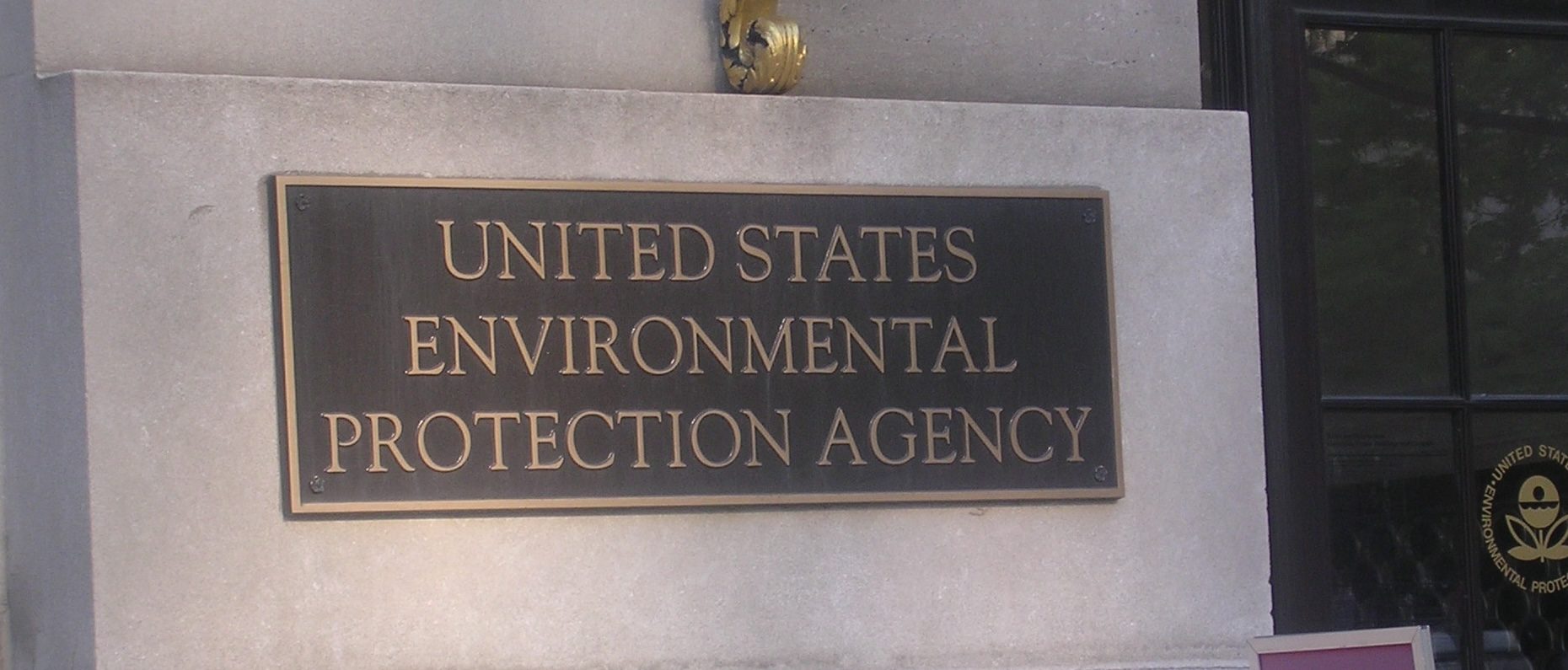
Environmental Protection Agency (EPA). Photo: mccready/Flickr
WASHINGTON — Trump administration officials laid out plans Tuesday to speed up permits for pipelines and power lines while a Senate permitting deal waits for a vote.
Senate negotiators reached a bipartisan deal last month to limit lawsuits against energy projects, but a floor vote is not expected until the lame-duck session after the midterm elections, according to PBS News. Officials from the Army, the EPA and the Interior Department described the permit changes their agencies are already making on a panel at the Association of the U.S. Army’s (AUSA) annual meeting in Washington, D.C.
“A lot of it is transmitting that energy across our country, whether it’s power lines, whether it’s pipelines, and I think that is now the greatest opportunity, and unfortunately, happens to be one of the areas of greatest … litigation in the country,” Interior Deputy Secretary Kate MacGregor said on the panel.
The permitting system so often ends in litigation that companies cannot assure shareholders when a project will be delivered, MacGregor said, adding that “we need aggressive action.”
“What you need is the strength and durability of these decisions to last beyond just one administration,” she said of the discussion over judicial review of permits.
Lee Forsgren, the senior official performing the duties of the assistant secretary of the Army for civil works, said the Army Corps of Engineers is about to send the White House Office of Management and Budget a rulemaking with proposals to “significantly expand” the use of its nationwide permits.
A total of six officials spoke at a panel titled “Delivering for the Nation: Infrastructure, Economic Security, and Crisis Response.” Stuart Levenbach, an associate director at the White House Office of Management and Budget, moderated.
Forsgren said the Corps will look at “ways to increase the viability of energy projects, pipelines, transmission lines for electricity,” which he said “right now, can be done under nationwide [permits], but there are significant limitations.”
“Right now, the individual permit can easily take at least a year, frequently two,” Forsgren said. “Nothing is being approved during that permitting time.”
The Corps handles about 100,000 activities a year, and more than half go through nationwide permits, which cover projects with small environmental effects, Forsgren said. He said the Corps could raise the half-acre limit on those permits to as much as two acres. The Corps reissued 56 nationwide permits and added one new one in January.
Forsgren said he wants Corps permits completed in about 45 days, the time Deputy Agriculture Secretary Stephen Vaden said it took to permit a Louisiana fertilizer plant.
“Those companies who developed that facility were told that permitting would take years. The Army Corps got it done in 45 days,” Vaden said. “That’s going to make a real difference for our farmers and give us more agricultural and therefore national security because we will not be dependent on foreign sources for the fertilizer our farmers need.”
The Blue Point plant in Modeste, Louisiana, a joint venture of CF Industries, JERA and Mitsui, broke ground in August and is expected to produce 1.4 million metric tons of ammonia a year starting in 2029.
Environmental Protection Agency (EPA) Deputy Administrator David Fotouhi said the agency is handing more permitting programs to states that can meet federal requirements because “in many instances, states can administer those permitting programs more quickly and more efficiently than the federal government.”
“We’re looking forward to having a final, durable new definition of the waters of the U.S. here in the coming months,” Fotouhi said of the rule that sets which streams and wetlands fall under the Clean Water Act.
The EPA and the Army sought comment on additional options in September, and that comment period closed Oct. 9. It will be the fourth definition in a decade, Fotouhi said, and Forsgren said the agencies hope it will be the last.
Fotouhi said repealing the 2009 endangerment finding and greenhouse gas requirements for vehicles carries projected savings of $1.2 trillion, and repealing most Biden-era greenhouse gas limits on power plants, which the EPA finalized Sept. 14, carries $310 billion.
The EPA has cut about 5,000 employees, leaving roughly 12,500, while reducing backlogs, Fotouhi said.
Lt. Gen. William “Butch” Graham, the chief of engineers, said the Corps’ first job after Hurricane Isaias was resurveying Gulf Coast ports with the Coast Guard to make sure the storm had not pushed sand and mud into shipping channels, “so that the energy could continue to flow.”
“The number one thing we get from shippers and producers is the system has to be reliable,” Graham said.
Ahead of landfall, Isaias threatened just under 500,000 barrels a day of refining capacity in Alabama and Mississippi, including Chevron’s Pascagoula refinery, and prompted the Coast Guard to tighten port conditions at Mobile, Alabama, S&P Global reported.
MacGregor also said putting the Endangered Species Act’s consultation and permit sections into practice “has been tough.”
“So we need to fix that, and that’s something that we’re heavily looking at,” she said.
The Senate deal could give opponents 150 days instead of six years to sue under two federal review laws, the Daily Caller News Foundation previously reported, and would require data centers to pay for the grid upgrades they need, according to PBS. Democrats have tied their support to the administration letting previously approved wind projects proceed, the outlet reported.
Republican Sen. Mike Lee of Utah, who chairs the Senate Energy and Natural Resources Committee, has said he is confident the bill will pass in the lame-duck session, PBS reported.
All content created by the Daily Caller News Foundation, an independent and nonpartisan newswire service, is available without charge to any legitimate news publisher that can provide a large audience. All republished articles must include our logo, our reporter’s byline and their DCNF affiliation. For any questions about our guidelines or partnering with us, please contact [email protected].