

Energy
The Environmental Case For Thorium Is Real. The Commercial Fleet Isn’t.
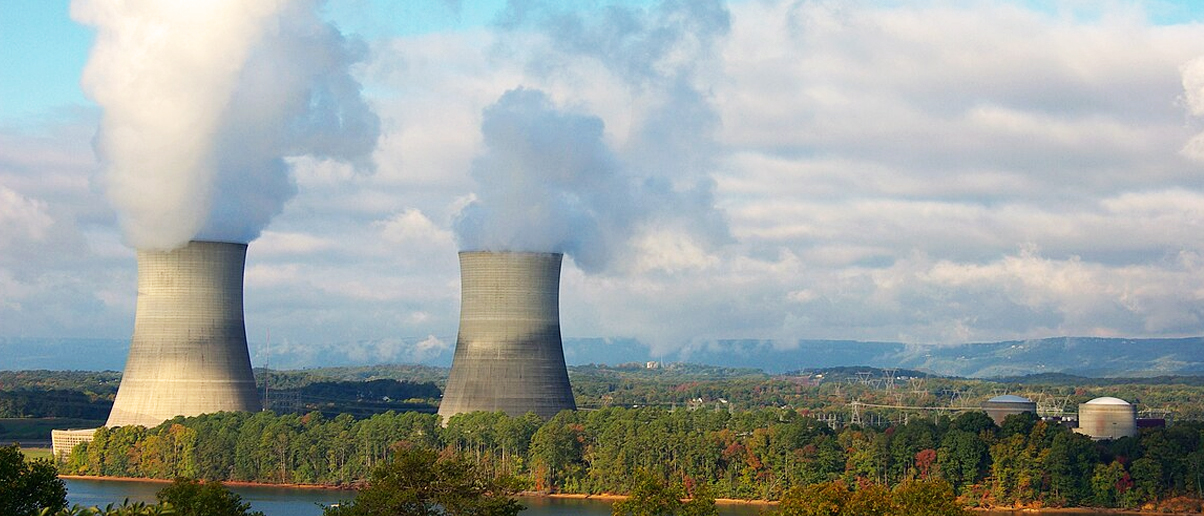
(Photorush / Wikimedia Commons)
America’s nuclear storefront still stocks uranium, while abundant and potentially cleaner thorium remains off the shelf.
Thorium advocates argue the element could give the U.S. another nuclear fuel option while reducing some of the long-lived radioactive material associated with conventional uranium fuel cycles.
“Thorium is usable as is — there is no enrichment needed,” John Kutsch, executive Director of the Thorium Energy Alliance, told the Daily Caller News Foundation. “We have 2,000 times the usable thorium on Earth than we do [Uranium].”
Meanwhile, China is trying to change that. Researchers in the Gobi Desert achieved thorium-to-uranium fuel conversion in 2025, according to the Chinese Academy of Sciences — decades after researchers at a U.S. lab demonstrated key technologies underlying the concept.
Natural thorium-232 cannot power a nuclear reactor on its own and must first be converted into uranium-233, according to the International Atomic Energy Agency. That means a thorium reactor needs another nuclear fuel to get the reaction started while the thorium is converted into usable uranium-233 fuel, Taek K. Kim, manager for the Nuclear Systems Analysis Group, told the DCNF.
The Environmental Case
“Thorium is a by-product of rare earth and critical materials processing,” Kutsch told the DCNF.
The element is more abundant in the Earth’s crust than uranium and is commonly found in monazite, a phosphate mineral that contains rare earth elements and serves as the world’s primary source of thorium, according to the U.S. Geological Survey. Monazite is primarily valuable for its rare-earth content and contains only small amounts of uranium, making thorium recovery a potential byproduct of mining material already sought for other minerals.
Conventional uranium fuel can produce plutonium and other long-lived radioactive materials as it is used in a reactor, according to Kim. Thorium, by comparison, is primarily converted into uranium-233, producing far smaller amounts of those materials.
“Since plutonium and minor actinides are highly radioactive and radiotoxic with long half-lives, the thorium fuel cycle has much lower long-lived radioactive hazards compared to the uranium fuel cycle,” Kim told the DCNF.
Thorium oxide also has higher thermal conductivity and a higher melting temperature than uranium oxide, the chemical form used in commercial reactors, according to Kim. Those properties are favorable for resistance to fuel failure and more robust fuel behavior under some accident conditions.
“Favorable safety characteristics with thorium have been discussed in several reactor types (for instance, molten salt reactors and high-temperature gas-cooled reactors),” Kim told the DCNF. “However, this may miss the point that the favorable safety characteristics mainly relate to reactor designs, not thorium itself.”
Kutsch also distinguished between the reactor and the material used to fuel it.
“There is fuel and there are reactors — people often say ‘Thorium Reactor,’ but there is no such thing; all reactors can be made to run all fuels,” Kutsch told the DCNF.
America Has Done This Before
Thorium’s nuclear potential is hardly new. Oak Ridge National Laboratory’s Molten Salt Reactor Experiment achieved its first self-sustaining nuclear chain reaction in 1965 and became the first reactor to run on uranium-233 in 1968, logging more than 13,000 hours at full power before shutting down in 1969.
Colorado’s 330-megawatt Fort St. Vrain reactor used thorium and uranium to generate electricity from 1979 to 1989, according to federal records. Germany’s 300-megawatt Thorium High Temperature Reactor also used thorium and uranium in the 1980s. Neither led to a commercially competitive thorium fuel industry.
Fort St. Vrain was terminated because it was economically unviable, with poor availability and high operating costs, while Germany’s reactor shut down in 1989 for similar reasons and poor government support, according to Kim.
Other concepts using thorium fuels, including molten-salt, heavy-water and fast gas reactors, have been designed but have not been commercially deployed, Kim said.
Why Thorium Never Took Off
Kutsch argues the central obstacle is an industry already built around uranium.
“The primary obstacle Inertia — Power producers use U235 and that is what they use and what they want to continue to use — Once and No recycling,” Kutsch told the DCNF.
He also pointed to the way nuclear research and infrastructure have developed around the incumbent fuel. “We use uranium, therefore we fund uranium, we do NOT use thorium, therefore we do NOT fund any work in thorium,” Kutsch told the DCNF.
Kim’s assessment places greater weight on technical, infrastructure and economic barriers.
“The primary barrier to moving forward with the thorium fuel cycle is technical issues, a lack of infrastructure for demonstration and licensing, and supply chains,” Kim told the DCNF.
Introducing a new nuclear fuel requires extensive testing and safety analysis before regulators can approve it, according to the Nuclear Regulatory Commission.
Thorium also presents challenges when turning it into reactor fuel. The process can produce highly radioactive material that requires additional shielding and specialized equipment to handle safely, making fuel production more complicated, according to the International Atomic Energy Agency.
Alternatively, reactors can pair thorium with enriched uranium, requiring both uranium and thorium fuel streams.
“Because U-233 recovery is complex and both thorium and uranium fuel streams are required, the nuclear community has focused on the single uranium fuel cycle rather than maintaining both streams,” Kim told the DCNF. “Thorium fuel requires a sizeable investment, which is the major regulatory and economic obstacle.”
Thorium never developed into a commercial fuel industry, but research has continued around the world. Countries including China, Canada, France, Japan, Russia and the United Kingdom have pursued thorium-related nuclear research, according to the U.S. Geological Survey.
China has recently pushed the technology further. More than half a century after American researchers demonstrated U-233 operation in a molten-salt reactor, China successfully converted thorium into uranium fuel in an experimental reactor in 2025, according to the Chinese Academy of Sciences. Kutsch argues that progress poses a strategic risk for the United States.
“It is sad because we will let our largest economic adversaries take over control of an entire fuel cycle,” Kutsch told the DCNF.
All content created by the Daily Caller News Foundation, an independent and nonpartisan newswire service, is available without charge to any legitimate news publisher that can provide a large audience. All republished articles must include our logo, our reporter’s byline and their DCNF affiliation. For any questions about our guidelines or partnering with us, please contact [email protected].