

Politics
‘More Dangerous Than Drugs’: Bill Gates Warns Of Risks Posed By Artificial Intelligence
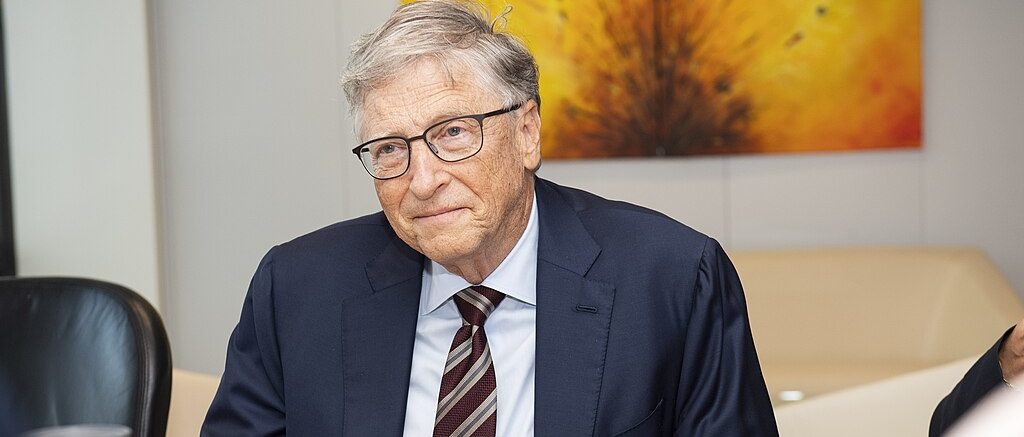
© European Union, 2025, CC BY 4.0 <https://creativecommons.org/licenses/by/4.0>, via Wikimedia Commons
The man behind one of the most significant technological revolutions of the last 50 years expressed dire warnings about the consequences of unregulated artificial intelligence during a Sunday interview on CNN.
Speaking with “State of the Union” host Jake Tapper, Microsoft founder Bill Gates warned of the risks unregulated artificial intelligence (AI) — recently rebranded as “super intelligence” by President Donald Trump and other industry leaders — could pose. The concern by the tech icon follows Anthropic’s CEO, Dario Amodei, penning a Sept. 12 letter calling for a slowdown of AI development so safety and oversight efforts could catch up with the rapidly evolving technology.
When asked by Tapper if his beliefs would fall under OpenAI CEO Sam Altman’s label of “doomerism” for those who envision AI in worst-case scenarios, Gates replied, “Well, all responsible AI leaders, including Sam Altman, including Dario Amodei, they are telling the world, ‘This is very concerning.'”
“The way that gets articulated in terms of potential negative scenarios: yes, it can get overblown. When people act like all of humanity is at risk in some imminent way, that is going too far. But, say, compared to cars or planes or drugs — all things that I think we’re pleased that we have significant regulatory capability to try and keep people safe — this is more dangerous than any of those.”
Tapper also questioned if Gates thinks world leaders are doing enough to prevent a bioterrorist attack, to which he responded, “Well, no, we’re not doing enough.”
“The front that we will probably see most dramatically in the next year is cyberattacks,” he continued, “because there’s a known business model where you threaten to do something and then ask somebody to pay you for that, or you create a disruption that changes something in the stock market or some betting thing that you go and do.”
“And so the real danger right now is not that AI is getting out of control,” Gates added. “We need to work on that, but that’s years away in terms of the big impact that might have. It’s really bad people using AI, particularly in AI, where you can take out all the safeguards.”
“We put in safeguards to try and avoid you doing cyberattacks,” he concluded. “We put safeguards in to avoid you doing bioterrorism, but, right now, you’re allowed to take all those safeguards out. So, when you have bad people, no safeguards, and then the latest models, that’s where, over the next year, primarily in the cyber area, we are going to have a lot of negative surprises.”
Gates previously committed to raising the issues involving AI and its potential to transform society with lawmakers, industry leaders, and others who could shape any national or international governance frameworks.
“This unprecedented technology demands an unprecedented global response. If we get it right, the payoff for humanity will be phenomenal and the world will be a more equitable place,” Gates wrote in an Aug. 26 essay, “The turbulent AI era is here. The choices we make now are critical.”
“I rarely stop thinking about AI—not because I have all the answers, but because the questions it raises are too consequential to leave to a small group of technologists,” he concluded. “Leaders across academia, business, government, and civil society all have a role to play in shaping what comes next.”
All content created by the Daily Caller News Foundation, an independent and nonpartisan newswire service, is available without charge to any legitimate news publisher that can provide a large audience. All republished articles must include our logo, our reporter’s byline and their DCNF affiliation. For any questions about our guidelines or partnering with us, please contact [email protected].