

Commentary: Big Tent Ideas
America First Is Good Policy For Our National Parks
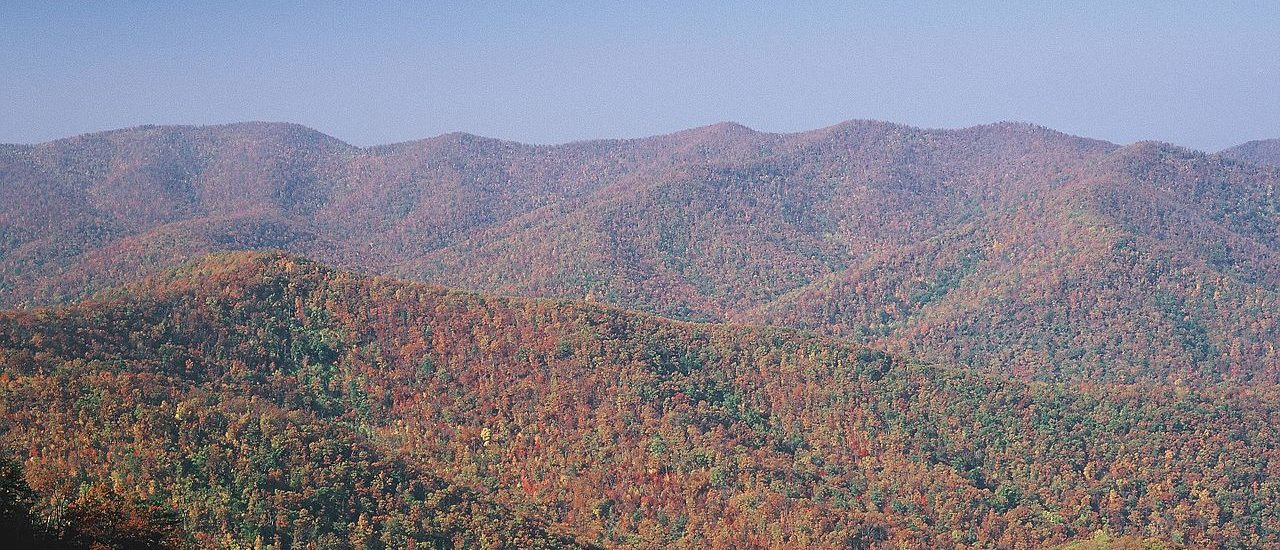
Shenandoah National Park from Virginia, Public domain, via Wikimedia Commons
Pick the most trusted part of our government. Like many, you might say the national parks. After all, they are not seemingly political or controversial. They’re beloved. And rightfully so.
Now pick some of the most controversial topics in today’s national discussion, like data centers, “energy efficient” technology, or even Chinese relations. Many would be shocked to know that there is a connection between our beloved national parks and these points of controversy.
The connection? NGOs (non-governmental organizations).
One might be surprised to know that NGOs with connections to foreign adversaries like China and extremist progressive interests are intertwined with our national parks. But they are.
Indeed, unelected activist groups — at best — have learned how to influence federal policy without ever participating in the democratic process. One method they use is through litigation, by exploiting otherwise well-intentioned laws to tie up major infrastructure projects. Or, they will use sue and settle—where they sue a like-minded agency that will then “settle” the matter in a way that changes policy — tactics to change laws without any public scrutiny or democratic process. To make matters worse, federal money often flows, directly or indirectly, to these NGOs, keeping them afloat and sometimes even growing into behemoths.
Data centers are a prime example. Correct usage of data centers will improve many facets of American society. For everyday life, they create jobs and can lower the tax burden. For the AI race, they can give the United States an advantage. For national security, they can help prevent foreign adversaries from controlling our technologies.
Yet, the messaging is anything but positive. Through NGOs connected to Chinese influence, messaging is strongly anti-data center, and often misleading.
For example, the Prince William Digital Gateway project, which would have been near the Manassas Battlefield, was axed through NGO messaging and litigation tactics. NGO messaging relied heavily on the idea that we shouldn’t have data centers where there are national parks. But the data center would only be near a national park. The proximity was exploited and created terrible precedent, which NGO leaders admitted was the plan.
One might question the claims of corruption and nefarious ties of these NGOs, but a recent Council to Modernize Governance paper demonstrates numerous examples.
One example is the Energy Foundation China, which has distributed more than a billion dollars in grants, some of which are in the United States. American environmental organizations that shape energy and development policy, like the Rocky Mountain Institute, are among the recipients. Rocky Mountain Institute — the same Rocky Mountain Institute that tried to eliminate gas stoves — has a longstanding relationship with the National Park Service and leverages that relationship to give it credibility in the energy policy debate. Another recipient is Earthjustice, which is an organization that takes advantage of our court systems to obstruct progress.
So, what can be done? First, transparency laws should be developed to trigger limitations on NGOs that receive foreign funding to restrict their access to government agencies and funding. Additionally, agencies such as the NPS should be required to distance themselves from organizations that have foreign funding. The Federal Government should create objective criteria on what activities undermine American interests, then limit NGOs that perform those activities from influencing government policy.
And, finally, Congress should act to take the tools of obstruction away from these NGOs. For example, if the National Environmental Policy Act (NEPA) were amended to make clear that projects cannot be blocked over an obscure angle not considered during an environmental assessment, among other reforms, then the NGOs would have one less tool to block progress.
It is time to restore our parks to just being national parks. NGOs should not be able to exploit them for political or ideological gain. It is time to shine a light on them and create distance from them, especially when there are foreign interests tied to them. Everyone should agree: America First is good policy for our national parks.
Curtis Schube is the Executive Director for Council to Modernize Governance, a think tank committed to making the administration of government more efficient, representative, and restrained. He is formerly a constitutional and administrative law attorney.
The views and opinions expressed in this commentary are those of the author and do not reflect the official position of the Daily Caller News Foundation.
All content created by the Daily Caller News Foundation, an independent and nonpartisan newswire service, is available without charge to any legitimate news publisher that can provide a large audience. All republished articles must include our logo, our reporter’s byline and their DCNF affiliation. For any questions about our guidelines or partnering with us, please contact [email protected].