

Energy
America Has Little Fuel Cushion Left If A Hurricane Knocks Out Gulf Coast Refineries
NASA Goddard Space Flight Center via Flickr
America’s fuel supply has little room left to absorb a hurricane that knocks Gulf Coast refineries offline, according to federal data and energy analysts.
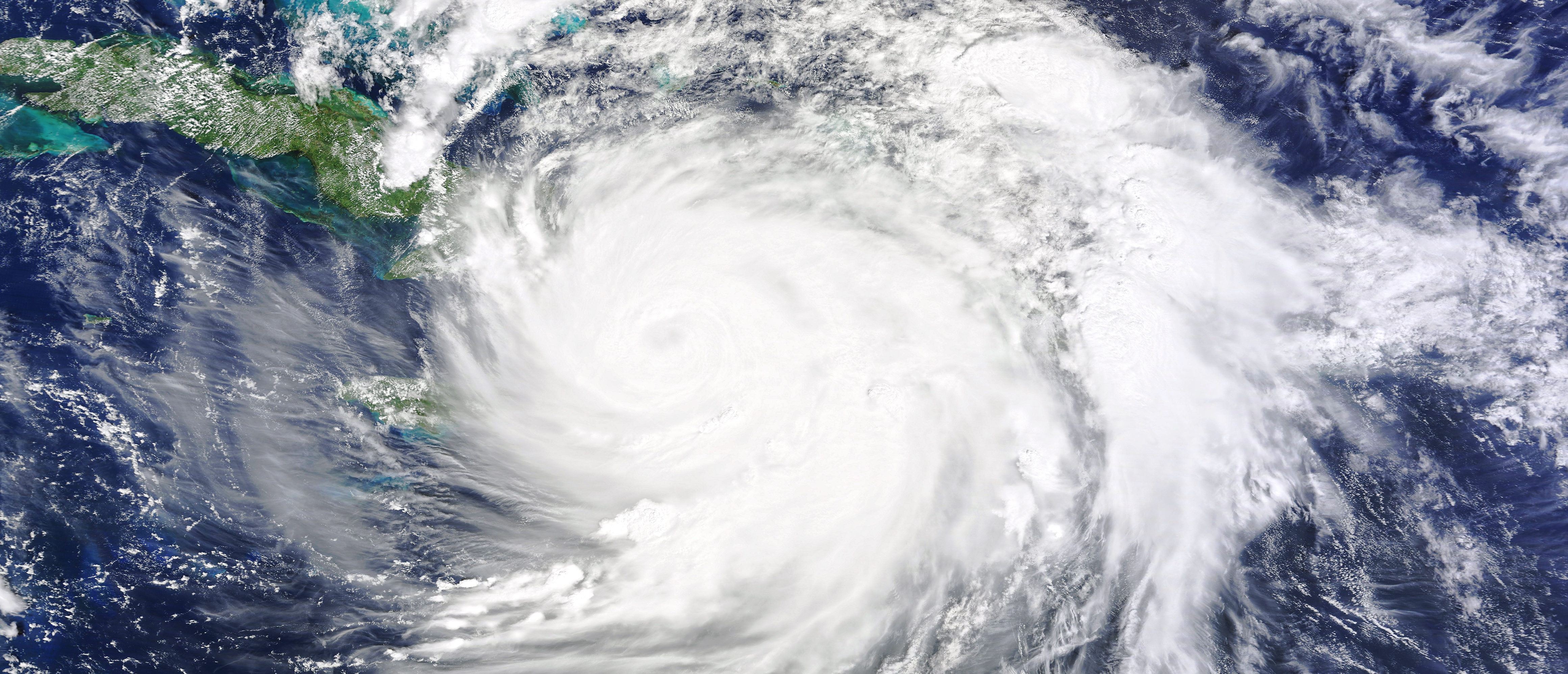
U.S. gasoline inventories were 6 percent below their five-year average for the week ending Oct. 2, and distillate stocks, which include diesel, were 12 percent below, the Energy Information Administration (EIA) said in a statement to the Daily Caller News Foundation. Hurricane Isaias, the first hurricane of the Atlantic season, had maximum sustained winds of 115 mph and was moving north toward the western Florida Panhandle at 17 mph Friday afternoon, according to the National Hurricane Center.
The Gulf Coast holds about 54 percent of the nation’s refining capacity, according to EIA data.
“We really don’t have much cushion,” Steve Milloy, a senior fellow at the Energy and Environment Legal Institute, told the DCNF.
Isaias had moved too far east to affect any refinery in Louisiana, Andy Lipow, president of Lipow Oil Associates, said in a statement to the DCNF. Lipow said a refinery that shuts down for a storm takes one to two weeks to restart if it is not damaged.
“Severe flooding can put a refinery out of commission for months,” he said. “Of course, losing any refinery capacity when diesel supplies are at their lowest level for this time of year since the EIA began reporting in 1982 is not a good thing.”
“Our industry is closely monitoring Hurricane Isaias and coordinating with state and federal officials to protect workers and communities and minimize potential fuel supply disruptions,” an American Petroleum Institute spokesperson said in a statement to the DCNF. “With global energy markets already under strain, companies are prepared to safely restore normal operations as quickly as conditions allow.”
The Department of Energy and the California Air Resources Board did not immediately respond to the DCNF’s requests for comment.
“U.S. refineries have been running flat out, even delaying maintenance because demand is so strong and margins have been so high,” Ellen Wald, a senior fellow at the Atlantic Council’s Global Energy Center, said in a statement to the DCNF. “Any outages, even temporary ones due to flooding or power outages from a hurricane, will show up in regional gasoline prices immediately.”
Jeff Moore, a corporate risk analyst at Muir Analytics and World Oil contributor, said in a statement to the DCNF that the Colonial Pipeline is one of the most critical chokepoints. The pipeline moves about 2.5 million barrels a day of gasoline, diesel and jet fuel from Houston to New York and New Jersey, about 45 percent of the fuel consumed on the East Coast, he said.
“During Hurricane Harvey in 2017 Colonial Pipeline deliberately shut down because refineries were knocked out of action. As a result of the decreased supply, U.S. gas prices temporarily rose 10 cents a gallon,” Moore said, referring to the storm that devastated parts of the Gulf Coast in Texas in Louisiana.
Since then, he said, the coast’s refiners and pipeline operators “have hardened their facilities from storm damages, they have introduced micro power grids and backup power generation, and they have literally elevated critical electrical systems to keep them from being inundated by floodwaters.”
“There’s no such thing as 100 percent protection from storms, but U.S. refineries along the Gulf are, for the most part, in a much better position to withstand heavy weather damage now than 2017 and 2021,” Moore added.
Colonial Pipeline said in a statement to the DCNF that the hurricane had “no significant impacts” on its operations so far and that its storm preparations include “strategically placing generators, moving personnel, and preparing our facilities and equipment to minimize impacts.”
Milloy, the Energy and Environment Legal Institute fellow, said the concentration of refining on the Gulf Coast is “another [reason] why we should not have … so much refining capacity concentrated in an area that is prone to storms like this.”
He blamed federal air quality rules and state regulators for that concentration.
“It’s mostly EPA, and then of course you have states like California,” Milloy said.
The EPA said in a statement to the DCNF that it “is committed to unleashing American energy and keeping costs low for Americans at the pump through commonsense action.”
The agency added the state where a refinery is located is the permitting authority for that refinery.
Europe and North America have shed about 2.1 million barrels a day of refining capacity since 2019, while China and the Middle East added 4.4 million, Dallas Fed economists Jesse Thompson and Garrett Golding wrote Thursday.
Milloy called the permitting bill senators are weighing a “success that only a lobbyist could like.”
“The reviews are still endless, and the lawfare is still endless,” he said. “We desperately need to update our environmental laws. The laws we have now were largely written 50 years ago.”
Wald, the Atlantic Council fellow, said the U.S. has “already drawn down most of its Strategic Petroleum Reserve” and should begin refilling it before next hurricane season, because releases “can provide cover to regions at risk of shortages while production, pipelines or ports are out of commission.”
She also said repealing the Jones Act, a 1920 law that requires goods shipped between U.S. ports to travel on American-built, American-owned and American-flagged vessels crewed mostly by U.S. citizens, would make it easier to move fuel into areas a storm cuts off. The law is currently suspended because of the Iran war, Wald said.
“Waiving the Jones Act does not reopen a closed port, repair a damaged pipeline, restore electricity to a gas station or put fuel trucks back on the road,” Jennifer Carpenter, president of the American Maritime Partnership, said in a statement to the DCNF.
Carpenter said more than 70 Jones Act tankers and petroleum-carrying articulated tug barges operate along the Gulf Coast, along with hundreds of barges on the Gulf Intracoastal Waterway between Texas and Florida. After Hurricane Ian in 2022, more than 25 American vessels carrying over 220 million gallons of fuel arrived at Florida ports as they reopened, she said.
“American operators are making vessel-by-vessel decisions to protect their crews and equipment while arranging for ships to be loaded and ready to return when the Coast Guard reopens affected ports,” Carpenter added.
The Strategic Petroleum Reserve held 284 million barrels of crude in September, its lowest level since 1982, and could last less than six months at its current draw of 1.2 million barrels a day if the official 80 million barrel operating minimum is accurate, the Dallas Fed economists wrote.
All content created by the Daily Caller News Foundation, an independent and nonpartisan newswire service, is available without charge to any legitimate news publisher that can provide a large audience. All republished articles must include our logo, our reporter’s byline and their DCNF affiliation. For any questions about our guidelines or partnering with us, please contact [email protected].