

National Defense
America’s War On Cartels Gets A War On Terror Makeover
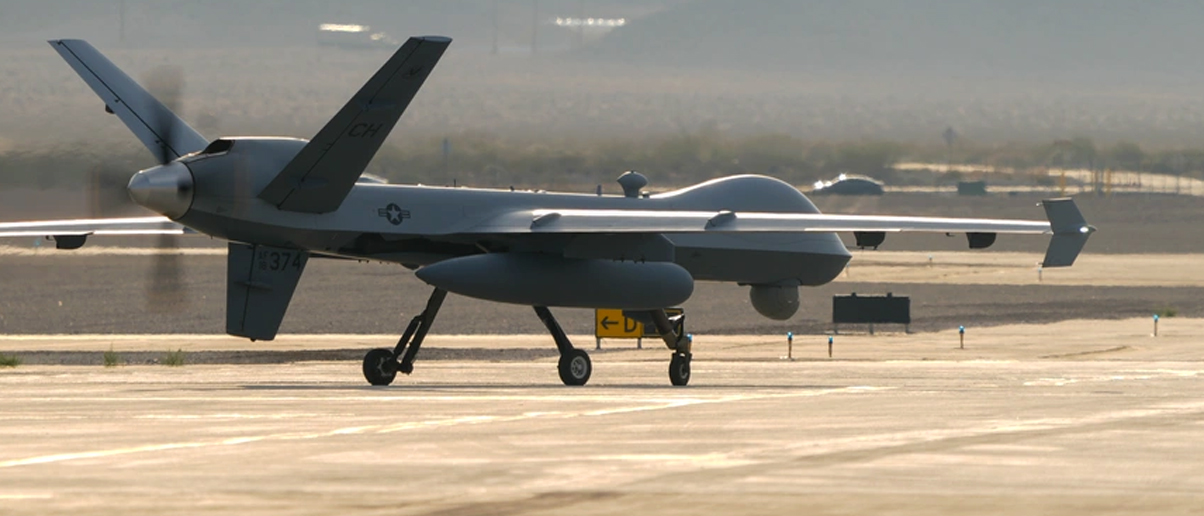
U.S. Air Force photo
Washington is applying two decades of hard-earned battlefield experience to combat the enemy in America’s backyard, but this tactic may not destroy cartels at the root.
On Monday, the U.S. military moved a number of MQ-9 Reaper drones from Africa to Colombia and Ecuador, the New York Times reported. Additionally, American Special Forces have been partnering with and training law enforcement to combat illicit drug networks.
Nicknamed the “hunter-killer,” the Reaper drone was commonly used in drone strikes against al-Qaida, al-Shabaab and the Islamic State during the Global War on Terror (GWOT).
“Based on our assessment of what needs to be done, this plan focuses on five core lines of effort: dismantling illicit networks, attacking network logistics, preventing adversary regeneration, bolstering partner sovereignty and security, and building a strong coalition,” United States Southern Command SOUTHCOM Commander Gen. Francis L. Donovan told the Hill.
Since President Donald Trump entered office for his second term, 20 Latin-American based cartels have been categorized as foreign terror organizations.
“Yes, I think that is the direction both in the language and in the approach,” George Mason University professor and organized crime expert Dr. Guadalupe Correa-Cabrera told the Daily Caller News Foundation when asked if the Pentagon was using the GWOT model on cartels.
“Intelligence gathering and drones alone do not make something a counterterrorism campaign. But when criminal organizations are defined as military enemies, and success means eliminating their leaders or striking their operations, we are moving into that framework,” Correa-Cabrera continued. “The administration’s strategy explicitly brings together counterterrorism, military strikes and leadership targeting.”
“For operational security reasons we cannot disclose the locations of aircraft or any future planning regarding their locations,” United States Africa Command (AFRICOM) told the DCNF. The Pentagon and SOUTHCOM did not respond to the DCNF’s request for comment.
Similar to GWOT-era operations, America conducts joint operations with partner forces and uses special operations forces to train local military and law enforcement groups. This is most prominent in Ecuador, where the American military partnered with the Ecuadorian military in an operation that killed a Tren De Arugua leader in early March.
Since the March operation, the US-Ecuadorian relationship has strengthened. American special operations forces partnered with Ecuadorian law enforcement to target an illicit cocaine network with ties to Mexican cartels on Sept. 24th.
Following the successes in Ecuador, Guatemala and Honduras have sent letters to the United States, requesting joint operations in their respective countries, an anonymous senior Pentagon official told the Hill.
The war on cartels may be as symbolic to America as it is tactical. Regarding the redeployment of Reaper drones, “as a political symbol, it’s unmistakable … it’s a sign of a commitment to expand both the level and type of cooperation,” former U.S. diplomat Francisco Palmieri told the New York Times.
More Americans die from drugs each year than they have in the Vietnam War, according to Republican Arkansas Sen. Tom Cotton’s office. These groups have killed, kidnapped, and trafficked Americans. Drugs trafficked across the U.S.-Mexico border have decimated American communities.
“A lot of people seem to think some of these tactics are a little aggressive…Well, you have to be aggressive against terrorists because they’re destroying our future,” former acting DEA Administrator Derek Maltz told the Hill.
However, these tactics may have limitations.
The Mexican government is rife with corruption, with many officials personally benefitting from cartel activity. In late April, the Department of Justice (DOJ) indicted ten Mexican politicians, including the former governor of Sinaloa on drugs and weapons trafficking charges.
“We also need to question the convenient image of a criminal enemy standing outside the state. Some officials fight these groups; others protect them, work with them, or benefit from their activities. The same applies to parts of the legal economy. If we concentrate on killing the visible criminals while ignoring those arrangements, we leave the foundations of their power in place,” Correa-Cabrera warned to the DCNF.
All content created by the Daily Caller News Foundation, an independent and nonpartisan newswire service, is available without charge to any legitimate news publisher that can provide a large audience. All republished articles must include our logo, our reporter’s byline and their DCNF affiliation. For any questions about our guidelines or partnering with us, please contact [email protected].