

Commentary: Big Tent Ideas
From Stockpile To Supply Chain: Project Vault’s Next Phase
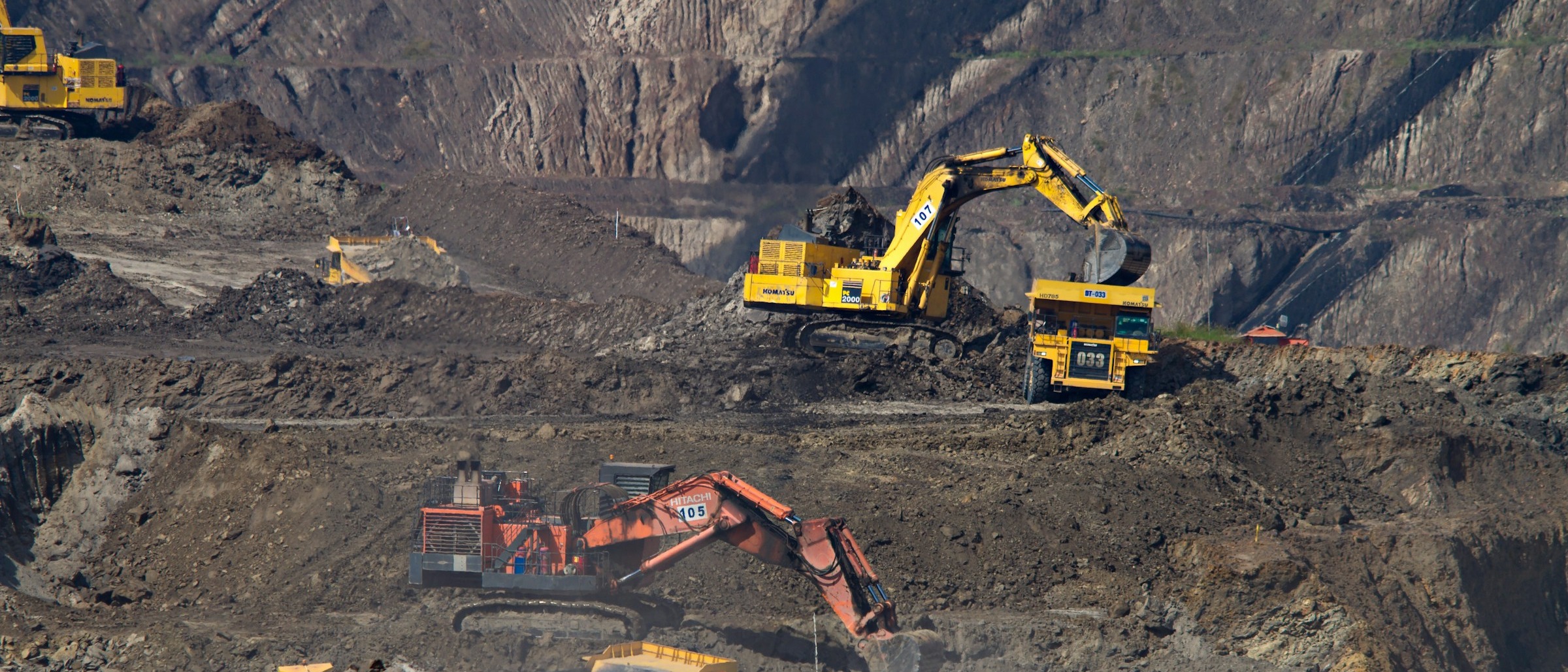
Mining, photo not from story (dominik-vanyi-Mk2ls9UBO2E-unsplash (1))
For years, Washington has understood the strategic danger created by America’s dependence on foreign sources for critical minerals. These materials sit at the foundation of every technology we consider essential to our economic and national security, from advanced weapons and satellites to semiconductors, automobiles, energy infrastructure, data centers and artificial intelligence. Yet despite repeated warnings about China’s dominance of key portions of these supply chains, the United States continued to rely largely on global markets to provide the materials American industry needs.
This is finally beginning to change, and Project Vault may prove to be much more important than simply creating another strategic stockpile.
When the Export-Import Bank (EXIM) approved up to $10 billion in long-term financing for Project Vault earlier this year, complemented by nearly $2 billion in private-sector investment, the immediate objective was clear: create a strategic reserve capable of protecting American manufacturers against critical-mineral supply disruptions. Unlike the National Defense Stockpile, Project Vault is specifically designed around the needs of the broader U.S. industrial base.
That alone was an important shift, but what has happened during intervening months suggests something more ambitious is taking shape.
Glencore and Mercuria have now committed a combined $1 billion to VaultCo, the independently governed company implementing Project Vault. Their participation brings more than money. These companies bring global capabilities in sourcing, processing, procurement, financing, transportation, and logistics. This is the tangible physical infrastructure required to turn billions of dollars in financing authority into minerals available to American manufacturers when they need them.
As the Center for Strategic and International Studies (CSIS) recently observed, Project Vault is moving from designing its financial architecture to building its physical supply architecture. That is an important milestone, but it also points toward the next phase of the project.
The ultimate objective should not be simply to build America’s largest warehouse of critical minerals. It should be to build a secure and dependable critical-minerals supply chain.
A strategic reserve provides an important insurance policy against export restrictions, geopolitical conflict, and market disruption. It can keep American production lines operating when supply chains fail. But if the minerals inside those warehouses continue to depend upon the same vulnerable mining, processing, and refining networks we are trying to escape, we have improved our resilience without solving the underlying strategic problem.
The stockpile buys us time, and the penultimate question is what we build with that time.
This is where Project Vault has the potential to become transformational. By aggregating the long-term requirements of American manufacturers, combining those requirements with sophisticated commodity-market expertise, backing the structure with federal financing, and bringing private capital alongside it, Project Vault can create something America’s critical-minerals industry desperately needs: a predictable demand.
That matters because one of the biggest obstacles confronting American mining and processing projects is not whether the minerals exist, it is whether the economics work to go after those assets.
New mines, processing facilities, and refining operations require significant capital and years of development. Investors need confidence that customers will exist when production begins and lenders need confidence that projects can generate sustainable revenues. Manufacturers need confidence that materials will be available at the quality, volume, and price necessary to keep production lines operating. I strongly believe that Project Vault can help connect those pieces.
CSIS makes this point particularly well. Broader manufacturer participation gives the market greater visibility of future demand. That can translate abstract projections about America’s future mineral requirements into clearer commercial signals capable of supporting investment decisions.
This is where the role of EXIM becomes particularly important, because something larger is happening at the agency as well.
As EXIM Chairman and President John Jovanovic recently told Congress, “EXIM today is no longer simply an export credit agency.“ He described it instead as “a strategic economic tool” capable of bringing together capital to strengthen America’s industrial base, enhance national security and compete economically in the 21st century. That is exactly the pivot Project Vault represents.
EXIM is not simply financing the purchase of commodities to put into storage. The agency says Project Vault is designed to shield domestic manufacturers from supply shocks while expanding U.S. production and processing of critical raw materials. Jovanovic has said the project is positioned to “strengthen America’s industrial base” and “support domestic production of critical materials.“
That distinction is important to the underlying argument. The objective is no longer simply to stockpile our way through the next crisis. It is to use the security provided by the stockpile and the purchasing power behind it to help build a supply chain that makes America less vulnerable to the crisis in the first place.
Government is simply not replacing the market; it is government recognizing a very real strategic market vulnerability and using federal credit to help unlock private investment. Project Vault combines government financing, private capital, industrial demand, and commodity-market expertise rather than attempting to recreate those capabilities inside another federal bureaucracy.
That model should increasingly be connected to the broader effort to expand American mining, processing, refining, recycling, and manufacturing to strengthen our defense industrial base.
We should therefore measure Project Vault’s success by more than the amount of material accumulated in warehouses. We should ask how much domestic capacity those purchases help create, how much private investment they unlock, how many processing facilities become commercially viable, and how many American manufacturers become less vulnerable to decisions made by geopolitical competitors.
America also needs to think about the entire supply chain. Mining a mineral domestically accomplishes little if it must still be shipped overseas for processing. Processing it here is insufficient if downstream manufacturing remains concentrated somewhere else. And stockpiling provides only temporary security if replenishing the reserve sends us directly back to the foreign-controlled supply chains that created the vulnerability.
The objective must be to mine it, process it, manufacture with it, and secure the supply chain connecting all three. This is the safest path to relinquishing our dependence on foreign suppliers.
That is particularly important as Washington debates America’s future in artificial intelligence, advanced manufacturing, autonomous systems, energy, and defense technology. There is no credible AI strategy without a critical-minerals strategy, and there is no serious defense-industrial-base strategy without one either. The most sophisticated semiconductor, autonomous platform, satellite, or missile still depends upon physical materials that must be mined, processed, and manufactured somewhere.
China understood the strategic importance of those supply chains long before Washington did. America is now beginning to respond with more than speeches, blue ribbon commissions, studies, and short-term fixes.
Thanks to this Administration’s leadership Project Vault is an important part of that response. The reserve provides insurance against today’s vulnerabilities. But its greater value may be its ability to help create the demand certainty, financing, and private investment necessary to build tomorrow’s American critical-minerals industry.
I would argue that the next phase of Project Vault should therefore be about more than what America puts into storage. It should be about what America mines, processes and manufactures because Project Vault exists.
Timothy J. Maney is a national security and government affairs executive, corporate board member, and longtime advocate for the American business community. His work focuses on defense, emerging technology, the industrial base, and federal policy.
The views and opinions expressed in this commentary are those of the author and do not reflect the official position of the Daily Caller News Foundation.
All content created by the Daily Caller News Foundation, an independent and nonpartisan newswire service, is available without charge to any legitimate news publisher that can provide a large audience. All republished articles must include our logo, our reporter’s byline and their DCNF affiliation. For any questions about our guidelines or partnering with us, please contact [email protected].