

National Defense
Trump, Anduril Make $6.6 Billion Bet To Fix America’s Submarine Production Crisis
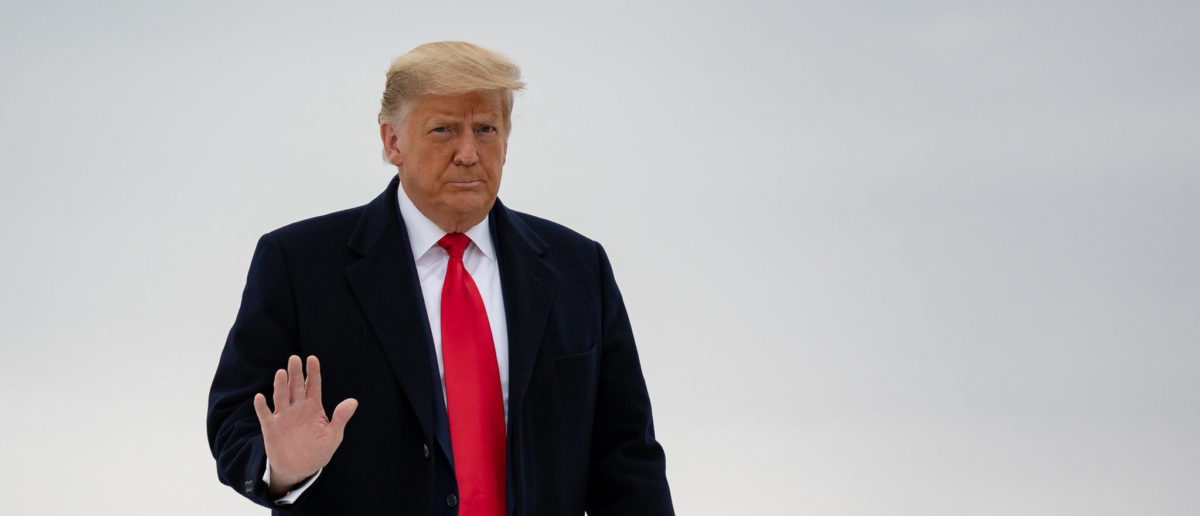
Trump White House Archives/Creative Commons/Flickr
Defense technology company Anduril is betting billions of dollars that a massive new Maryland shipyard can help break one of the Navy’s most persistent submarine-production bottlenecks.
President Donald Trump announced Arsenal-2 Tuesday, a planned 187-acre manufacturing site at Sparrows Point backed by $3.7 billion from Anduril and a Navy contract worth up to $2.9 billion, Anduril told the DCNF. The site will build large sections and key parts for Virginia-class submarines before sending them to General Dynamics Electric Boat and HII Newport News Shipbuilding for final assembly.
The United States is trying to rebuild a shipbuilding industry that has shrunk for decades while China has rapidly expanded its own. China’s shipbuilding capacity is estimated at more than 200 times that of the United States by gross tonnage, though the comparison is driven largely by commercial shipbuilding rather than advanced warship production, the Congressional Research Service reported, citing an unclassified Navy assessment.
China has also begun outpacing the United States in nuclear-powered submarine construction. China launched more nuclear-powered submarines than the United States between 2021 and 2025, with a greater combined tonnage, although American submarines remain larger and more sophisticated, the International Institute for Strategic Studies reported. The institute said China’s expanding production capacity presents a growing challenge as the United States and its allies struggle to increase their own submarine output.
China now produces more than half of the world’s commercial ship tonnage, up from roughly 5% in 1999, while the United States produces less than half of 1% of global commercial ships. The U.S. built just five ocean-going commercial vessels in 2024, compared with more than 1,000 annually in China, according to the Office of the U.S. Trade Representative.
American taxpayers will receive an approximately 40% stake in a new Anduril subsidiary created to operate Arsenal-2 rather than a stake in Anduril itself, Defense One reported, citing Trump and the company. Additional details surrounding the ownership arrangement were not immediately available, the outlet reported.
The decline has also hollowed out the military shipbuilding base. Seventeen private shipyards that built vessels for the defense industry closed or left the sector over the past 50 years, leaving roughly 25 U.S. yards capable of constructing medium- and large-sized vessels as of 2021, while the industry will need an estimated 174,000 new workers over a decade to meet Navy production goals, the Government Accountability Office reported, citing Navy and Department of Defense assessments.
The Navy contract ties payments to demonstrated production outcomes, an arrangement that puts most of the execution risk on Anduril rather than taxpayers, Anduril told the DCNF. Initial operations are expected in 2030 at the more than 2 million-square-foot facility, which is planned to include a 1,200-foot graving dock, essentially a large basin that can be drained so workers can build or work on major ship components out of the water, along with high-bay assembly halls and reconfigurable production lines.
Those shortages are already constraining the fleet. None of the seven shipbuilders constructing Navy battle-force ships were positioned to meet the service’s delivery goals as of 2025, and the Navy failed to meaningfully increase the size of its fleet over two decades despite nearly doubling its inflation-adjusted shipbuilding budget, according to the Government Accountability Office.
The facility is expected to add roughly 9 million production hours per year and increase overall Navy submarine production capacity by about 15%, Defense One reported, citing Vice Adm. Robert Gaucher. Anduril will initially produce components including precision torpedo tubes and impulse tanks before moving toward more complicated modules and potentially submarine hull sections, Defense One reported, citing Gaucher.
Anduril also plans to use its ArsenalOS software platform as a central operating system for the shipyard, allowing workers and managers to track parts, inspections, assembly steps and production records in one place, Anduril told the DCNF. The company says the system will also use automation and digital instructions to help workers complete complex shipbuilding tasks more consistently.
The company is establishing a separate 160,000-square-foot facility in Orange County, California, where workers will develop manufacturing processes, train and begin producing submarine components before Arsenal-2 opens, Anduril told the DCNF.
The Maryland project is expected to create 3,100 direct jobs, support more than 11,000 indirect jobs and generate roughly $2 billion in annual economic output, including approximately $312 million in wages, Anduril said.
Anduril has already been expanding deeper into traditional weapons manufacturing, including the Air Force’s Collaborative Combat Aircraft program, where the company was selected to deliver an initial batch of FQ-44 semi-autonomous fighter aircraft. Anduril said its Arsenal-1 production line could produce as many as 150 aircraft annually in its current configuration.
“This massive new project will deliver the largest private investment, drive billions of dollars in economic activity, and create the most jobs in Maryland in history,” Democratic Maryland Gov. Wes Moore said, according to Anduril.
Autonomous systems are also taking on a larger role at sea, with defense companies developing unmanned vessels capable of continuing missions even when communications are jammed or lost. Contractors displayed armed and autonomous surface vessels capable of reconnaissance, resupply and offensive missions at the Sea Air Space 2026 expo, including systems designed to operate with limited human intervention in contested environments.
Arsenal-2 is intended to help close the gap between current Virginia-class production and Navy requirements while expanding the industrial capacity needed to support U.S. commitments under the AUKUS security partnership.
All content created by the Daily Caller News Foundation, an independent and nonpartisan newswire service, is available without charge to any legitimate news publisher that can provide a large audience. All republished articles must include our logo, our reporter’s byline and their DCNF affiliation. For any questions about our guidelines or partnering with us, please contact [email protected].