

Politics
Governors Take On Power Companies Over Who Controls Your Electric Bill
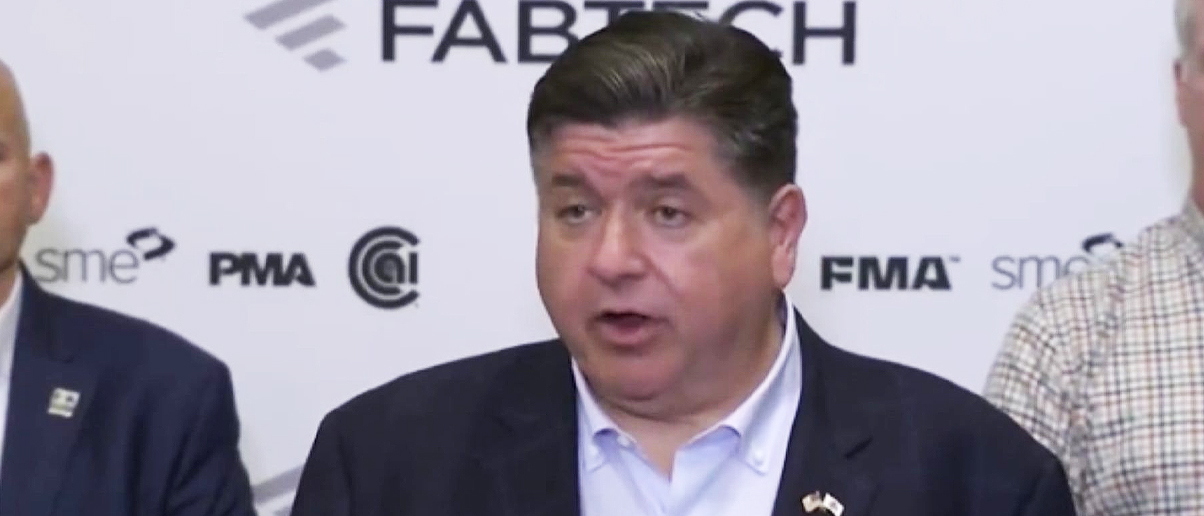
(Screenshot/Heartland Signal)
Governors whose states share the nation’s largest power grid will meet Thursday in Chicago — as critics say the grid’s members kept most decision-making power.
The PJM Governors’ Collaborative summit at the Palmer House opens with Democratic Illinois Gov. JB Pritzker and is scheduled to close at 4:30 p.m. local time with a “special announcement,” according to the event’s agenda. The meeting comes as states press PJM Interconnection for a bigger say over decisions that shape what families pay for electricity.
PJM, the largest regional transmission organization in the U.S., runs the grid serving more than 67 million people in 13 states and Washington, D.C., according to its website.
Pritzker’s office did not immediately respond to the Daily Caller News Foundation’s request for comment.
PJM’s members, including transmission owners and power generators, voted Sept. 30 on governance changes ordered by the Federal Energy Regulatory Commission (FERC), Maryland Matters reported. The plan would let governors’ offices take part in the Organization of PJM States for the first time, according to the outlet. But members would keep the final say on key filings with FERC, and two-thirds of them would have to back any proposal from the states before it moves forward.
“The fact that companies that benefit from the current rules get to write and approve their own reform highlights the broken system Marylanders are footing the bill for,” Rhyan Lake, a spokesperson for Democratic Maryland Gov. Wes Moore, said, according to the outlet.
Democratic Pennsylvania state Rep. Danielle Friel Otten said in a statement that the members gave themselves “veto power over the very decisions at issue.”
“The big picture is that a regional market needs to work for the region — power supply is not confined to state lines or political preferences,” Todd Snitchler, president and CEO of the Electric Power Supply Association, which represents competitive power suppliers, told the Daily Caller News Foundation. “The proposed changes include significant gains for states and state interests.”
“What is not desirable is a system that subjects these long-term planning decisions to potential uncertainty and partisan political swings,” Snitchler said.
“It is not for PJM to say whether the Member package provides the states with a meaningful voice. Only the states can make that determination,” PJM spokesman Jeff Shields told the DCNF.
Shields said PJM worked with states and members on its own package, which “ultimately did not receive enough Member support,” and that PJM is obligated to file the members’ plan with FERC. He said the members’ plan gives PJM more independence and speeds up decisions, “but there are key differences from the PJM package, especially as it relates to state gains.”
FERC Chair Laura Swett warned in July that the commission was “not going to hesitate to use the full extent of our legal authority” if PJM’s members failed to reach “credible, meaningful reforms” by the end of September, according to Maryland Matters.
The collaborative launched in September 2025 as a bipartisan effort joined by 11 of the 13 governors whose states PJM serves, including the Republican governors of Indiana, Ohio and Tennessee. Republican West Virginia Gov. Patrick Morrisey and Democratic Kentucky Gov. Andy Beshear did not join, Mountain State Spotlight reported.
Democratic Pennsylvania Gov. Josh Shapiro hosted the first summit of PJM governors in Philadelphia last September and warned that states including Pennsylvania could look for options outside PJM if the grid operator did not act decisively, according to his office.
Governors stepped up pressure on PJM after prices in its yearly auction for power plant capacity hit a record, roughly 10 times the previous year’s level, according to a 2025 statement from Pritzker’s office.
Snitchler said prices in the capacity auction make up a small part of monthly electric bills and pointed to a report from the nonprofit PowerLines finding that utility spending on transmission and distribution “made up the bulk of utility rate requests” in the third quarter of 2026. “PJM’s markets deliver reliable power and $5 billion in annual savings — we need to build on that success and get projects built,” he said. EPSA laid out its case in a blog post ahead of the summit.
Shields said the governance changes alone will not lower bills, adding that “only additional supply is going to help this issue so long as demand from data centers continues to grow.”
“Governance is important, but it is more of an enabler to accomplish substantive tasks like obtaining more supply to meet data center demand,” he said.
Members also voted to give states one seat on the committee that picks nominees for PJM’s board, while PJM staff had proposed two, Maryland Matters reported.
“States cannot be treated as spectators in a system whose decisions have such enormous consequences for our constituents,” Democratic Maryland state Sen. Katie Fry Hester, who has criticized PJM’s handling of the data center boom straining the grid, said, according to the outlet.
The members’ proposal would take effect only if FERC approves it, according to Maryland Matters.
All content created by the Daily Caller News Foundation, an independent and nonpartisan newswire service, is available without charge to any legitimate news publisher that can provide a large audience. All republished articles must include our logo, our reporter’s byline and their DCNF affiliation. For any questions about our guidelines or partnering with us, please contact [email protected].