

Commentary: Big Tent Ideas
How US Export Controls Left $70,000,000,000 On The Table For Huawei
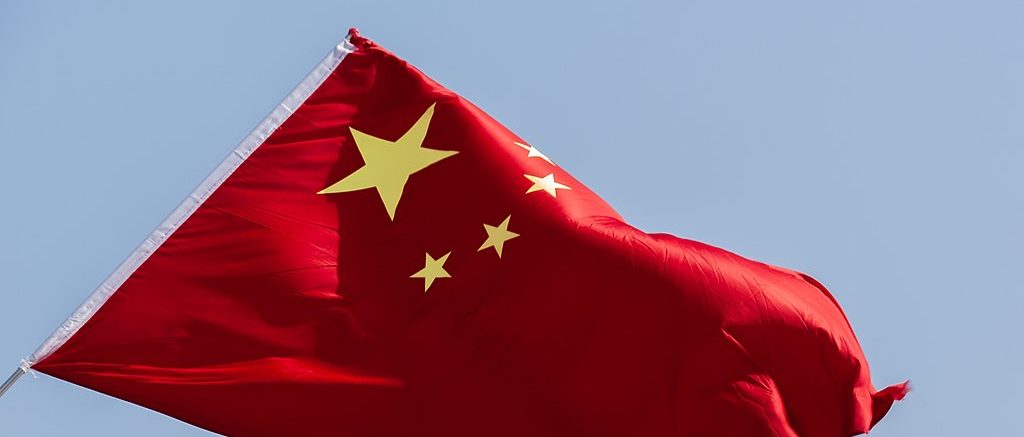
(Wikimedia Commons/Public/Ermell)
American export controls on advanced semiconductors have been in effect for four years. That’s long enough to actually evaluate what they’ve accomplished. Looking back, the goal was to deny China the hardware it needed to compete at the frontier of artificial intelligence.
But four years later, Chinese chipmakers that once struggled to find domestic buyers are running at capacity, Chinese AI models are winning enterprise customers, and Chinese executives are stating publicly that Washington’s restrictions helped them. It’s clear that while D.C.’s export control policy started with the best of intentions, the end result has been highly beneficial to China’s long term AI ambitions and disproportionately impacted U.S. firms.
In fact, one can argue the U.S. economy has become a “highly leveraged bet” focused on winning the AI race. And right now, that bet appears to be increasingly uncertain. Chinese AI models, running 60 to 90 percent cheaper than American alternatives, are quietly capturing the customers U.S. companies built their valuations on. Coinbase and DoorDash, for example, are already routing workloads to Chinese models. We are witnessing a market-by-market migration to cheaper Chinese infrastructure.
Recent reports highlight just how quickly China has closed the gap with the U.S. on AI. Bloomberg recently reported that China is rapidly closing the performance gap while already winning on cost and global adoption. Stanford University found earlier this year that China has “nearly erased” America’s AI lead. Forbes and BCG now describe the competition as a duopoly: two increasingly incompatible tech stacks, with the window for flexibility closing fast.
Alvin Graylin, a well-respected technology executive in Asia, points the finger for these developments right at export controls. In conversations with the founders and CEOs of China’s leading GPU companies, he has learned that many of them would have gone under without American export controls. Hardly anyone was buying Chinese GPUs before the ban. Indeed, the ban is the only reason several of these companies are still around. A look at key Chinese AI companies underscores that fact. Biren Technology “filed” a 22-fold revenue surge, directly attributable to the domestic market the U.S. chip ban created. Cambricon reported its first-ever full-year profit, with revenue up 450 percent.
The most telling admission came from Huawei’s rotating chairman. Xu Zhijun who explicitly thanked the U.S. government for its export restrictions, saying they “supercharged” China’s semiconductor research and development. Cut off from American suppliers, Huawei built its own chip architecture under pressure. Then it launched a Model-as-a-Service platform across nine countries. The restrictions were designed on the assumption that Huawei couldn’t build its own stack. Huawei is now selling that stack across the globe.
Huawei’s recent export pitch to Egypt suggests Xu wasn’t exaggerating. Huawei proposed a plan for Egypt to build AI data centers from the ground up, including 1,408 Ascend 950-series chips for a training cloud, 600 more for inference clusters, on a 12-month delivery timeline. Winning the contract would have made Huawei a key AI provider to Africa’s second-largest economy and established a foothold in the Middle East, the same region where the U.S. has aggressively invested in the more lucrative markets of the UAE and Saudi Arabia. It would also mark the first confirmed export of Huawei’s Ascend accelerators after more than a year of attempts, proving there is real foreign demand for Chinese chips.
It’s important to understand that once developers build on Huawei’s models and companies migrate operations to its cloud infrastructure, they don’t switch back. BCG warns the window for companies to operate across both tech stacks is rapidly closing. Countries are being forced to choose. Every month that window stays open, the cost of pivoting back to American providers grows higher.
Washington is still tied to the idea that the country with the best model is winning the AI race, but that fixation ignores the power of “good enough but cheaper” models for many customers. And China seems to be closing the quality gap as well. More importantly, it has grasped a fundamental truth: models come and go, but infrastructure endures—and the country whose technology powers the world will set the terms of the AI age. To do so, Huawei is pushing beyond its domestic market with lower cost models. Chinese AI and semiconductor companies’ revenues are surging with China’s own tech executives crediting U.S. restrictions with accelerating their drive for self-reliance. The simple reality is that export controls have not stopped China’s advance but accelerated it. Four years is long enough to admit that the controls are not working — and allow American firms to compete globally. The current system doesn’t.
Charles Wessner is a senior adviser with the Renewing American Innovation program at the Center for Strategic and International Studies (CSIS) and a globally recognized expert on innovation policy.
The views and opinions expressed in this commentary are those of the author and do not reflect the official position of the Daily Caller News Foundation.
All content created by the Daily Caller News Foundation, an independent and nonpartisan newswire service, is available without charge to any legitimate news publisher that can provide a large audience. All republished articles must include our logo, our reporter’s byline and their DCNF affiliation. For any questions about our guidelines or partnering with us, please contact [email protected].