

Energy
Cash-Strapped Farmers Found A Money Stream, But Their Community Is Saying Not So Fast
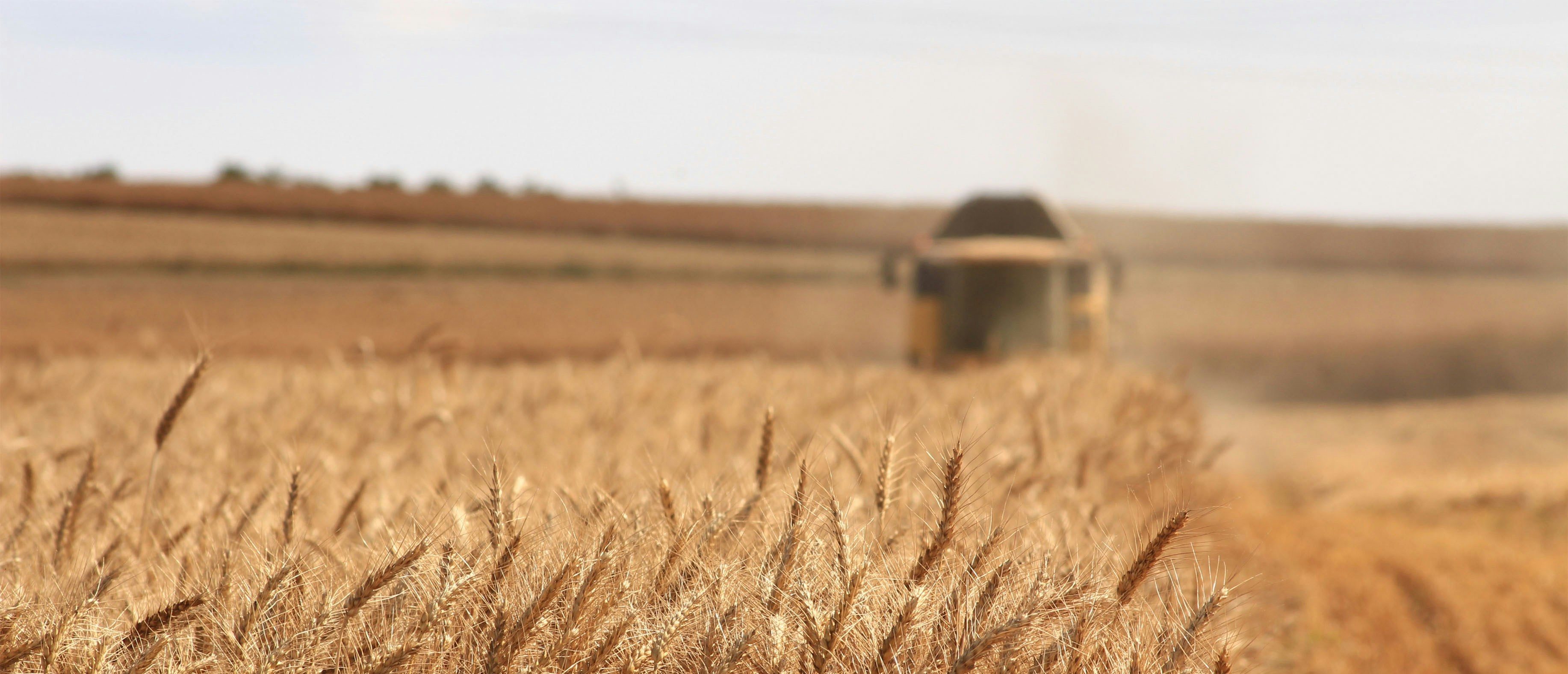
Meric Tuna/Unsplash
A fight over renewable energy in rural Idaho has turned into a battle over private property rights, as farmers push local officials to overturn a ban preventing them from leasing their own land for large-scale energy projects.
Bannock County currently bans large-scale solar, wind and nuclear energy projects, but officials are considering a new ordinance that would allow the projects through a conditional-use permitting process.
The dispute has created an unusual fault. Residents opposed to utility-scale solar have raised concerns about agricultural land, rural scenery and surrounding communities, while farmers interested in leasing their property have argued that the government should not determine how they can economically use their own land, according to county meeting minutes.
“I just don’t appreciate being told what I can or cannot do. I don’t want to get to a point of, like, Europe, where the government tells all the farmers what they can and cannot do with their land,” Lytton Bastian, a rancher in the Arimo/Downey area of Bannock County, Idaho told Daily Caller News Foundation.
Bannock County Commissioner Jeff Hough cast the lone vote against the county’s ban on large-scale solar and wind projects during a March 26, 2024, public hearing, arguing at the time that the restriction infringed on private property rights.
“If we allow the government to deny the opportunity for individuals to explore options, where does the insidious creep of government power stop?” Hough said during the 2024 hearing.
Hough, now chairman of the commission, has since pushed to reverse the ban and replace it with rules allowing solar, wind and nuclear projects through conditional-use permits. The county’s Planning and Development Council is set to hold a public hearing on the proposal Oct. 29 before sending a recommendation to commissioners, who are tentatively scheduled to consider the ordinance for adoption Nov. 19.
Hough did not respond to the DCNF’s request for comment.
It’s a matter of economics for some farmers, who face a bleak economic picture.
“This piece of ground that I have in specific is very poor ground. I only use it in the spring and the fall to graze cattle on it, and it only is enough feed there to sustain them for a month each time,” Bastian, who argued against the ban in 2024, continued. “Out of 12 months of the year I only get to use it for two months, because outside of that, it won’t do anything better than that. I’m just looking at something to make it more sustainable for me and my operation, cause despite record cattle prices, we also have record input prices that has eaten up all the profit that we would have normally gotten.”
Diesel prices have surged to record highs in recent weeks as the Iran war and disruptions to global refining capacity squeeze supplies. The fuel is extensively used throughout agriculture to power tractors, combines and other farm equipment, as well as trucks that haul livestock, crops and supplies.
President Donald Trump signed an executive order Monday allowing tax-free red-dyed diesel on highways through December as fuel costs rise ahead of the midterms.
Farmer Dale Lish signed a one-year agreement in 2023 giving Hecate Energy an option on roughly 400 acres of his land for solar development. Hecate declined to renew the agreement in 2024 because of the county’s ordinance, according to The Daily Yonder. Lish told the outlet projected solar income per acre was four to five times what he could earn growing wheat.
Bannock County’s zoning ordinance prohibits large-scale solar projects, which the county defines as facilities capable of producing or storing at least 10 megawatts of power or occupying 100 acres or more.
County officials are considering replacing the ban with a conditional-use permitting process requiring safeguards including setbacks, emergency plans and decommissioning.
Steve Criddle, whose family’s roots in Downey stretch back to 1876, has struggled to maintain the family’s agricultural operation, the Daily Yonder reported. One of Criddle’s alfalfa fields produced roughly 800 bales three years ago, but that number has dropped to about a dozen this year.
The county’s proposed rules would replace the outright prohibition with regulations governing individual projects. Wind, solar and nuclear projects would be allowed through conditional-use permits and face requirements covering emergency planning, erosion, fire protection, wildlife, transportation, visual impacts, setbacks and eventual decommissioning.
The controversy comes as Idaho’s electricity needs are growing. Idaho Power expects peak electricity demand to increase by nearly 1,000 megawatts by the end of the decade as population and business growth put additional strain on the utility’s system.
“Solar has been politicized more so than it rightly deserves, it’s just another industry that’s just trying to get a foothold and make money like, everybody else. It’s just another avenue of generating electricity for our growing demands of electricity,” Bastian told the DCNF.
All content created by the Daily Caller News Foundation, an independent and nonpartisan newswire service, is available without charge to any legitimate news publisher that can provide a large audience. All republished articles must include our logo, our reporter’s byline and their DCNF affiliation. For any questions about our guidelines or partnering with us, please contact [email protected].