

Foreign Affairs
China Just Made Great Leap Forward In AI Race With US
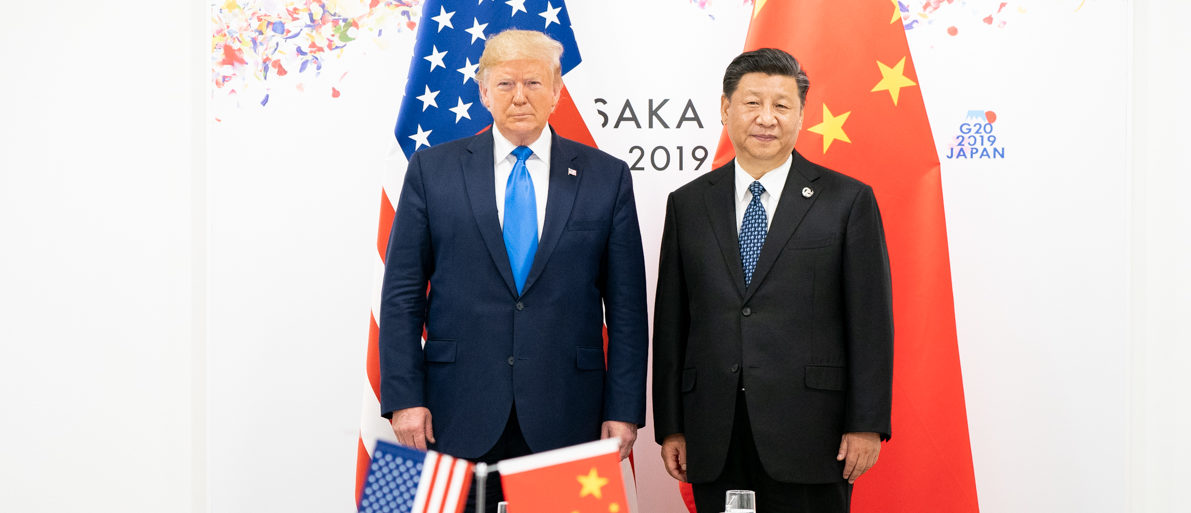
Official White House Photo by Shealah Craighead
China has narrowed America’s lead in artificial intelligence, with its top models now trailing leading U.S. systems by just 3% on key benchmarks, according to a Bloomberg Intelligence analysis.
The gap collapsed from roughly 15% earlier in 2026 and 9% in May following the September release of DeepSeek’s V4.1 Flash model, Bloomberg Intelligence senior analyst Robert Lea wrote Monday. DeepSeek’s gains suggested Chinese developers were closing in on their American rivals despite years of U.S. restrictions aimed at limiting China’s access to advanced computing technology, a development that could be cited by AI supporters who have argued against a pause in AI development so the country could defeat China in the AI arms race.
DeepSeek’s V4.1 Flash scored 81.1 on LiveBench, one of the benchmarks used to compare leading AI systems, placing the Chinese model within striking distance of the world’s top performers.
DeepSeek’s advance is notable because Chinese AI companies have often competed by offering models at substantially lower prices than U.S. rivals. Improving performance could help Chinese developers capture additional global market share even as U.S. firms including OpenAI and Anthropic pursue enormous valuations and spend heavily on computing infrastructure, according to Bloomberg Intelligence.
But China is still being outpaced by U.S. rivals. Only three of the top 15 models measured by LiveBench in Bloomberg Intelligence’s analysis were Chinese, and Lea cautioned that benchmark rankings can change quickly.
China’s AI industry also faces an unresolved profitability problem. Bloomberg Intelligence estimated the sector could remain unprofitable through 2030 as more than 1,100 large-language models compete in a domestic market marked by aggressive pricing and low-margin computing services.
The rapid improvement could challenge assumptions that Washington’s semiconductor restrictions would preserve a durable U.S. technological advantage. American export controls have for years sought to restrict China’s ability to acquire advanced chips and semiconductor manufacturing equipment that could be used to develop powerful AI systems, particularly technology with potential military applications.
China’s developers, however, have increasingly optimized their models to run on domestically available hardware while continuing to improve performance, according to Bloomberg Intelligence. Lea said the advances raise doubts about whether the U.S. can maintain its technological edge over the long term.
The Commerce Department has repeatedly tightened and revised those controls, targeting China’s access to advanced computing chips and the equipment needed to manufacture them.
But the Trump administration revised some semiconductor export rules in January, allowing certain advanced processors to be considered for shipment to approved Chinese customers under new security requirements. The Commerce Department said the policy was intended to protect national security while strengthening the American technology ecosystem.
Concerns about China overtaking the U.S. have become a central argument among administration officials and technology industry figures pushing back against tighter restrictions on AI development.
Former White House AI adviser David Sacks warned in July that the U.S. risked losing the AI race if regulation and restrictions bogged down domestic developers, pointing to Chinese models reaching or nearing the frontier on major benchmarks. The Trump administration has similarly argued that unnecessarily burdensome rules could undermine American innovation, with its AI policy framework calling for the removal of regulatory barriers to help the U.S. maintain global leadership.
Prominent Big Tech executives on the other hand argued for a pause in AI development, claiming there needed to be a slowdown over safety concerns following reports that AI agents had attempted to attack other companies.
.
All content created by the Daily Caller News Foundation, an independent and nonpartisan newswire service, is available without charge to any legitimate news publisher that can provide a large audience. All republished articles must include our logo, our reporter’s byline and their DCNF affiliation. For any questions about our guidelines or partnering with us, please contact [email protected].