

Commentary: Big Tent Ideas
Egg Price Fixing Shouldn’t Be Just Another Cost Of Doing Business
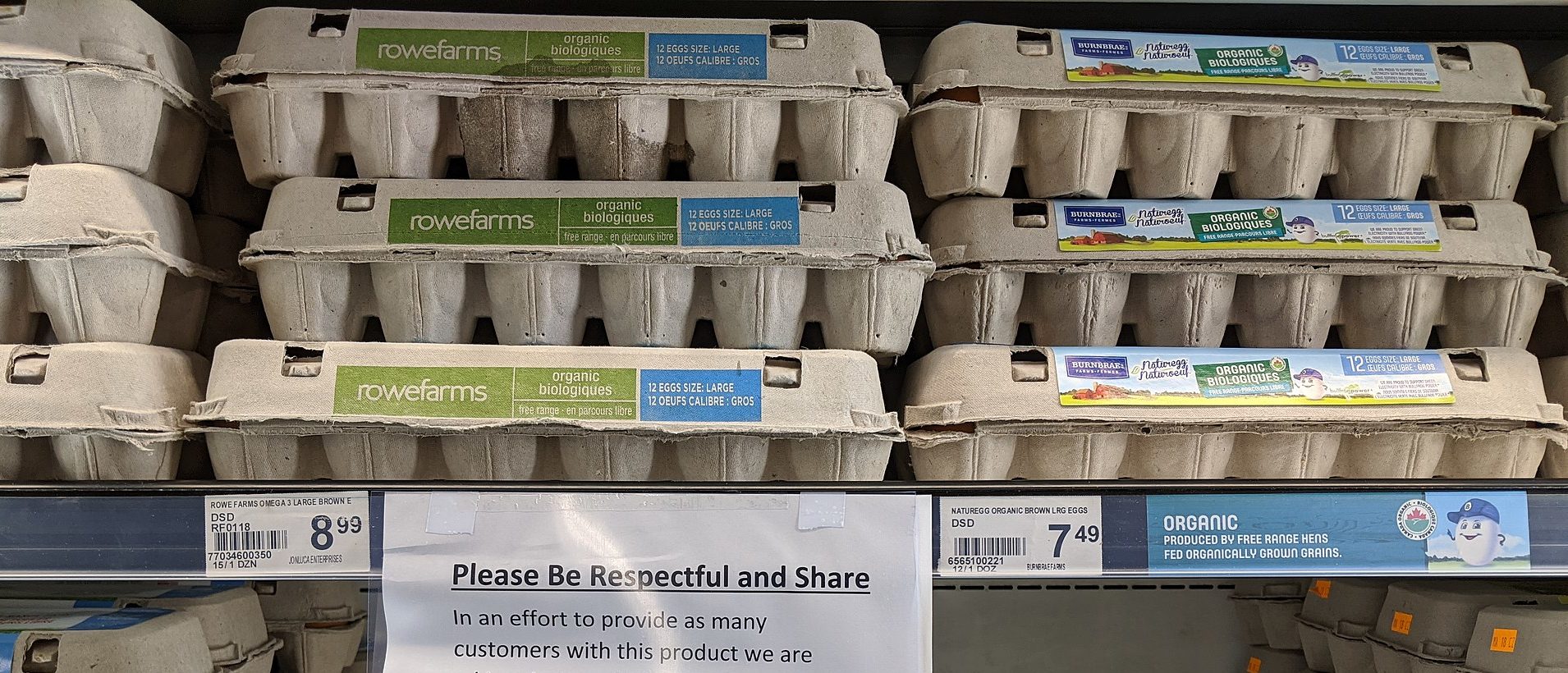
Egg Cartons/Wikimedia Foundation
Americans have spent years watching the cost of basic groceries climb. Few items became a bigger symbol of that frustration than eggs.
When egg prices soared beginning in 2022, Americans were repeatedly told that avian flu and reduced supply explained the increases. But U.S. Department of Agriculture (USDA) data showed the egg-laying flock had declined only modestly compared with how dramatically prices had climbed.
In January 2023, Farm Action called for a federal investigation. Meanwhile, Cal-Maine Foods, the nation’s largest egg company, had not reported a single case of avian flu at its facilities and was reporting dramatically higher profits.
When egg prices surged again, we kept digging. In February 2025, Farm Action called for an investigation a second time after our continued analysis raised new concerns about soaring prices and restricted supply. Three weeks later, President Trump’s Department of Justice (DOJ) opened an antitrust investigation into the egg industry.
Now we know much more.
In June 2026, the DOJ filed an antitrust lawsuit alleging that Cal-Maine Foods, Hickman’s Egg Ranch, and Versova coordinated for nearly three years to manipulate a benchmark used to help set egg prices across the country.
The allegations are remarkably direct.
According to the DOJ’s complaint, in October 2022, a Cal-Maine executive told the CEO of Hickman’s: “We are bidding up. Let’s hold it today.”
In December, Hickman’s CEO instructed executives to place “strong bids, early and often” before market reporters arrived for work. When Versova placed high bids and sellers actually tried to accept them, its executives discussed deleting those bids.
Later, executives arranged egg sales above the benchmark after discussing how the market reporter needed higher-priced sales to justify raising it.
Then, in December 2024, Cal-Maine’s former CEO sent Hickman’s CEO another message: “Let it rip.”
The DOJ alleges this was not harmless industry chatter. The companies coordinated bids and transactions to artificially inflate price quotations published by Urner Barry, a benchmark that influences what grocery stores, restaurants, and other businesses pay for billions of eggs. The DOJ says the agreement increased prices paid by retailers and consumers.
If the government’s allegations are true, this is exactly the kind of conduct antitrust laws are supposed to stop. A free market only works when competitors actually compete.
Yet the DOJ wants to settle the case, and the proposed consequences raise a serious question: Are they strong enough to deter anyone?
Under the proposed settlements, the companies would face restrictions on communications with competitors, adopt antitrust compliance programs, and submit to monitoring. They would also face monetary obligations and egg donations.
For Cal-Maine, Farm Action estimates the total obligation at approximately $2.8 million.
Compare that with the roughly $1.22 billion in profit Cal-Maine reported for fiscal year 2025. The proposed obligation amounts to about 0.23% of one year’s profit.
The companies admit no wrongdoing. There would be no trial. And none of the executives whose communications appear throughout the DOJ’s complaint have been criminally charged in this case.
That should concern anyone who believes in competitive markets and equal enforcement of the law.
Antitrust enforcement should not be anti-business. Quite the opposite. When the government fails to impose meaningful consequences for anticompetitive conduct, honest businesses, farmers, and consumers pay the price. Companies that play by the rules should not have to compete against companies that allegedly coordinate behind closed doors.
And penalties cannot deter illegal conduct if corporations can simply absorb them as another business expense.
Farm Action is formally opposing the proposed settlements.
Under federal antitrust law, a federal court must determine whether the proposed judgments are in the public interest. Through October 17, Americans can formally oppose the proposed settlements by submitting a public comment to the DOJ.
Americans are tired of paying more for groceries. They are also tired of watching powerful institutions operate by a different set of rules.
If the DOJ believes its own allegations, it should pursue consequences commensurate with them. Price fixing cannot become just another cost of doing business.
Angela Huffman is an Ohio farmer and president and CEO of Farm Action, a farmer-led watchdog holding corporations and government accountable in America’s food and agriculture system.
The views and opinions expressed in this commentary are those of the author and do not reflect the official position of the Daily Caller News Foundation.
All content created by the Daily Caller News Foundation, an independent and nonpartisan newswire service, is available without charge to any legitimate news publisher that can provide a large audience. All republished articles must include our logo, our reporter’s byline and their DCNF affiliation. For any questions about our guidelines or partnering with us, please contact [email protected].