

Foreign Affairs
Ebola Explodes In Africa Much Faster Than Infamous 2010s Outbreak
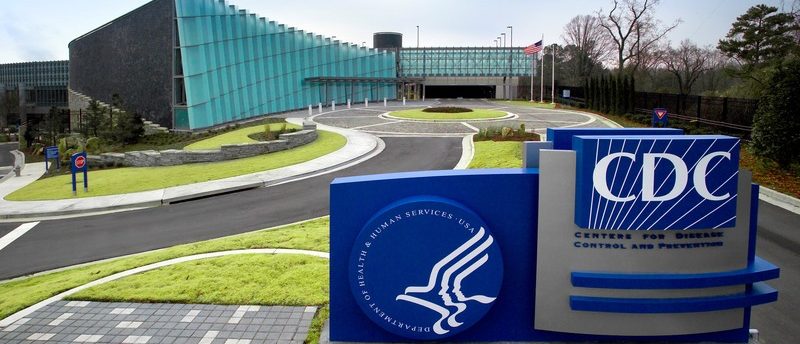
James Gathany, Centers for Disease Control and Prevention, Public domain, via Wikimedia Commons
The Ebola virus has returned with a vengeance as a new strain spreads across central Africa at breakneck speed.
With over 8,000 confirmed cases of ebola in the Democratic Republic of the Congo (DRC), the spread of the new Bundibugyo virus is the second-largest recorded outbreak of the disease. At this rapid rate of infection, the total number of current cases rivals the number that swept across West Africa during the early days of the 2010s Ebola epidemic, according to the Centers for Disease Control and Prevention (CDC).
With a fatality rate of 48 percent, the contagion has cost 3,799 lives, according to a Friday press release from the World Health Organization (WHO).
The initial outbreak reported in May, surpassed 1,000 confirmed cases within 40 days — much faster than the 2018 Ebola outbreak in DRC which took approximately 235 days to breach the same threshold, the CDC reported.
The U.S. government has committed to over one billion dollars in funding for Ebola response activities, according to an official statement from the Department of Health and Human Services (HHS) to Daily Caller News Foundation. HHS and the Department of State are working in close coordination with partners in the region, to respond to the outbreak.
“More than 500 CDC staff are supporting the response, including more than 120 personnel deployed to affected countries, where they are providing expertise in disease surveillance and contact tracing, laboratory testing, infection prevention and control, border health, clinical guidance and training, and community engagement,” an HHS spokesperson said in a statement to the DCNF.
From May 21 to Sept. 21, the CDC conducted public health entry screening for more than 15,000 travelers at Washington Dulles, JFK, and Atlanta airports, according to a U.S. official.
Under Title 42, a temporary public health restriction implemented by the HHS, the CDC conducts screenings and travel restrictions as part of a broader health response, because the Bundibugyo virus can incubate for up to 21 days and infected individuals could travel internationally before symptoms become apparent.
To reduce the risk of Ebola importation, travelers, including U.S. citizens, who have been in the DRC within 21 days of departure currently cannot board commercial flights bound for the U.S., as per Title 42.
“Protecting Americans from importation and combating the outbreak at its source are both essential parts of our response. HHS will continue pursuing both with urgency,” the HHS spokesperson said. “[HHS] Secretary Robert Kennedy Jr. has received regular briefings on the Ebola outbreak from career experts across the agency — including CDC, FDA [Food and Drug Administration], and ASPR [Administration for Strategic Preparedness and Response] — and is deeply engaged in U.S. response activities.”
Kennedy also visited the CDC in Atlanta in August to meet with experts, thank everyone involved in the response, and receive in-person updates, the HHS told the DCNF.
Shortly after DRC reported the outbreaks, Gavi the Vaccine Alliance announced it would give upwards of $50 million dollars to funding experimental vaccines to be used against the strain, in a statement on their website.
“We need to act now to ensure that once one or more vaccine candidates are ready, manufacturers are in position to start producing doses at scale,” Dr. Sania Nishtar, CEO of Gavi said in the press statement.
Gavi, the Vaccine Alliance is a global vaccine initiative sponsored by the Gates Foundation. The platform has also pushed to increase vaccination to mitigate the spread of measles.
On Sept. 19, Doctors Without Borders partnered with the World Health Organization to launch the BRAVO study — where 20,000 front line doctors were given the Ervebo vaccine to evaluate its effectiveness among health care workers providing care at the epicenter of the spread, as announced on the Doctors Without Borders website.
Despite the experimental nature of the vaccine, in addition to the doses allocated for research, the WHO also delegated 70,000 doses of Ervebo to Congolese authorities to use for outbreak response throughout the region, as stated on the United Nations (UN) website.
“The Ervebo vaccine has been ‘highly effective’ against Ebola Zaire virus in the past, but it is not yet known whether it can provide ‘meaningful protection’ against Ebola Bundibugyo disease, which is still spreading in the DRC,” the UN’s website said.
All content created by the Daily Caller News Foundation, an independent and nonpartisan newswire service, is available without charge to any legitimate news publisher that can provide a large audience. All republished articles must include our logo, our reporter’s byline and their DCNF affiliation. For any questions about our guidelines or partnering with us, please contact [email protected].