

Exclusives
Data Center Party Dared Critics To ‘Come And Take It.’ A Few Tried And Failed
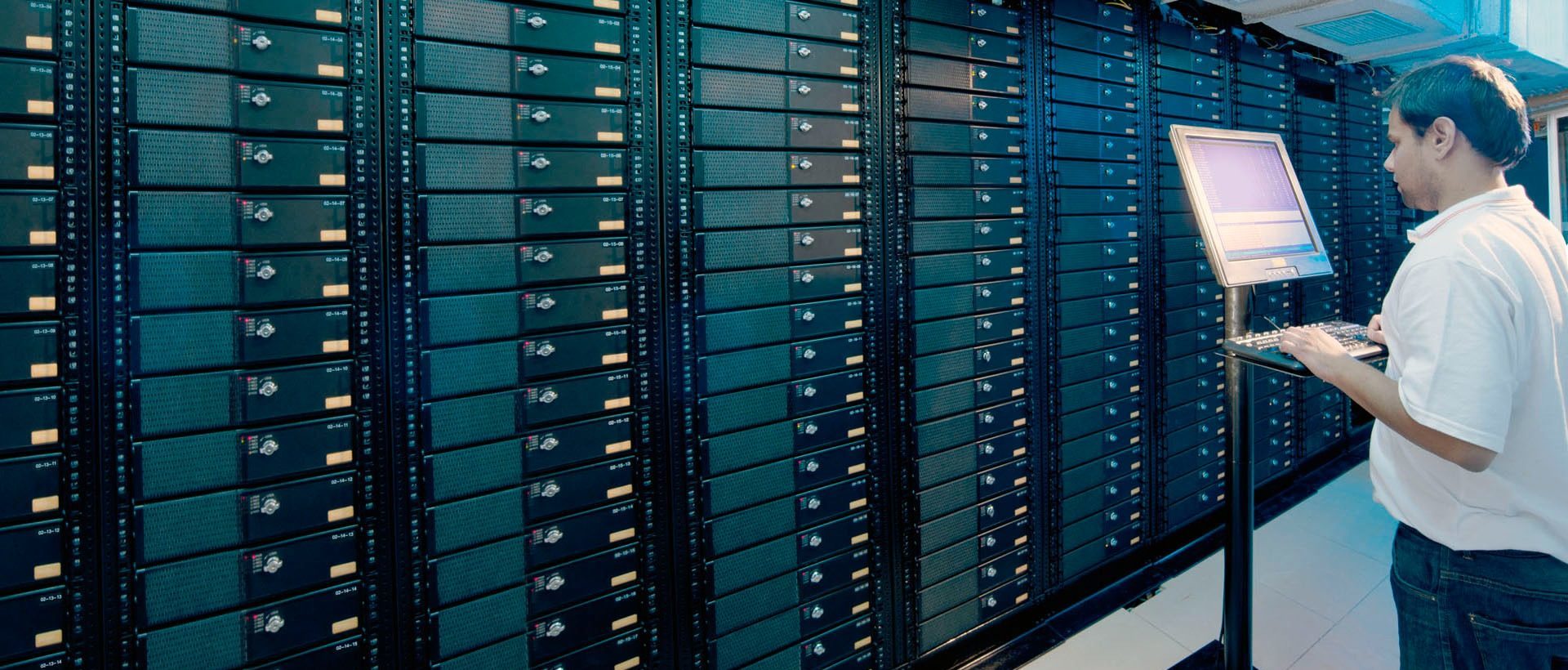
Data center (Azraelito/Wikimedia Commons)
WASHINGTON — A celebration of data centers kept humming Saturday night despite protesters’ best attempts to take over the stage.
Four protesters took the stage during the toasts and remarks at Data After Dark, a pro-data center party at the Washington, D.C. bar PubKey. The event, organized by Pirate Wires reporter Jonas Du, R Street Institute tech fellow Ed Tarnowski and Young Voices CEO Casey Given, drew hundreds of attendees who chanted “USA” as protesters were ushered out of the venue.
Asked why he opposed data centers, the first protester told the DCNF, “I wanna live,” as security rushed him out of the bar. “Our only fucking home [planet Earth]. Just so you can get rich. It’s despicable. It’s fucking despicable.”
Among the other protesters was a woman who flipped off the crowd as their chants drowned out her declarations. “Thank you for using all of our water. You are killing the world” the woman yelled through the noise, according to another angle of the incident posted Sunday on X.
“How is this ‘USA’?” she asked as the crowd chanted.
“Fuck all of you,” she said as she raised her middle fingers to the audience.
Two other women then interrupted the speakers’ remarks before security forcibly removed them from the stage.
“I started a ‘USA’ chant to drown them out,” Matt Kita, a Bitcoin investor who attended the event, said in an early Sunday X post. “We will re-industrialize and we will win.”
R Street Institute analyst Adam Thierer spoke after the protesters rushed the stage, and he said the debate over data centers comes down to “makers or takers.”
“Well, we know who doesn’t believe in freedom, it’s the kind of freaks who were just up here charging the stage.” Thierer said.
The data center debate is “a fight between those of us who believe in prosperity and permissionless innovation versus those who believe in poisonous, parasitic thinking,” he argued.
‘Blabbering Some Nonsense’
Du told the DCNF that organizers expected disruption at an event of that size.
“No one could hear what they were saying. They were blabbering some nonsense,” Du said. “I do think we were surprised by how quickly the crowd drowned them out.”
The chant reflected the stakes of the AI race, he argued.
“If we let China win the AI race, for instance, that’s much more of a threat,” Du told the DCNF. “I think that’s why people broke out into the USA chants when the protesters were running onto the stage.”
After the toasts ended, another member of the protest group approached him near the stage and warned that they would disrupt future events, Du said.
“He said, ‘Any future events you throw, we’re gonna be there. We’re gonna disrupt it. Be prepared. We’re coming for you,'” Du recalled. “I laughed him off.“
Du described the opposition to data centers as “slopulism,” which he defined as populist anger over “the thing of the moment” that is easy to stir up, just as low-effort “AI slop” is easy to produce.
“It’s very, very easy to get people in a room and convince them that data centers are bad because you can just exaggerate all of the harms and talk about none of the good sides and then capitalize on people’s pre-existing fears,” Du said. “If you want to do the opposite thing, that is much harder to do. Which is why it’s called slopulism, because it’s easy.”
‘The Swamp Loves Them’
Data center critics were unmoved by the party.
“D.C., which Kamala Harris won with more than 90% of the vote, is exactly where I’d expect a bunch of tech grifters to gather and celebrate forcing data centers on rural America,” Amy Kremer, chair of Humans First, said in a statement to the DCNF.
“Meanwhile, this same week, Frederick County, Virginia — a county Trump won by 30 points — voted to ban new data centers. That speaks volumes,” Kremer added. “Rural America hates them. The swamp loves them.”
Frederick County became the first locality in Virginia to ban new data centers when its supervisors voted 6-1 on Wednesday to bar them countywide, according to the Winchester Gazette.
Du called Kremer’s framing “pretty obvious cherry-picking.”
“I think it’s very lazy for them to try to frame this as a Kamala Harris versus Donald Trump situation,” Du said. “This is where AI policy is going to be formed.”
Du said attendees included people who worked for the Trump administration as well as staffers for Democratic Rep. Ro Khanna of California. The DCNF spoke with both Khanna staffers and a White House official at the party.
Given, whose group handled logistics after the party outgrew the original venue, told the DCNF ahead of the event that its popularity reflected a side of the debate that rarely gets heard.
“One side of this argument has been tremendously loud and really kind of hysterical, and so I think there’s kind of a quiet, silent majority, if you will, that really don’t have a channel to let their voice out because you have everyone screaming about killer robots, essentially,” Given said.
“[W]hat I’m hoping to accomplish is just to showcase that [the pro-data center side] is a movement, and that really one side of the conversation does not dominate everything,” he added. “There is a different side of the argument, and we’re more fun.”
‘The Polling Is Very Clear’
Other critics argued the turnout does not reflect public opinion.
“I don’t think a party in D.C. changes the fact that data centers are extremely unpopular,” Brendan Steinhauser, CEO of the Alliance for Secure AI, told the DCNF.
“AI is not polling much better these days. [G]iven the news over the past few days, I doubt this will change anytime soon,” he added.
Du acknowledged that data center supporters face an uphill battle.
“Data centers are still broadly unpopular with the American public. The polling is very clear,” Du said, adding that the party was “an organizing opportunity” amid “the PR [public relations] crisis that the tech industry finds itself in right now.”
Fifty-four percent of U.S. adults said “data centers are mostly bad for the environment,” up from 39 percent in January. Similarly, 50 percent said they are “mostly bad for home energy costs,” an increase from 38 percent in January, according to Pew Research data released Sept. 22.
Meanwhile, just 7 percent of registered voters ranked data centers as a top-three national issue, according to a Sept. 10-14 Rainey Center poll of 1,004 registered voters. AI ranked a top-three issue for 12 percent of voters.
Only 11 percent of 1,000 respondents said they would support an AI data center being built in their community, and 65 percent opposed it, according to a University of Massachusetts Amherst poll released Sept. 14.
An NBC News poll of 7,105 American adults, conducted Aug. 20-Sept. 1, similarly found that 69 percent opposed data center construction in their community while 31 percent supported it.
Given said some local concerns, including zoning, water and electricity, are “perfectly reasonable,” but argued they can be addressed “through the processes of democracy” and that the benefits of data centers outweigh the costs.
“The conversation should be that yes, AI is good, data centers are good. We definitely need guardrails, as we do with everything in life,” Given said.
‘Really, It’s A Competition’
The original idea for the event was a small house party before the event went viral online, Du told the DCNF. More than 1,000 people were added to the guest list for the event on Partiful, about 600 of whom attended over the course of the evening, Du said.
A long line formed outside PubKey as the event began, according to a photo posted on X. At its peak, the line wrapped around the block, Du said.
The event was presented by Pirate Wires, Young Voices and Compute Optimist and sponsored by several additional groups, such as the Manhattan Institute, NetChoice, the Bitcoin Policy Institute and the ’76 Crew, according to Du’s Saturday X post.
The party featured an AI photo booth, a DJ, a jazz trio and themed cocktails.
The names of the drinks were meant to highlight arguments for data centers, according to Tarnowski’s Sunday X post. The “SMR-tini” nodded to small nuclear reactors that can power data centers, the “Closed Loop Spritz” to water-recycling cooling systems and the “Loudoun County Iced Tea” to Northern Virginia’s “Data Center Alley.”
A photo of the drink menu was posted on X during the event.
A similar event, “AI After Dark: Party – #SFTechWeek” is scheduled for Oct. 9 in San Francisco, CA, on Partiful.
“We want to bring this to other cities across the nation because I think that you need to bring the same level of energy that the anti-data center people are bringing to this issue,” Du said. “Really, it’s a competition.”
All content created by the Daily Caller News Foundation, an independent and nonpartisan newswire service, is available without charge to any legitimate news publisher that can provide a large audience. All republished articles must include our logo, our reporter’s byline and their DCNF affiliation. For any questions about our guidelines or partnering with us, please contact [email protected].